Oman witnesses first successful Pre-implantation Genetic Diagnosis (PGD)

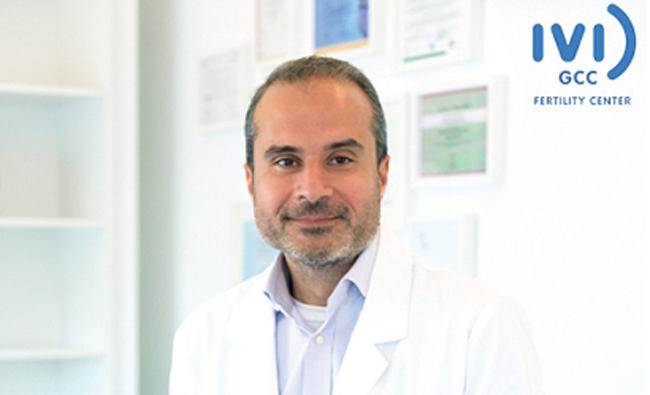
Dr. Human Fatemi
Updated 05 January 2018
Follow

Oman witnesses first successful Pre-implantation Genetic Diagnosis (PGD)

Pre-implantation Genetic Diagnosis (PGD) has been instrumental in helping couples prevent the risk of having a child with genetic disorders, according to IVI Middle East Fertility Clinic. The fertility center recently reported its first two successful PGD pregnancies in Muscat. “PGD is a technique where medical experts can check the genes in an embryo before pregnancy occurs. Couples who have alterations or mutations in their genes, or who have a risk of having children with genetic disorders, benefit from this screening. PGD is the latest reproductive technological advancement in medical science and is immensely important as it gives possibility to these couples to have healthy children and reduces the burden on the family, the health care system and society as a whole,” said Prof. Dr. Human Fatemi, medical director, IVI Middle East Fertility Clinic.
IVI Middle East Fertility Clinic has made several advances in the reproductive medicine field. The clinic has recently reported two successful pregnancies in Muscat following PGD, which not only highlights the outstanding proficiency of the embryology team, but also demonstrates the adeptness of the clinical team for their sustained effort and commitment to achieving 73 percent successful pregnancy rates.
Until this year, Omani couples traveled abroad to seek PGD. However, with IVI Middle East Fertility Clinic reporting successful pregnancies following PGD, couples have not only found a new hope, but also have access to the world’s best treatment options in the region.
The procedure for PGD test is simple. It includes obtaining eggs from the mother and injecting them with the husband’s sperm. The fertilized eggs are then followed for five or six days until they become embryos, inside the IVF lab. Then a biopsy is performed from the mature embryo when cells are examined to rule out any genetic mutation / alteration. This process takes about ten days. In the meanwhile, the embryos are frozen by a process known as cryopreservation. When the results from the diagnostic process are available, normal embryos without the genetic disorder are transferred into the mother’s uterus.


DeveGO25: Social Development Bank signs 51 agreements to support startups, productive families

Updated 25 December 2025
Follow

DeveGO25: Social Development Bank signs 51 agreements to support startups, productive families

The Social Development Bank has announced the signing of 51 agreements covering the establishment of financing portfolios, as well as local and international cooperation partnerships, on the sidelines of the Entrepreneurship and Modern Business Practices Forum, known as DeveGO25. This milestone reinforces the bank’s growing role in building an integrated entrepreneurial ecosystem and expanding its developmental impact through financial and nonfinancial solutions tailored to the needs of entrepreneurs, startups, micro and small enterprises, freelancers, and productive families, in line with the economic transformation of the Kingdom under Saudi Vision 2030.

The announcement was made during the second edition of the forum, which witnessed the signing of a package of specialized financing portfolios. Most notably, this included a joint financing portfolio with Arab National Bank valued at SR100 million ($26.6 million) to support entrepreneurs’ projects, alongside a financing portfolio with the Council of Foundations, valued at SR50 million to enhance the sustainability of nonprofit organizations.

The SDB also signed a number of corporate social responsibility financing portfolios with Al-Ghuwairi Charity Foundation to support community initiatives, as well as with ACWA Power to help entrepreneurs and innovators in the energy sector, in addition to Fakeeh Care Group to support startups in the healthcare sector.

Furthermore, financing portfolios were signed to support freelancers and entrepreneurs in partnership with Naylah Finance, Al-Yusr Leasing and Financing, Al-Jabr Financing, and J-B Financial Solutions. These financing portfolios reflect the bank’s accelerating direction toward diversifying support solutions and developing innovative financing channels capable of accommodating the needs of entrepreneurial segments across all regions of the Kingdom.

As part of its international partnerships, the bank strengthened its presence within global entrepreneurial networks through the signing of agreements with leading international entities. It partnered with Alibaba for a Saudi–Chinese initiative aimed at supporting the international market access of Saudi startups and productive families through specialized training and capacity-building programs, as well as linking them with potential clients and partners in China. In addition, SDB partnered with Incofin to cooperate on financing programs for small and emerging enterprises, while exchanging expertise in the areas of investments, joint funds, sustainable finance, and financing guarantees. Furthermore, the SDB entered a partnership with Riversands to exchange knowledge and expertise in investment programs and nonfinancial services dedicated to entrepreneurs, small enterprises, and co-working spaces. 

In support of entrepreneurs and small enterprises, the bank signed cooperation agreements with the Royal Commission for Jubail and Yanbu, Qassim Chamber, Al-Qurayyat Chamber, and Riyadh Chamber, to finance startups and small enterprises, enhancing beneficiary capabilities through training and capacity-building programs, and creating more than 500 sustainable jobs for citizens. These efforts contribute to strengthening the role of such enterprises in the national economy. In addition, a tripartite agreement was signed with the Sports Investment Forum and the Council of Saudi Chambers to support enterprises and strengthen the investment ecosystem in the sports sector.

In the area of supporting productive families and freelancers, the SDB signed agreements with a range of entities, including the King Salman Charity Housing Association, the Heritage Commission, the Hail Region Development Authority, the Saudi Geological Survey, and Last Mile Information Technology (Thrive), to implement programs and initiatives aimed at supporting productive families and encouraging self-employment.

The agreements also included innovative partnerships with digital platforms such as The Chefs, Cloud Chefs, and HungerStation, to provide innovative digital sales channels that contribute to strengthening freelance work and, in turn, the local economy. In addition, the SDB collaborated with Hala Payments and STC Bank to launch financing cards for freelancers. 

As part of efforts to enhance market access, the bank signed eight agreements with the Ministry of Islamic Affairs, Riyadh Municipality, King Salman Social Center, Zain Telecom, the Small and Medium Enterprises Bank, Ministry of Interior Clubs, Saudi Railways Company and NADEC, aimed at establishing permanent sales outlets within their premises. This initiative contributes to creating sustainable marketing channels that enhance the ability of productive families to increase their income and transition their projects into more structured and resilient business models.

The agreements also included strategic partnerships with government entities and national institutions serving diverse objectives. A cooperation agreement with the Authority for the Care of Persons with Disabilities will empower beneficiaries through the “Kanaf” financing product and specialized training programs, while a collaboration with the Ministry of Municipalities and Housing (Developmental Housing Agency) will enable nonprofit organizations to manage productive families’ portfolios. Partnerships with Albilad Bank and NEO Digital Banking will promote a culture of savings.

The forum also witnessed a significant expansion of the SDB’s “education product,” through the signing of agreements with national universities and institutes to enable students to continue their education with the help of accessible financing solutions. These agreements included Northern Border University, Effat University, King Abdulaziz University, Qassim University, Imam Muhammad ibn Saud Islamic University, Institute of Public Administration, University of Business and Technology, Arab Open University, Resal Company, Saa’i Endowment Foundation, and Gulf Training Company.