MANILA: At least 200 people have been killed and scores are missing in the southern Philippines after a tropical storm triggered severe flooding and landslides that also wrecked Christmas for tens of thousands of survivors.
Tropical Storm Tembin lashed Mindanao island, home to 20 million people, on Friday with strong gusts and torrential rain, wiping out at least one mountain village and prompting a massive rescue operation.
Police said 144 people remained missing while more than 40,000 had fled their homes to evacuation camps as Tembin roared out into the South China Sea early Sunday.
A total of 70,000 have been displaced or otherwise affected by the storm according to the International Federation of Red Cross and Red Crescent Societies (IFRC), which warned that continued heavy rain could hamper the search for survivors.
“People left everything behind when they fled for their lives,” the IFRC’s Philippines operations and programs manager Patrick Elliott said in a statement.
The archipelago nation is pummelled by major storms every year, many of them deadly. Mindanao tends to be less affected and officials said this may have caused many to ignore warnings to move to safer ground.
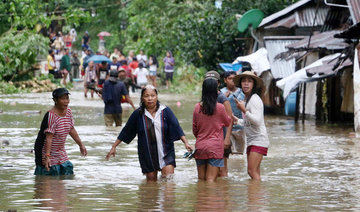
Footage showed vast tracts of land on the island submerged by brown water, often waist-deep, with streets turning into rivers.
Local police said 135 people were killed and 72 missing in the northern section of Mindanao, while 47 were dead and 72 missing in the impoverished Zamboanga peninsula on its western side.
Another 18 people perished in the province of Lanao del Sur in the center of the island.
One of the places hit hardest was the mountain village of Dalama, which was virtually wiped off the map as rampaging floodwaters carried away 103 houses.
Footage on ABS-CBN showed houses there destroyed or engulfed by floodwaters and rescuers retrieving the body of a girl buried in a landslide.
Police, soldiers and volunteers used shovels and their bare hands to dig through mud and debris in their search for survivors.
“The flood was already close and the people were not able to get out from their homes,” Armando Sangcopan, an elderly male survivor, told the station.
“We called for forced evacuation, preemptive evacuation in certain areas. We are saddened by the (large) numbers of casualties,” Romina Marasigan, spokeswoman for the National Disaster Risk Reduction and Management Council told reporters in Manila.
In the town of Kabasalan in Zamboanga, dozens of families huddled in the homes of neighbors on Christmas Eve, two days after floods carried off 40 houses, killing three people with one other missing, said local civil defense chief Junalyn Maravillo.
“This is a disaster. They don’t think about Christmas. All they think about is what they will eat for today,” she told AFP.
The storm swept into the South China Sea before dawn Sunday after hitting the western tourist island of Palawan overnight Saturday, the state weather service said.
“So far zero casualties, but we have accounts of some people missing,” Palawan civil defense chief Zaldy Ablana told DZMM radio on Sunday.
But in a Palawan fishing village, a 53-year-old man was killed by a crocodile while securing his boat in a river.
Tembin struck less than a week after Tropical Storm Kai-Tak left scores dead and more than 20 missing in the central Philippines, straining the disaster-prone nation’s already stretched resources.
The deadliest typhoon to hit the country is still Haiyan, which killed thousands and destroyed entire towns in heavily populated areas of the central Philippines in November 2013.


Philippines storm leaves 200 dead and tens of thousands displaced

Philippines storm leaves 200 dead and tens of thousands displaced



Iran war unsettles India’s packaged water makers as bottles, caps get pricey
- Higher polymer prices hurt bottled water industry
- Industry worth $5 billion has big multinational players like Pepsi, Coca-Cola
NEW DELHI: The Iran war is rattling India’s $5 billion packaged water market just ahead of the sweltering summer season.
One of the world’s fastest growing bottled water markets is seeing some manufacturers hike prices for distributors, as supply disruptions linked to the war fuel higher costs in everything from plastic bottles to caps, labels and cardboard boxes.
Though retail prices are yet to feel the heat and bigger companies are absorbing the pain, about 2,000 smaller bottled water makers have increased rates for their resellers by around 1 rupee per bottle, a 5 percent hike, which will rise by a further 10 percent in coming days, according to the Federation of All India Packaged Drinking Water Manufacturers’ Association.
Consumers usually pay less than 20 rupees, or around 20 US cents, for a one-liter bottle.
“There is chaos and within the next 4-5 days, this will start impacting customer prices,” said Apurva Doshi, the federation’s secretary general.
Rising oil prices have increased the cost of polymer, which is made from crude oil and is a key material for the industry’s plastic bottles. The cost of material used in making plastic bottles has risen by 50 percent to 170 rupees per kilogram, while the price of the caps has more than doubled to 0.45 rupees apiece. Even corrugated boxes, labels and adhesive tape are costing much more, industry letters showed.
Clean water is a privilege in the country of 1.4 billion people where researchers say 70 percent of the groundwater is contaminated, leaving people reliant on bottled water. Companies including Bisleri, Coca-Cola’s Kinley, Pepsi’s Aquafina, billionaire Mukesh Ambani’s Reliance and Tata all compete for a share of the $5 billion market. The companies did not respond to Reuters request for comment.
PREMIUM WATER FACES HEAT TOO
Within the broad bottled water market, natural mineral water is a $400 million business in India and a new, fast-growing wellness product for India’s wealthy.
The premium water segment accounted for 8 percent of the bottled water market last year in India, compared to just 1 percent in 2021, Euromonitor says.
Aava, which sells mineral water sourced from the foothills of the Aravalli mountains, has increased prices of its water bottles by 18 percent for resellers, Shiroy Mehta, CEO of the company, told Reuters.
“Most manufacturers are absorbing 40-50 percent of the cost to ensure that they don’t lose clients. It’s a poor situation for the beverage industry ahead of the summer season,” he said.
The mass market, however, is dominated by companies that produce “drinking water” to be sold in 1-liter bottles to customers. Clear Premium Water, a brand of India’s Energy Beverages, said in a notice to its distributors there had been an “unprecedented and continuous surge” in prices of key raw materials used in packaging and production.
“It is no longer possible for us to absorb the escalating costs while maintaining existing product prices,” the notice said.


