EasyJet says other airlines interested in feeder flights from Tegel

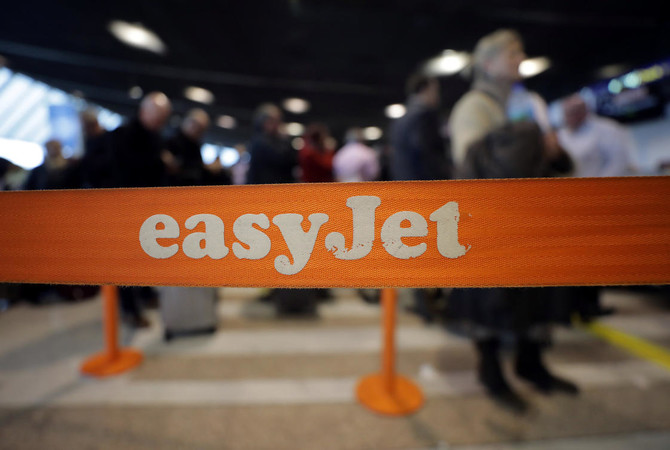
EasyJet passengers line up at Nice Cote d’Azur airport. The carrier has said it has received approaches from other airlines interested in feeder flights from Tegel. (Reuters)
Updated 23 December 2017
Follow

EasyJet says other airlines interested in feeder flights from Tegel

FRANKFURT: EasyJet has been approached to provide feeder flights from Berlin’s Tegel airport for other airlines’ long-haul routes, the British budget carrier’s Europe managing director told a German newspaper.
EasyJet is taking over some of failed German airline Air Berlin’s operations at Tegel, covering leases for up to 25 A320 aircraft. It already operates at Berlin’s other airport, Schoenefeld.
“We have already had very many enquiries from other airlines that want to use our flights as feeders,” daily Berliner Morgenpost quoted Thomas Haagensen as saying on Saturday.
He did not provide details.
Both easyJet and Ryanair have been looking at so-called feeder flights to attract more customers, and have often said traditional carriers should use low-cost rivals to bring passengers to their hubs.
EasyJet in September launched a new booking platform allowing customers to connect more easily onto long-haul flights by Norwegian Air Shuttle and WestJet at London Gatwick.
Haagensen said easyJet had so far brought on board around 100 of the 1,000 Air Berlin crew it plans to recruit.
Around 500 former Air Berlin staff are in the recruitment process and 300 of those are poised to sign contracts, he said.
EasyJet in November agreed a deal with German trade union Verdi over job terms for former pilots and cabin crew of Air Berlin.


US Treasury welcomes reactivation of Syria central bank account at New York Fed

Updated 5 sec ago
Follow

US Treasury welcomes reactivation of Syria central bank account at New York Fed

RIYADH: The US Treasury said it welcomed the reactivation of the Central Bank of Syria’s account at the Federal Reserve Bank of New York, marking the first time it has been operational since 2011.

The account had effectively been frozen after the outbreak of Syria’s civil war in 2011, when Washington imposed sweeping targeting the Syrian government, state institutions and individuals associated with the regime, designed to isolate Damascus financially and restrict its access to international banking channels.

It is the latest step in efforts to reintegrate Syria into the international financial system. The country has also begun reconnecting to the Society for Worldwide Interbank Financial Telecommunication network, a move that would end roughly 14 years of financial isolation and restore access to global banking channels.

In a statement posted on social media, the US Treasury Department said it was working with Syria’s new authorities to “responsibly reintegrate Syria into the global financial system,” adding that it welcomed the Syrian central bank’s announcement that its account at the New York Fed had been restored. 

The post also stated: “Sanctions relief was just the first step to realizing the President of the United States’ historic vision of greatness and prosperity in Syria.”

The release added: “We welcome the Syrian Central Bank’s momentous announcement that its account at the Federal Reserve Bank of New York was officially reactivated for the first time since 2011.”

Over the course of the more than 13-year conflict, sanctions expanded to include broader economic restrictions, including the Caesar Syria Civilian Protection Act enacted in 2019, which targeted foreign entities conducting business with the Syrian government. 

The measures contributed to Syria’s deep financial isolation and complicated humanitarian and reconstruction efforts.

Efforts to restore financial channels have been discussed intermittently as international actors assess pathways for humanitarian assistance and potential economic stabilization.

However, broader sanctions frameworks remain in place, and significant political and regulatory hurdles continue to shape Syria’s reintegration into the global financial system.

In recent years, regional institutions have gradually renewed engagement with Syria as part of broader efforts to stabilize the country and support economic recovery after more than a decade of conflict.

Syria was readmitted to the Arab League in 2023 after a 12-year suspension, reopening diplomatic channels with several Arab states.