Bethesda, US: Bookstores are a go-to for the procrastinating gift-getter, a one-stop shop that has a little something for everyone.
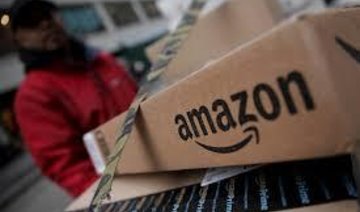
But there’s a new kid on the block this holiday season as online giant Amazon creeps into the physical realm, with 13 brick-and-mortar stores across the US and counting.
In the upscale Washington suburb of Bethesda, the sector’s transformation is playing out in full view: traditional bookstore Barnes & Noble is closing up shop and Amazon is coming to town — with a gleaming new store soon to open not two minutes’ walk away.
“I think the elephant in the room is Amazon,” said Donna Paz Kaufman, a Florida-based industry consultant. “Anybody in publishing is concerned about the tremendous market share that Amazon has garnered.”
Since it began soaring to e-commerce domination in 1995, Amazon has been a thorn in the side of independent bookstores and big-box chains alike, with Borders shuttered in 2011.
Barnes & Noble’s numbers, meanwhile, are dwindling.
The regal, three-level Barnes & Noble in Bethesda feels like more than just a store: coffee drinkers overlook passers-by, while children gather around a storytelling stage, decorated with woodland creatures.
But Barnes & Noble says it was unable to agree on a lease extension, and the shop will close in January after two decades.
Up in arms, over 5,600 people signed a petition urging the Federal Realty Investment Trust — the property owner — to “strike a fair leasing deal” and keep Barnes & Noble open.
Sarah Pekkanen, a local author whose first book signing was in the store, dubbed the closure “a loss.”
“I bring my kids there all the time, I know some of the people who work there,” she told AFP. “It’s always sad when a good bookstore closes.”
Though itself a big-box store that at its zenith menaced independent sellers, long-time customer Liz Cummings said Barnes & Noble “became a part of the community.”
But although she is dismayed by the loss, Cummings, who directs a local writing center, is welcoming Amazon’s neighborhood debut.
“There’s no concern as far as I can tell, because people want to be able to browse for books,” said Cummings. “We’ll take it.”
Amazon told AFP it will stock only bestselling or highly rated titles and feature local authors in the store, which it said is “all about discovery.”
For the industry, which includes an increasing number of independents according to the American Booksellers Association, welcoming Amazon is more of a challenge — but not something to pout over.
“Our culture is at risk if there isn’t diversity in the number of outlets selling books,” said analyst Kaufman.
She believes Amazon’s move into the brick-and-mortar market — with stores selling books and technology like the Kindle e-reader and Fire tablet — is about accessing a certain type of customer.
“We know that their interest in the bookstore world is really a portal,” she said. “You have upscale, educated, higher income customers who are early adopters in technology.”
“They started with books because they wanted the profile of those customers that would then buy a lot of other things.”
But independent bookstores are here to stay, she said, as they can dodge the key issue of scale, which crippled big chains.
Plus, “younger people want authenticity,” she said.
“They’re not necessarily big on big,” she explained — adding consumers are “looking for something beyond the click.”
Her assessment echoes an upcoming Harvard Business School study on the resurgence of independent bookstores, whose numbers — according to the study, citing the ABA — rose 35 percent between 2009 to 2015, having plummeted 43 percent between 1995 and 2000.
Study author Ryan Raffaeli said community engagement, thoughtful curation and “convening” — hosting events to attract like-minded customers — help independent shops survive and thrive.
Testament to these findings are ex-Washington Post journalist Bradley Graham and his wife Lissa Muscatine — former speech writer for Hillary Clinton — who took over iconic Washington bookstore Politics and Prose in 2011, and have enjoyed record sales ever since.
Their store is located almost equidistant from Bethesda and Washington’s posh Georgetown neighborhood — which also lost its Barnes & Noble in 2011, and is slated to get an Amazon Books on the very same block.
While Graham admits Amazon’s “convenience and cost” is hard to beat, he believes there is “room in the market for them as well as us.”
He likens local bookshops to community centers — and he’s not convinced the cyberspace behemoth can replicate that crucial human touch.
“We’re more really agents of culture than instruments of commerce,” he said.
Although independents have “weathered the storm,” Graham said, bookselling remains a game of narrow margins, with non-book offerings and behind-the-scenes technology crucial to boosting revenue and shaving administrative costs.
Still, he remains upbeat about bookstores’ prospects.
“The book, with some improvement, has existed for several centuries, so that’s reassuring,” he jokes, reflecting that the “faddishness that first greeted e-books” has somewhat worn off.
As for Amazon, his message clear: “Welcome to the neighborhood,” he said. “Bring it on.”


![]()

Book chains better watch out: Amazon is coming to town
Book chains better watch out: Amazon is coming to town
Latest updates


© 2026 SAUDI RESEARCH & PUBLISHING COMPANY, All Rights Reserved And subject to Terms of Use Agreement.