ANKARA: Russia, Turkey and Iran have agreed to hold Syria peace talks in Russia’s Black Sea resort of Sochi on Jan. 29-30.
Sochi will become another track of peace talks alongside the UN-sponsored Geneva process and the Astana process brokered by Russia, Turkey and Iran.
Previous attempts to gather the Congress for National Dialogue in Sochi were foiled by disagreements over the participant list, especially the involvement of the Syrian-Kurdish Democratic Union Party (PYD) and its military arm, the People’s Protection Units (YPG).
Ankara opposes their involvement, viewing them as an offshoot of the outlawed Kurdistan Workers’ Party (PKK).
The parties have yet to agree on the full list of participants. As a concession to Ankara, the PYD will reportedly not be invited, but other Kurdish representatives will be.
“We made an effort to have Kurds represented as much as possible, while on the other hand avoiding objections from Turkey,” said the Russian president’s special envoy for Syria, Alexander Lavrentyev.
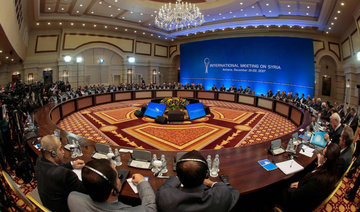
During talks in Astana on Thursday and Friday, Turkey, Russia and Iran agreed to establish a working group on prisoner exchanges.
Russian President Vladimir Putin and his Turkish counterpart Recep Tayyip Erdogan spoke by phone on Friday to discuss ongoing developments in Syria and the upcoming Sochi talks.
The Kremlin said the two leaders emphasized the importance of bilateral cooperation for “achieving a stable political settlement” in Syria. The next round of Astana talks is scheduled for the second half of February.
“The Astana process focused on the technical military details on the ground in Syria,” Oytun Orhan, a Syria expert at the Ankara-based think tank ORSAM, told Arab News.
“Now with the fight against Daesh almost over, Russia aims to translate this initiative into the political sphere.”
In this way, the political process will be transferred from the Western sphere of influence to a regional initiative in which Russia will take center stage, Orhan said.
“The Congress for National Dialogue in Sochi is the product of this understanding,” he added.
The talks will have to grapple with the issue of Turkish and US troops in Syria. Damascus has called for an immediate and unconditional withdrawal of foreign forces, and considers the presence of Turkish and US troops an aggression.
The main reason why Turkey has troops in Syria is to fight the YPG, said Orhan. “In the absence of the YPG, Turkey would prefer not to have its forces on the ground,” he added.
“So in the upcoming period, an agreement may emerge where Turkey will withdraw its forces from Syria on condition that YPG-controlled territories are transferred to Damascus.”
Ali Semin, a Middle East expert from the Istanbul-based think tank Bilgesam, told Arab News: “We should consider the reality on the ground. Sustainable initiatives are needed to find alternatives to the YPG as an influential Kurdish force.”
It is possible to exclude the YPG and PYD by bolstering influential Kurdish tribal leaders, he said.
“If a reasonable political regime is established in Damascus, and if Turkey’s threat perception regarding the Kurdish presence along its borders changes, Ankara may consider negotiating to withdraw its forces and transform the region into a military base,” he added.


![]()
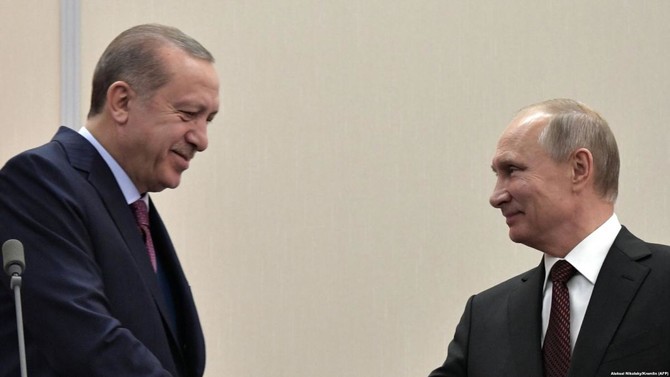
Date set for Sochi talks on Syria
Date set for Sochi talks on Syria

Latest updates


© 2026 SAUDI RESEARCH & PUBLISHING COMPANY, All Rights Reserved And subject to Terms of Use Agreement.