LONDON: British Prime Minister Theresa May on Friday told British forces in Cyprus that they should be “proud” of helping to crush Daesh in the Middle East – but at home the war on terror is far from over.
In London, Paris and Brussels, this year’s Christmas celebrations are tinged with public unease over the threat of more of the kind of attacks that have blighted European capitals throughout 2017.
Speaking at Britain’s RAF Akrotiri, May said the base was the “epicenter” of operations against Daesh.
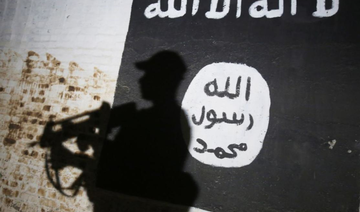
Akrotiri has been used as a staging post for attacks against Daesh, now largely defeated after attempting to set up a caliphate across swathes of Iraq and Syria.
But while the spread of Daesh may have been thwarted abroad, a spate of attacks across Europe during 2017, means the fight goes on.
In the UK, the threat of terrorism and the fear of terrorism itself, remain very real.
The British government’s threat level is currently set at “severe” after briefly reaching “critical” in May and September this year.
According to a statement from Britain’s MI5 security service: “The UK is a high-priority target for Islamic extremists and they pose a significant threat to our country and to our interests and citizens abroad.”
MI5 also states: “The majority of terrorist attack plots in this country have been planned by British residents. British nationals who have fought for extremist groups overseas continue to return to the UK, increasing the risk of terrorist attacks.
“Using skills acquired overseas, they may organize attacks under direction from outside the UK, or on their own initiative, or they might radicalize others to do so.
“While the majority of returners will not mount attacks in the UK, the large numbers involved mean it is likely that at least some of them will attempt to do so.”
Thousands of Daesh fighters have already returned to their home countries, a recent report by The Soufan Center (TSC) found.
At least 425 Daesh members have so far returned to the UK – the largest contingent in Europe.
Following five major terror attacks in in the UK in 2017, including the deaths of 22 people at pop concert in Manchester in May, the British public has been on high alert for terror incidents.
On Thursday in London, road closures were set up around Hyde Park Corner after an abandoned vehicle was spotted near the grounds of Buckingham Palace. Bomb squad personnel were seen inspecting a car near the tube station which turned out to be a false alarm.
London’s Oxford Street in November witnessed similar scenes of panic that saw residents fleeing a supposed terrorist attack. The incident was quickly resolved, yet the panic that erupted is a reminder of terrorism’s lasting psychological impact.
Britain’s Counter Terrorism Policing Unit (CTPU ) advises that “while still rare, terrorist attacks can happen at anytime and without warning.”
The anti-terrorism body’s official guidelines advise the general public to be vigilant and report any suspicious behavior to the police immediately.


![]()

May hails terror victory overseas amid festive season unease at home
May hails terror victory overseas amid festive season unease at home

Latest updates


© 2026 SAUDI RESEARCH & PUBLISHING COMPANY, All Rights Reserved And subject to Terms of Use Agreement.