NEW YORK: A secret agreement between Washington and Qatar to stop money flowing from the emirate to terrorist groups should be made public, US Secretary of State Rex Tillerson has been told.
Four US congressmen urged Tillerson to declassify the US-Qatar deal, which was brokered in July amid a diplomatic rift between Qatar and several of its neighbors.
In a letter published on Wednesday, the congressmen said that while parts of the deal may need to remain confidential, “public policy should be discussed and reviewed in public.”
“The American people have a right to know what steps Qatar’s government is taking to deter Islamist terrorism,” the congressmen said, and the deal probably included “steps Qatar must take to curb all support for terrorism, including Hamas.”
Tillerson agreed the deal in Doha on July 10 in an effort to defuse the crisis between Qatar and other Arab states — Saudi Arabia, the UAE, Bahrain and Egypt — which had boycotted Qatar over its support for extremism.
At the time, Tillerson said the deal would enable the US and Qatar to cooperate to track down sources of terrorist funding and share information about counter-terrorism activities, with milestones for measuring its success.
The contents of the agreement have never been disclosed despite mounting calls for transparency, resulting in the letter from congressmen Jim Banks, Robert Pittenger, Scott Perry and Ron DeSantis.
The State Department has said the agreement could not be published because it contained classified information about foreign governments and intelligence operations, including non-binding political commitments from Qatar.
However, the four congressmen said the agreement “does not appear to contain classified or sensitive information. The decision to classify the document while publicly praising Qatar’s progress toward upholding its contents makes it impossible for the public to judge Qatar’s compliance.”


![]()
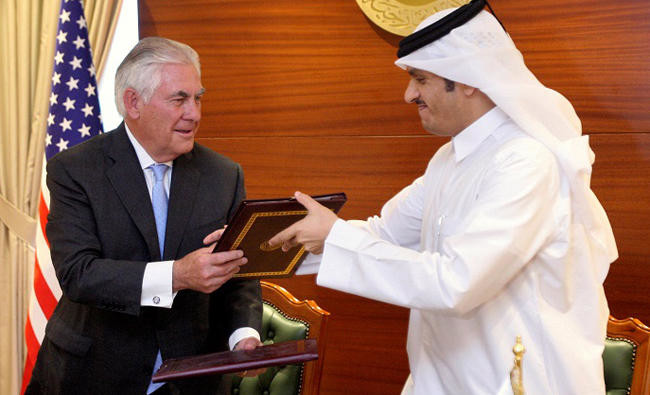
US urged to publish secret anti-terror deal with Qatar
US urged to publish secret anti-terror deal with Qatar
Latest updates


© 2026 SAUDI RESEARCH & PUBLISHING COMPANY, All Rights Reserved And subject to Terms of Use Agreement.