RIYADH: Saudi Arabia plans the highest level of government spending in its history next year when expenditure will hit more than SR1.1 trillion ($293 billion), according to Tuesday’s budget statement.
Crown Prince Mohammed bin Salman said that improving the standard of living for citizens is central to the efforts exerted by the Kingdom’s government to diversify the economy.
The expenditure will come from three main sources, with SR978 billion from the central budget, SR50 billion from funds such as the National Development Fund, along with capital and investment expenditure from the Public Investment Fund (PIF).
The crown prince pointed out that the budget includes provisions for more housing, with the economic reform under the Vision 2030 program having achieved tangible benefits, with 50 percent of this year’s budget funded by non-oil sources.
“These developments are tangible evidence of the progress made in this framework and also affirm the need to continue pursuing financial sustainability and economic diversification in order to reduce our dependence on one key source of income,” the crown prince said.
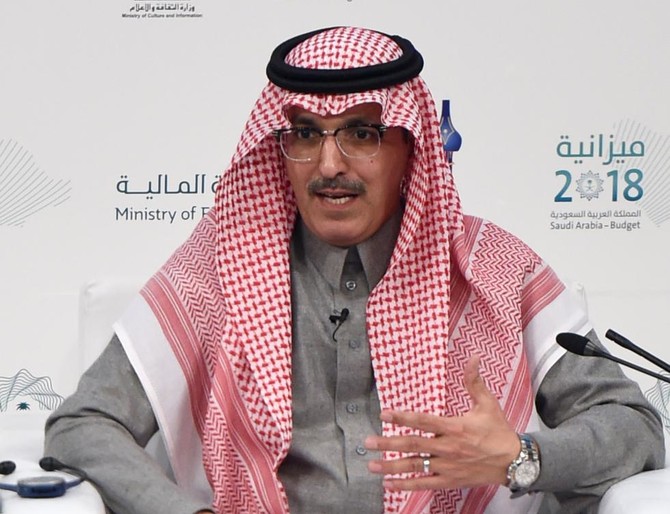
Speakers at a press conference about the budget held on Tuesday included Finance Minister Mohammed Al-Jadaan, Minister of Economy and Planning Mohammed Al-Tuwaijri, and SAMA Gov. Ahmed Al-Kholifey.
The speakers also stressed how Saudi citizens are at the heart of efforts to build a strong economy.
The finance minister said he expects the budget for the Citizens Account scheme — a plan to compensate the less well-off for the forecast higher cost of living — to be in the range of SR32 billion during 2018.
The minister said that “unprecedented growth” in non-oil revenues saw income from this sector hit SR256 billion this year.
The SAMA governor said that the Kingdom’s exchange-rate policy “will not change, and there is no intention” for it to do so.
Minister of Economy and Planning Mohammed Al-Tuwaijri said: “We expect to see an economic recovery in 2018 and overall improvement in the balance of payments.”


![]()
Saudi spending to top SR1 trillion in 2018
Saudi spending to top SR1 trillion in 2018

Latest updates


© 2026 SAUDI RESEARCH & PUBLISHING COMPANY, All Rights Reserved And subject to Terms of Use Agreement.