Multimillion-dollar Disney-Fox merger may create a new nerdy nirvana

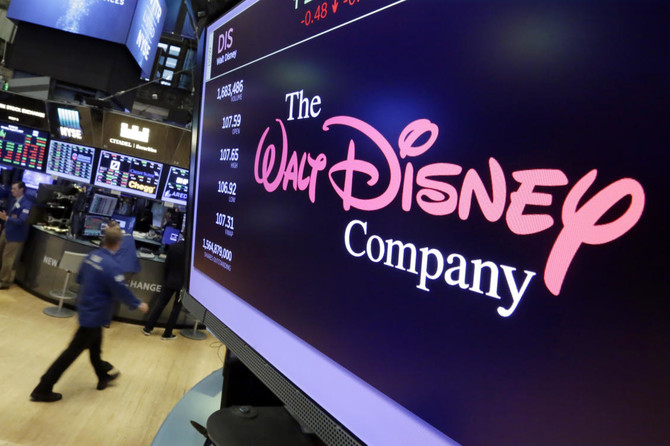
Walt Disney announced on Thursday that was buying most of movie goliath Fox for $52.4 billion in stock. The purchase includes Fox’s film and television studios, as well as its 39 percent stake in satellite broadcaster Sky. (AP)
Updated 16 December 2017
Follow

Multimillion-dollar Disney-Fox merger may create a new nerdy nirvana

MENLO PARK, California: The coming union of the Disney and Fox media empires is set to create a new nirvana for fanboys and -girls, one that reunites superheroes and sci-fi characters long separated by an energy barrier of corporate legalism.
Take, for instance, the fractured world of Marvel superheroes. For years, the X-Men (Wolverine, Storm, Professor X and the crew) and the Fantastic Four (Thing, Invisible Woman, et al) have battled bad dudes from the studios of 20th Century Fox. Meanwhile Iron Man, Black Widow and other Avengers vanquished villains in another corner of the galaxy run by Disney. Almost ne’er the twain did meet — though that could soon change.
In a related fashion, rights to the various “Star Wars” films have been scattered all over a galaxy far, far away; those will soon be unified under a powerful Galactic Emp– er, well, Magic Kingdom.
Disney’s announcement Thursday that it’s buying most of movie goliath Fox for $52.4 billion in stock brings these once disparate franchises together, possibly for as-yet unplanned intergalactic dust-ups. Add the “Avatar” franchise to the blockbuster mix, and the company that launched Mickey Mouse will be an unavoidable presence at the box office and online if the deal goes through.
The combined company will account for more than a third of theatrical revenues in the US and Canada, an $11 billion business last year, not to mention a huge chunk of the global theater-going pie, according to Daniel Ives, chief strategy officer at market research firm GBH Insights.
That would make the Disney juggernaut a more powerful theatrical force to be reckoned with than ever before. Online, Disney has announced plans to launch its own streaming service in 2019, after pulling titles like “Rogue One: A Star Wars Story” and Disney’s “Moana” from Netflix’s streaming platform to move onto its own. After Fox’s deal to send its movies to HBO ends reportedly in 2022, its films will also move to the Disney streaming platforms.
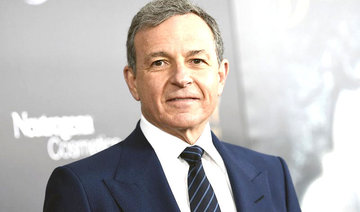
“Creating a direct-to-consumer relationship is vital to the future of our media businesses and it’s our highest priority,” Disney CEO Bob Iger told investors in a Thursday conference call detailing the Fox deal.
Those old enough to remember the blaring 20th Century Fox opening to the original “Star Wars” (Episode IV) may no longer have to search far, far, away to find the other titles. The original was made and distributed by Fox, but it was a quirk of the series.
Episodes V, VI, I, II, and III were owned by Lucasfilm (bought by Disney in 2012) and distributed by Fox. You can only stream those first six movies endlessly if you buy them and register them through the not-terribly-popular UltraViolet system backed by several studios. (You can also rent them digitally.) “The Force Awakens” — Episode VII — is available to streaming subscribers, though only if you have Starz.
The Force may finally put these titles in one place.
Buying Fox will also give Disney a majority stake in streaming platform Hulu. The addition of Fox’s regional sports TV networks and National Geographic video programming in the deal could let the new service bundle hugely popular movie and TV franchises, local sports broadcast rights, and distribution platforms into one live online video empire.
That would recreate online what the US Supreme Court broke apart in the 1940s. That’s when the court forced Hollywood studios to divest ownership of theater chains to keep content producers from controlling every step along the way to the consumer.
“This moves Disney from an afterthought in streaming to a legitimate contender,” Ives said.
At the same time, tech companies — particularly Netflix, Amazon, Facebook, Google, and Apple — are making big investments in video streaming. Hollywood-centered entertainment companies have struggled as people drop traditional TV packages, shifting the nexus of power in entertainment from the Hollywood Hills toward Silicon Valley and Seattle.
That marketplace dynamic could help pave the way for regulators to clear the deal, aimed to close within the next 12 to 18 months.
“These guys are up against Facebook and Google, not Warner Bros. and MGM,” said Mike Kelly, the former Weather Channel CEO who is now CEO of investment and advisory firm Kelly Newman Ventures. “If you look at it that way, I don’t think the government would have that big of an issue with it.”
Iger said he anticipates a “significant amount of regulatory scrutiny both in the United States and internationally” because of the deal’s size, but he said authorities should quickly approve it because it makes sense for consumers.
He said Disney’s current thinking is to split its streaming services into three different brands, such as a Disney-labeled family service that would fold in NatGeo, Marvel, Pixar and Lucasfilm; an ESPN-led sports service; and an adult-oriented service that would incorporate Hulu and some of Fox’s TV shows.
Disney also aims to expand the global audience of its cast of characters as it pulls in Fox’s London-based pay-TV broadcaster Sky, which has a pan-European audience, and Mumbai-based Star India.
But there’s one part of the comic book world that will escapes Disney’s sizable web: Spider-Man, whose rights Marvel partially farmed out to Sony.
Although Sony and Disney cut a deal to include Spidey in Avengers tales starting with “Captain America: Civil War” last year, Sony continues to develop its own alternate reality with movies like the animated “Spider-Man: Into the Spider-verse” as well as spin-offs “Venom” and “Silver & Black” starting in 2018.


A look back at how Arab News marked its 50th anniversary

Updated 31 December 2025
Follow

A look back at how Arab News marked its 50th anniversary

  • In a year crowded with news, the paper still managed to innovate and leverage AI to become available in 50 languages
  • Golden Jubilee Gala, held at the Diplomatic Quarter in Riyadh, now available to watch on YouTube

RIYADH: In 2025, the global news agenda was crowded with headlines concerning wars, elections and rapid technological change.

Inside the newsroom of Arab News, the year carried additional weight: Saudi Arabia’s first English-language daily marked its 50th anniversary.

And with an industry going through turmoil worldwide, the challenge inside the newsroom was how to turn a midlife crisis into a midlife opportunity. 

For the newspaper’s team members, the milestone was less about nostalgia than about ensuring the publication could thrive in a rapidly changing and evolving media landscape.

“We did not want just to celebrate our past,” said Faisal J. Abbas, editor-in-chief of Arab News. “But more importantly, we were constantly thinking of how we can keep Arab News relevant for the next five decades.”

Faisal J. Abbas, editor-in-chief of Arab News. (Supplied)

The solution, he added, came down to two words: “Artificial intelligence.”

For the Arab News newsroom, AI was not a replacement for journalism but as a tool to extend it.

“It was like having three eyes at once: one on the past, one on the present, and one on the future,” said Noor Nugali, the newspaper’s deputy editor-in-chief.

Noor Nugali, deputy editor-in-chief of Arab News. (Supplied)

One of the first initiatives was the 50th anniversary commemorative edition, designed as a compact historical record of the region told through Arab News’ own reporting.

“It was meant to be like a mini history book, telling the history of the region using Arab News’ archive with a story from each year,” said Siraj Wahab, acting executive editor of the newspaper.

The issue, he added, traced events ranging from the outbreak of the Lebanese civil war in 1975 to the swearing-in of Donald Trump, while also paying homage to former editors-in-chief who shaped the newspaper’s direction over five decades.

The anniversary edition, however, was only one part of a broader strategy to signal Arab News’ focus on the future.

To that end, the paper partnered with Google to launch the region’s first AI-produced podcast using NotebookLM, an experimental tool that synthesizes reporting and archival material into audio storytelling.

The project marked a regional first in newsroom-led AI audio production.

The podcast was unveiled during a special 50th anniversary ceremony in mid-November, held on the sidelines of the Arab Media Forum, hosted by the Dubai Future Foundation. The event in the UAE’s commercial hub drew regional media leaders and officials.

Remarks at the event highlighted the project as an example of innovation in legacy media, positioning Arab News as a case study in digital reinvention rather than preservation alone.

“This is a great initiative, and I’m happy that it came from Arab News as a leading media platform, and I hope to see more such initiatives in the Arab world especially,” said Mona Al-Marri, director-general of the Government of Dubai Media Office, on the sidelines of the event.

“AI is the future, and no one should deny this. It will take over so many sectors. We have to be ready for it and be part of it and be ahead of anyone else in this interesting field.”

Behind the scenes, another long-form project was taking shape: a documentary chronicling Arab News’ origins and its transformation into a global, digital-first newsroom.

“While all this was happening, we were also working in-house on a documentary telling the origin story of Arab News and how it transformed under the current editor into a more global, more digital operation,” said Nugali.

The result was “Rewriting Arab News,” a documentary examining the paper’s digital transformation and its navigation of Saudi Arabia’s reforms between 2016 and 2018. The film charted editorial shifts, newsroom restructuring and the challenges of reporting during a period of rapid national change.

The documentary was screened at the Frontline Club in London, the European Union Embassy, Westminster University, and the World Media Congress in Bahrain. It later became available on the streaming platform Shahid and onboard Saudi Arabian Airlines.

The grand slam of the anniversary year was the Golden Jubilee of Arab News gala, held in late September in Riyadh’s Diplomatic Quarter. (AN photo)

It was also nominated for an Association for International Broadcasting award.

In early July, a special screening of the documentary took place at the EU Embassy in Riyadh. During the event, EU Ambassador to Saudi Arabia Christophe Farnaud described the film as an “embodiment” of the “incredible changes” that the Kingdom is undergoing.

“I particularly appreciate … the historical dimension, when (Arab News) was created in 1975 — that was also a project corresponding to the new role of the Kingdom,” Farnaud said. “Now the Kingdom has entered a new phase, a spectacular phase of transformation.”

Part of the documentary is narrated by Prince Turki Al-Faisal, the former Saudi ambassador to the US, who in the film delves into the paper’s origins.

Prince Turki Al-Faisal, the former Saudi ambassador to the US. (AN photo)

The grand slam of the anniversary year was the Golden Jubilee of Arab News gala, held in late September in Riyadh’s Diplomatic Quarter.

Hosted by the Dean of Diplomatic Corps in Saudi Arabia and Ambassador of Djibouti to Riyadh Dya-Eddine Said Bamakhrama, the evening featured a keynote address by Prince Turki, who spoke about Arab News’ founding under his father, the late King Faisal, and its original mission to present the Kingdom to the English-speaking world.

The Dean of Diplomatic Corps in Saudi Arabia and Ambassador of Djibouti to Riyadh Dya-Eddine Said Bamakhrama (far left). (AN photo)

Arab News was established in Jeddah in 1975 by brothers Hisham and Mohammed Ali Hafiz under the slogan to give Arabs a voice in English while documenting the major transformations taking place across the Middle East.

The two founders were honored with a special trophy presented by Prince Turki, Assistant Media Minister Abdullah Maghlouth, Editor-in-Chief Abbas, and family member and renowned columnist Talat Hafiz on behalf of the founders. 

During the gala, Abbas announced Arab News’ most ambitious expansion yet: the launch of the publication in 50 languages, unveiled later at the World Media Congress in Madrid in cooperation with Camb.AI.

The grand slam of the anniversary year was the Golden Jubilee of Arab News gala, held in late September in Riyadh’s Diplomatic Quarter. (AN photo)

The Madrid launch in October underscored Arab News’ aim to reposition itself not simply as a regional paper, but as a global platform for Saudi and Middle Eastern perspectives.

The event was attended by Princess Haifa bint Abdulaziz Al-Mogrin, the Saudi ambassador to Spain; Arab and Spanish diplomats; and senior editors and executives.

As the anniversary year concluded, Arab News released the full video of the Golden Jubilee Gala to the public for the first time, making the event accessible beyond the room in which it was held.

For a newspaper founded in an era of typewriters and wire copy, the message of its 50th year was clear: longevity alone is not enough. Relevance, the newsroom concluded, now depends on how well journalism adapts without losing sight of its past.