MANILA: The Philippines has passed a tax reform bill at the heart of President Rodrigo Duterte’s economic agenda, officials said Thursday, raising levies on coal, cars, soft drinks and cosmetic surgeries to finance the country’s crumbling infrastructure.
Economists and environmentalists have praised the package, with the Philippines winning a credit rating upgrade this week from Fitch Ratings and green campaigners hailing the higher tax on coal.
Officials said the tax reforms, the most significant revenue-boosting measure introduced since Duterte took office last year, would finance increased spending on infrastructure to ease the cost of doing business.
“The tax reform (act) seeks to achieve a simpler, fairer, and more efficient tax system characterized by lower rates and a broader base, to encourage investment, job creation, and poverty reduction,” Finance Secretary Carlos Dominguez said in a statement.
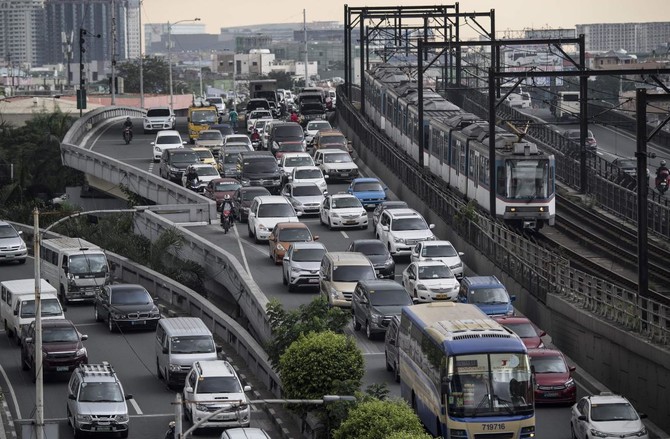
The government has warned that bad roads, crowded trains and poor Internet speed have hindered the country’s competitiveness and threaten to derail efforts to lift millions out of poverty.
The key provisions of the bill, which Duterte is expected to sign later this month, includes a rise in the excise tax on coal, the fuel that runs almost half the country’s power plants.
The coal tax will increase incrementally to ten-fold or 100 pesos (SR7.44) a ton by 2020 according to the version passed in Congress late Wednesday.
The act also significantly raised excise taxes on automobiles, petroleum products including diesel, gasoline and cooking gas, and jacked up mining levies.
The effort to raise revenues also led to a “sweetened beverage tax,” an excise tax on “cosmetic procedures, surgeries and body enhancements,” and the doubling of tax rates on dollar deposits, capital gains tax and stock transactions.
The affected sectors have warned of an inflation spike but Congress has described the legislation as pro-poor for lowering income tax rates and exempting some small businesses from paying a sales levy.
Duterte has vowed to launch a “golden age of infrastructure,” with spending of about $170 billion for roads, railways and airports during his six-year term.
International credit rating agency Fitch had earlier cited the impending passage of the tax reforms as one of the reasons behind its decision to upgrade the Philippines’ credit rating on Monday.
“We estimate the bill to be net revenue positive, reflecting an expansion of the VAT (value-added tax) base and higher taxes on petroleum products, automobiles and on sugar sweetened beverages, which would more than offset a lowering of personal income taxes,” Fitch said in a statement.
Congress this week also passed a 3.767-trillion-peso national budget for 2018, a 12.4-percent increase from last year.


![]()
Philippines passes major tax reform law
Philippines passes major tax reform law



Latest updates


© 2026 SAUDI RESEARCH & PUBLISHING COMPANY, All Rights Reserved And subject to Terms of Use Agreement.