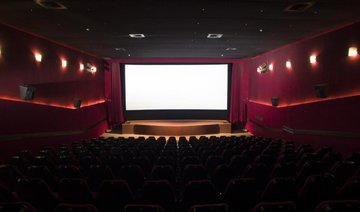
JEDDAH: In a historical decision to lift the ban on cinemas in the Kingdom announced on Monday, movie theaters will open for the first time in 35 years in March 2018, with 2,000 screens expected to be installed within 12 years.
The Saudi government anticipates that this decision will contribute to the diversification of the Saudi economy by creating more than 30,000 jobs.
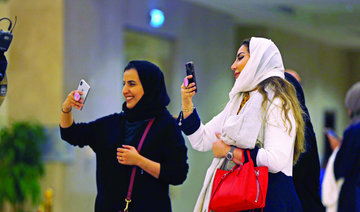
The announcement was welcomed with enthusiasm by the public, but what does the emerging Saudi Arabian art community think of this decision?
Arab News spoke to some of the Kingdom’s most prominent art personalities to determine their perspective.
Ahmed Mater, one of Saudi Arabia’s most influential contemporary artists today, expressed both delight and concern over this decision: “Saudi Arabia, and the wider Middle East region, is a story-telling culture. Oral histories form an underlying net within our society, they’re a big and important part of our intangible heritage. The fluidity of film suits this medium — the combination of the visual combined with the oral brings to light approaches, concepts, cultural references, and histories.
“There is already a number of Saudi filmmakers and directors such as Mahmoud Sabbagh, whose film “Barakah yoqabil Barakah” was made inside the Kingdom with an all Saudi cast, and is going on to be nominated for an Oscar for best foreign film. I hope that the decision to lift the ban creates an ecosystem of support for existing filmmakers and those to come. I also hope that it will create the opportunity for the new generation to identify with their own culture more closely, whether through engaging with Saudi-made films, or by exploring the visual culture at home. In an age where everyone has a video camera, it is really exciting to think about what lifting the ban on cinemas will do for young filmmakers from Saudi in the future. It will also be important for Saudi to create access through education to the movie industry, to ensure that a wide range of films, independent and mainstream — not just Hollywood blockbusters — are represented,” Mater concluded.
Saudi director Ali Alsumayin, conveyed a sense of responsibility as a filmmaker to provide the viewer with a worthwhile movie experience: “Just now we can talk about the movie industry in Saudi where the viewers can live the full experience of movies’ magic. When a person finds the time and the money to go and watch a movie in a cinema, the pressure on moviemakers is great to produce something worth the time and the money spent by the audiences.”
Contemporary artist and designer Ahmad Angawi shared his perspective: “This decision will positively influence our culture by creating dialogue,” but he remains wary of the selection process of movies and its effects on the viewers’ experience.