LONDON: Saudi Arabia and the UAE are working on the launch of a digital currency that could be used for transactions between the region’s banks by using blockchain, the technology that underpins bitcoin.
Citing UAE Central Bank Gov. Mubarak Al-Mansouri, Reuters reported on Wednesday that UAE and KSA banks would issue a digital currency that would be accepted in cross-border transactions between the two countries.
In a speech to a regional financial conference, Al-Mansouri explained that blockchain is a shared ledger of transactions, maintained by a network of computers on the Internet rather than by a central authority.
Although there is official skepticism around bitcoin, blockchain is viewed as a groundbreaking system with huge potential for saving time and costs for businesses and financial services.
Arab News recently reported that banks around the world were looking to create digital versions of their currencies. Unlike bitcoin, these digital currencies would be backed by the monetary authorities and could one day replace cash.
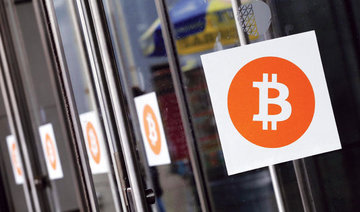
James Bernard, development director of the Dubai Multi Commodities Center (DMCC), told Arab News that a clear distinction should be made between blockchain, which offers huge potential, and cryptocurrencies that have faced hacking issues and massive swings in value. “Bitcoin is dependent on blockchain, but the blockchain technology is independent of bitcoin,” Bernard said.
The KSA and UAE central banks have in the past expressed skepticism about bitcoin, with the UAE Central Bank saying it did not recognize it as an official currency.
In July, the Saudi central bank warned against trading bitcoin because it was outside the bank’s regulatory reach.
On Wednesday, however, Al-Mansouri said the central banks wanted to understand blockchain technology better. He told reporters that the UAE-Saudi digital currency would be used among banks, not by individual consumers, and would make transactions more efficient.
“It is digitization of what we do already between central banks and banks,” he said.
At a panel discussion on banking and blockchain during November’s Global Financial Forum — hosted by the Dubai International Financial Center — speakers agreed that blockchain was in its early stages and had many years before going mainstream, but all agreed the potential was massive.
Leanne Kemp, CEO of Everledger, told the forum that banks could benefit from the immutable track-and-trace application of blockchain, which helps enhance trust and security.
Brian Behlendorf, executive director at Hyperledger, explained that there are two different types of blockchain: Permissioned and permission-less, with the latter used by bitcoin.
Behlendorf said he believed the potential benefits of the permissioned blockchain makes it attractive to financial institutions and other enterprises.
At the end of 2016, the Royal Mint of the UK announced plans to launch a digital gold product called Royal Mint Gold (RMG), a joint venture with US exchange, CME. A spokesman told Arab News earlier the system is now “up and running” and the Royal Mint is “in advanced discussions to sign up a number of corporate users.”
“By using distributed ledger technology, we can make it more cost-effective and provide increased transparency for traders and investors to trade, execute and settle gold,” said the Royal Mint.
A decade ago, the UAE and Saudi Arabia discussed the possibility of creating a single currency among members of the six-nation Gulf Cooperation Council but the UAE pulled out of the project in 2009.
However, diplomatic and economic ties between the UAE and Saudi Arabia have been strengthening this year, and last week the UAE said it planned to establish a bilateral committee with Saudi Arabia on economic, political and military issues.


![]()

Saudi Arabia, UAE poised to launch digital currency
Saudi Arabia, UAE poised to launch digital currency


Latest updates


© 2026 SAUDI RESEARCH & PUBLISHING COMPANY, All Rights Reserved And subject to Terms of Use Agreement.