Harry Potter in the sky? Bid to inspire young stargazers

1 / 6
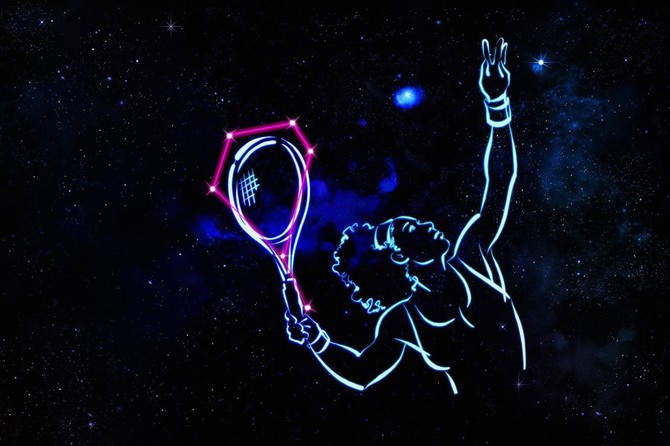
In a campaign to get more young people interested in the universe, The Big Bang Fair in partnership with astronomers at University of Birmingham created ‘Look Up To The Stars’: a new set of constellations representing icons from sport, entertainment, science and activism that children are inspired by today. (AFP/UNIVERSITY OF BIRMINGHAM/THE BIG BANG FAIR/HO)
2 / 6
In a campaign to get more young people interested in the universe, The Big Bang Fair in partnership with astronomers at University of Birmingham created ‘Look Up To The Stars’: a new set of constellations representing icons from sport, entertainment, science and activism that children are inspired by today. (AFP PHOTO/UNIVERSITY OF BIRMINGHAM/THE BIG BANG FAIR)
3 / 6
A new constellation to celebrate British astronaut Tim Peake. In a campaign to get more young people interested in the universe, The Big Bang Fair in partnership with astronomers at University of Birmingham created ‘Look Up To The Stars’: a new set of constellations representing icons from sport, entertainment, science and activism that children are inspired by today. (AFP PHOTO/UNIVERSITY OF BIRMINGHAM/THE BIG BANG FAIR)
4 / 6
A new constellation based on and created to celebrate JK Rowling's fictional boy wizard Harry Potter. In a campaign to get more young people interested in the universe, The Big Bang Fair in partnership with astronomers at University of Birmingham created ‘Look Up To The Stars’: a new set of constellations representing icons from sport, entertainment, science and activism that children are inspired by today.(AFP PHOTO/UNIVERSITY OF BIRMINGHAM/THE BIG BANG FAIR)
5 / 6
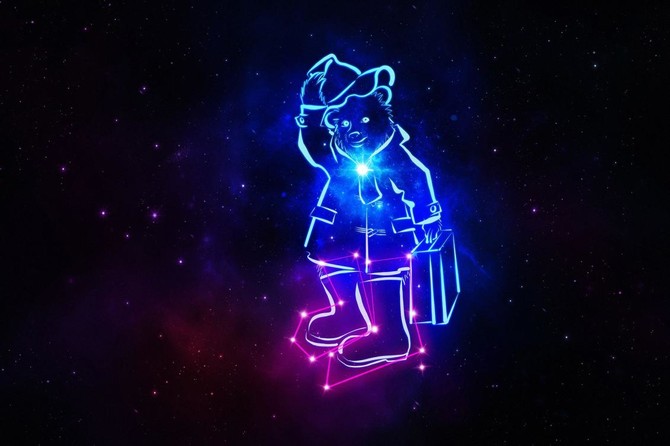
A new constellation based on and created to celebrate classic fictional character Paddington Bear. In a campaign to get more young people interested in the universe, The Big Bang Fair in partnership with astronomers at University of Birmingham created ‘Look Up To The Stars’: a new set of constellations representing icons from sport, entertainment, science and activism that children are inspired by today. (AFP PHOTO/UNIVERSITY OF BIRMINGHAM/THE BIG BANG FAIR)
6 / 6
A new constellation based on and created to celebrate Jamaican sprinter Usain Bolt. In a campaign to get more young people interested in the universe, The Big Bang Fair in partnership with astronomers at University of Birmingham created ‘Look Up To The Stars’: a new set of constellations representing icons from sport, entertainment, science and activism that children are inspired by today.(AFP PHOTO/UNIVERSITY OF BIRMINGHAM/THE BIG BANG FAIR/HO)
Updated 13 December 2017
Follow

Harry Potter in the sky? Bid to inspire young stargazers

LONDON: British astronomers have come up with a new set of constellations inspired by modern-day figures such as Harry Potter and Usain Bolt in an attempt to teach children about the layout of the universe.
The eight new constellations in the “Look Up to The Stars” project are the brainchild of The Big Bang Fair, a science education event for young people and astronomers at the University of Birmingham.
The proposals include Harry Potter’s glasses, a tennis racket for Serena Williams, a spaceship for astronaut Tim Peak, a blue whale for naturist David Attenborough and a book in honor of Nobel-winner Malala Yousafzai.
The eight constellations invented are a bid “to get more young people interested in the universe,” The Big Bang Fair said in a statement.
Existing constellations are based on the zodiac and figures from ancient Greek and Roman mythology which “aren’t necessarily proving successful in enticing children today to look up at the stars,” it said.
A survey quoted by The Big Bang Fair found 29 percent of seven to 19-year-olds admitted they would not be able to recognize a single classical constellation.
The survey also found 72 percent of children admitted they had never looked for a constellation at night.
“We really hope these new creations will help people of all ages develop their interest in space and astronomy,” Emma Willett, who led the University of Birmingham research team, said in the statement.


Apple to update EU browser options, make more apps deletable

Updated 22 August 2024
Follow

Apple to update EU browser options, make more apps deletable

  • iPhone maker came under pressure from regulators to make changes after the EU’s sweeping Digital Markets Act took effect on March 7
  • Apple users will be able to select a default browser directly from the choice screen after going through a mandatory list of options

STOCKHOLM: Apple will change how users choose browser options in the European Union, add a dedicated section for changing default apps, and make more apps deletable, the company said on Thursday.
The iPhone maker came under pressure from regulators to make changes after the EU’s sweeping Digital Markets Act took effect on March 7, forcing big tech companies to offer mobile users the ability to select from a list of available web browsers on a “choice screen.”
The new rules require mobile software makers to show the choice screen where users can select a browser, search engine and virtual assistant as they set up their phones, which earlier came with preferred options from Apple and Google.
In an update later this year, Apple users will be able to select a default browser directly from the choice screen after going through a mandatory list of options.
A randomly ordered list of 12 browsers per EU country will be shown to the user with short descriptions, and the chosen one will be automatically downloaded, Apple said. The choice screen will also be available on iPads through an update later this year.
Apple released a previous update in response to the new rules in March, but browser companies criticized the design of its choice screen, and the Commission opened an investigation on March 25 saying it suspected that the measures fell short of effective compliance.
The company said it has been in dialogue with the European Commission and believes the new changes will address regulators’ concerns.
It also plans to introduce a dedicated area for default apps where a user will be able to set defaults for messaging, phone calls, spam filters, password managers and keyboards.
Users will also be able to delete certain Apple-made apps such as App Store, Messages, Camera, Photos and Safari. Only Settings and Phone apps would not be deletable.