ATM cyber heists hit Pakistan banks

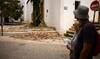
This photo shows that HBL ATM software license is not genuine. (AN photo)
Updated 11 December 2017
Follow

ATM cyber heists hit Pakistan banks

ISLAMABAD: An ATM scam affecting hundreds of debit card users in Pakistan has led to several arrests by the country’s Federal Investigation Agency (FIA), which apprehended another four suspects on Sunday.
FIA official Abdul Ghaffar Mirani told Arab News that investigators have unearthed a scam of about $105,000 and expected the number to rise after digital forensic experts searched confiscated equipment and cloned debit cards used by the scammers.
Mirani withheld the exact number of people arrested but said that mostly Chinese nationals had been taken into custody. “Our team is probing further as more complaints are pouring in and data is being compiled from other cities,” he said.
The cyber heist is being dealt with by the FIA’s National Response Center for Cyber Crime (NR3C), the country’s only technology-based crime division, which was set up 10 years ago and assists other law enforcement agencies in Pakistan.
On Friday, FIA Director Shakeel Durrani said at a press briefing that the investigation had revealed the involvement of Canadian, Nigerian and Italian hackers, as well as an Indian scammer identified as Sorev.
The information was divulged by Saqibullah, a Rawalpindi resident running a racketeering business, who as their front man sold stolen financial information to the hackers. He is also involved in identity theft, credit debit card cloning and extortion. His arrest has expanded into a FIA investigation searching for his collaborators.
Durrani said, “The prime suspect (Saqibullah) would take photos of ATM machines to match suitable skimming machines that were ordered from other countries.”
The cash withdrawals from the hacked accounts were in China, Canada, Italy, Nigeria, Indonesia, Malaysia, US, but were not limited to those countries, he said.
Revelations of the ATM-skimming scam were revealed last week by the country’s largest financial institution, Habib Bank Limited (HBL), which confirmed more than $105,000 had been stolen from 559 hacked HBL customers, mostly in the cities of Karachi and Lahore.
“We have more than 10 million customers, which means that the size of the amount missing is not very significant for the HBL, while the number of customers affected is also low, said HBL’s corporate and marketing executive Naveed Asghar, who was reported in a local English daily. “It is a fraud and we must check it and find the culprits ... it happens in all the countries that use ATMs,” he said.
Banks using outdated technology fitted with aging security protocols attracted a “organized foreign group” to hack the ATM booths, suggests the FIA, which is approaching the State Bank of Pakistan, the country’s banking regulator, to introduce biometric policy and enforce it across the banking spectrum.
An HBL official in Islamabad told Arab News: “The practice of skimming is not new,” but the bank’s new biometric security measures, currently being introduced in its ATMs, “will prevent and curb future hacks.” Though HBL seems to be the main target, Standard Chartered Bank, Faysal Bank Limited, Bank Al Habib Limited and other banks have also fallen victim to cybercrime, he said.
“Officially the bank hasn’t sent out warning notifications to customers of this continuing fraud but we are compensating the affected account holders. An internal memo has been circulated for each bank branch to check and monitor the ATMs,” the banking officer said.


In Bangladesh’s mangrove forest, villagers brave tigers to collect rare honey

Updated 58 min 55 sec ago
Follow

In Bangladesh’s mangrove forest, villagers brave tigers to collect rare honey

  • Honey is gathered from wild bee colonies deep in the Sundarbans
  • Producers made a debut at the biggest food fair in Jeddah this month

DHAKA: When the harvest begins, Mizanur Rahman gathers a few hundred men and sets out into the mangrove forest along the Bay of Bengal, where for months they climb trees to collect by hand a wild natural honey whose unique properties are only starting to attract global attention.

The honey is collected from wild bee colonies deep within the Sundarbans, the world’s largest mangrove reserve spanning parts of India and southwestern Bangladesh.

“Honey collection from this forest is mostly done in the Bangladesh part,” Rahman said. “All plants, trees, and the overall environment of this forest are natural. There is no human touch.”

Sundarban honey comes from an ecosystem where trees grow and bloom naturally, without the use of fertilizers or pesticides. Its collectors, known as mawalis, begin work in March for about three and a half months.

Rahman estimates there are about 4,000 mawalis in the local community. To enter the forest, they require special passes from the forest department.

“It’s a very risky job for the people who enter the forest,” he told Arab News. “It’s the only honey in the world where collectors risk their lives in the den of the mighty Bengal tiger to gather it. Sometimes, they also face the danger of poisonous snake bites.”

During the season, his team reaches up to 1,200 members who together manage to collect about 400 tons of honey.

“One hundred small boats start sailing together, each carrying eight to 10 people,” Rahman said. “Despite the dangers, it is a matter of pride to be part of these challenging tasks.”

Collected from a humid environment, Sundarban honey is thinner than other types. Its greenish-amber shade comes from the nectar of mangrove flowers, and the taste is less sweet than most commercial honeys, with a subtle citrus-like tanginess. The scent is mild.

Being raw and unprocessed, the honey retains more enzymes, antioxidants, and pollen.

“Some people can feel acidity similar to orange juice,” Rahman said. “It has a unique taste. If someone tastes this honey once, she or he will definitely love to taste it again and again.”

Well known locally in Bangladesh and parts of eastern India, where it has been harvested and consumed for generations, Sundarban honey is only starting to gain attention in organic and specialty food markets.

Earlier this month, it debuted at AgroFood Jeddah, Saudi Arabia’s leading international exhibition for the agriculture, food, and agritech industries.

The organic honey from the Sundarbans received an encouraging reception, according to Mohammed Saleh Uddin Bhuyan, chief category officer at Ghorer Bazar, one of the companies participating in the expo.

“We have been receiving good responses from the local buyers,” he said. “Saudi Arabia is a very promising market for us.”

Bangladeshi authorities recognize the honey’s export potential but also the fact that production still needs to be standardized to enter global markets.

Mahmudul Hasan, director of Bangladesh’s Export Promotion Bureau, told Arab News that there are plans to promote the organic practices behind the honey during future food fairs in the Gulf region.

“There is huge export potential for our mangrove honey in the Gulf countries, as Arab consumers are fond of honey. They just need to be assured of the quality in the production process,” he said.

“Our mangrove honey is undoubtedly an organic product. It has unique value, but the world is not very aware of it yet.”