LONDON: Campaigners for EU citizens living in Britain and Britons in the EU reacted skeptically on Friday to the proposed deal in the first phase of Brexit negotiations between Britain and the European Union.
The agreement declared both sides had reached a “common understanding” that all EU citizens will have the right to continue living and working where they reside when Britain withdraws from the bloc in 2019.
The deal, spelled out in a joint report published by the European Commission, protects the rights of those who are yet to be granted permanent residency in Britain so they can still acquire it after withdrawal.
It also includes future family reunification rights for relatives, including spouses, parents, grandparents, children and grandchildren, which had been a major sticking point in the negotiations.
On the contentious issue of legal jurisdiction, it said British courts would enforce the rights of EU citizens but judges could refer cases to the European Court of Justice for eight years from withdrawal.
British Prime Minister Theresa May hailed the agreement as allowing expatriate citizens caught on different sides of the Brexit divide when Britain leaves “to go on living their lives as before.”
But representatives for the estimated 4.6 million European and British citizens impacted said the proposals still left them in uncertainty — with British expatriates especially unhappy.
“As always, the devil is in the details and in the things that haven’t been said,” according to Maike Bohn, of The 3 Million, the largest grassroots organization of EU citizens living in Britain.
“It’s still not clear what the status is that the UK is giving us,” she said.
Advocates for Britons living in EU countries responded scathingly to the agreement.
“This deal is even worse than we expected,” said Jane Golding, chair of the British in Europe coalition.
“After 18 months of wrangling the UK and EU have sold 4.5 million people down the river in a grubby bargain that will have a severe impact on ordinary people’s ability to live their lives as we do now.”
She called the deal “a double disaster” for Britons living in Europe because it was unclear whether it guaranteed retaining automatic residency rights and free movement beyond an agreed transition period.
The draft agreement was published ahead of a European Council meeting at the end of next week when European leaders are expected to sign off on it formally.
About 3.7 million people living in the UK are citizens of another EU country, according to the latest figures from Britain’s Office of National Statistics covering the 12 months up to June 2017.
Some 900,000 Britons live in other member state countries, according to an estimate based on official data from 2010/2011.
Academics who have been tracking the negotiations had a mixed reaction to the proposals.
“On citizens’ rights she’s got a really good deal — far far better than I thought she’d get,” said Anand Menon, professor of European politics at King’s College London.
That view was echoed by colleague Jonathan Portes, professor of economics, who said it went “a considerable way toward resolving the uncertainty” hanging over those effected.
But Stijn Smismans, professor of law at Cardiff University, said progress had been modest, identifying three problematic areas.
These include ambiguity over the “settled status” EU residents will get in Britain, issues over the registration system they will use, and their long-term legal protections.
Smismans said British citizens in Europe were also “extremely unhappy” because their future freedom of movement remained unclear.
“That’s still not decided,” he added.


Expats react skeptically to Brexit deal
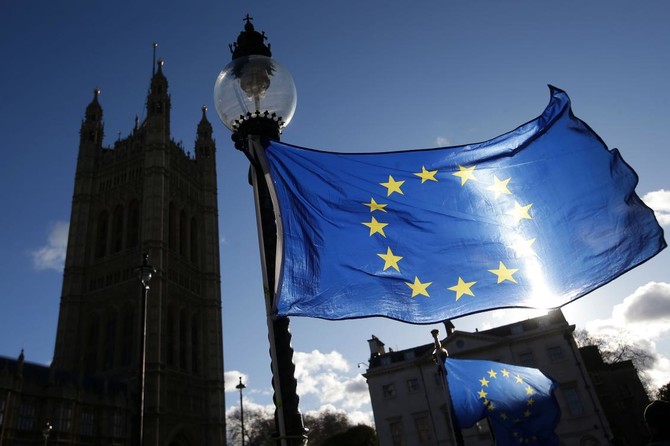
Expats react skeptically to Brexit deal

Acwa signs key terms to develop 5GW of renewable energy capacity in Turkiye
JEDDAH: Saudi utility giant Acwa has signed key investment agreements with Turkiye’s Ministry of Energy and Natural Resources to develop up to 5 gigawatts of renewable energy capacity, starting with 2GW of solar power across two plants in Sivas and Taseli.
Under the investment agreement, Acwa will develop, finance, and construct, as well as commission and operate both facilities, according to a press release.
The program builds on the company’s first investment in Turkiye, the 927-megawatt Kirikkale Independent Power Plant, valued at $930 million, which offsets approximately 1.8 million tonnes of carbon dioxide annually, the statement added.
A separate power purchase agreement has been concluded with Elektrik Uretim Anonim Sirketi for the sale of electricity generated by each facility.
Turkiye aims to boost solar and wind capacity to 120GW by 2035, supported by around $80 billion in investment, while recent projects have already helped prevent 12.5 million tonnes of CO2 emissions and reduced reliance on imported natural gas.
Turkiye’s energy sector has undergone a rapid transformation in recent years, with renewable power emerging as a central pillar of its strategy.
Raad Al-Saady, vice chairman and managing director of ACWA, said: “The signing of the IA (implementation agreement) and PPA key terms marks a pivotal moment in Acwa’s partnership with Turkiye, reflecting the country’s strong potential as a clean energy leader and manufacturing powerhouse.”
He added: “Building on our long-standing presence, including the 927MW Kirikkale Power Plant commissioned in 2017, this step elevates our partnership to a new level,” Al-Saady said.
In its statement, Acwa said the 5GW renewable energy program will deliver electricity at fixed prices, enhancing predictability for grid planning and supporting long-term industrial investment.
By replacing imported fossil fuels with domestically generated clean energy, the initiative is expected to reduce Turkiye’s exposure to global energy market volatility, strengthening energy security and lowering long-term power costs.
The company added that the economic impact will extend beyond the anticipated investment of up to $5 billion in foreign direct investment, with thousands of jobs expected during the construction phase and hundreds of high-skilled roles created during operations.
The energy firm concluded that its existing progress in Turkiye reflects a strong appreciation for Turkish engineering, construction, and manufacturing capacity, adding that localization has been a strategic priority, and it has already achieved 100 percent local employment at its developments in the country.


