MOSCOW: Russia’s Justice Ministry on Tuesday named nine US media outlets including Voice of America (VOA) as “foreign agents” after President Vladimir Putin signed a law allowing international media to be slapped with the controversial label.
The ministry said that US-funded VOA and Radio Free Europe/Radio Liberty (RFE/RL) and seven of their media affiliates had been recognized as “carrying out the functions of a foreign agent,” in a statement posted on its website.
Putin last month signed into law hastily issued legislation allowing the measure to target media.
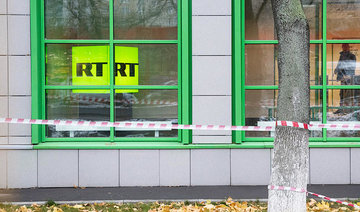
Russia said this was a retaliatory move after Kremlin-funded RT television registered as a “foreign agent” in the US under official pressure.
Rights groups fear the law could have a chilling effect on the ability of outlets to carry out independent reporting.
VOA and Radio Free Europe began broadcasting to the Soviet Union in the 1950s, playing a key role in providing its citizens with uncensored news.
Both broadcasters had already been formally warned by the Justice Ministry that they risked recognition as “foreign agents.”
The ministry has now formalized the move, naming them and their affiliates, including RFE’s news outlets dedicated to Crimea, which Russia annexed from Ukraine, and the Caucasus.
They also include a television channel run jointly by RFE and VOA called Current Time TV.
Speaking on Current Time TV in Russian, Radio Free Europe/Radio Liberty’s president Thomas Kent said that “as a result, the activities of our organization can face even greater restrictions.”
“So far we have no concrete information on these restrictions,” the head of the US Congress-funded corporation said.
He stressed: “We remain committed to continuing our work in journalism in the interests of providing precise and objective information to our Russian-language audience.”
The 2012 law previously applied only to non-governmental organizations that had international funding.
Those branded “foreign agents” have to present themselves as such on all paperwork and submit to intensive scrutiny of their staffing and financing.
Many NGOs have closed down as a result, saying the measure made it too difficult for them to operate.
The US State Department said last month that the new law “presents yet another threat to free media in Russia.”
It said it was “disingenuous” of Moscow to equate the move to RT’s listing as a foreign agent in the US since Washington’s measure “does not restrict an organization’s ability to operate.”
The head of the Russian upper house’s commission for the protection of state sovereignty, Andrei Klimov, said the measure would be strictly enforced but could be reversed.
“If (foreign media) try to get out of it, we will catch up with them anyway, we will force them to obey Russian law,” Klimov told Interfax news agency.
“If Washington comes to its senses and ceases pressure on Russian media, however, in that case we will also consider correcting our decisions.”
Russian MPs are set to vote Wednesday on whether to ban journalists from outlets labelled as “foreign agents” from entering the State Duma lower house of Parliament.


![]()
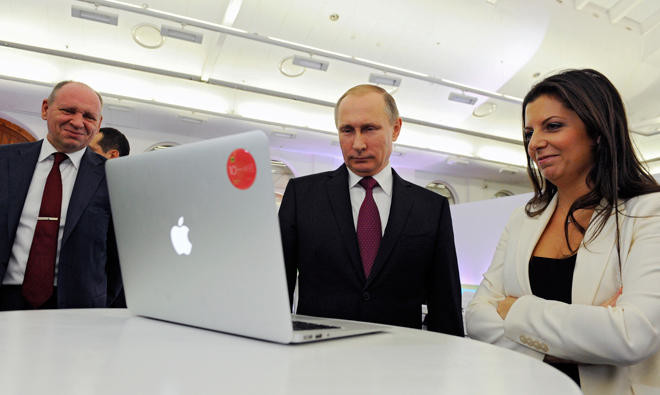
Russia declares 9 US media outlets ‘foreign agents’
Russia declares 9 US media outlets ‘foreign agents’

Latest updates






© 2026 SAUDI RESEARCH & PUBLISHING COMPANY, All Rights Reserved And subject to Terms of Use Agreement.