MOSUL: Soon after she turned 14, Ferah built her own world in her bedroom. A world of paper butterflies, of lights draped in strings from corner to corner, of inspirational messages taped on the wall above her bed.
It had to be special because the Iraqi teen intended to stay there to escape the horror outside in her home city of Mosul. Just a few months earlier, in the summer of 2014, it had been taken over by the Daesh group, the fanatics that everyone sneeringly referred to by their acronym in Arabic, Daesh.
Her room became her sanctuary for nearly three years, where she wrote a Facebook journal, expressing her fears and hopes.
“What is the problem?” she wrote in an imagined dialogue.
“The future is gone. It came crashing down.”
“How can I understand your feelings?“
“Be among Daesh. ... Try being a dreamer while sitting among Daesh.”
Ferah’s story and writings offer a glimpse of the day-to-day struggle to survive under Daesh. The group’s takeover of Mosul plunged her into isolation. Her friends fled the city, as did her two eldest sisters, who were married and had their own families. Ferah stopped going to school, afraid of the girls in her class who identified with Daesh.
Outside was dangerous. Daesh religious police hunted for the slightest sign of “sin.” Outside Ferah’s uncle’s house, they dragged away a girl when her robes swished open and they spotted something red underneath, a forbidden dash of color in the required all-black garb hiding her entire body and face.
In a nearby neighborhood, a young girl, around 12, went on her roof to catch a breeze in the summer heat. A boy next door was on his roof at the same time. They were seen. Suspicions were raised.
Daesh arrested and killed them both. The girl was stoned to death in front of her house, the punishment for adultery. Everyone in the neighborhood said when the girl’s body was taken away, the warm smell of musk lingered, one of the aromas of Paradise, proof she was innocent and God had taken her in.
Ferah, her parents and an older sister stayed inside as much as possible.

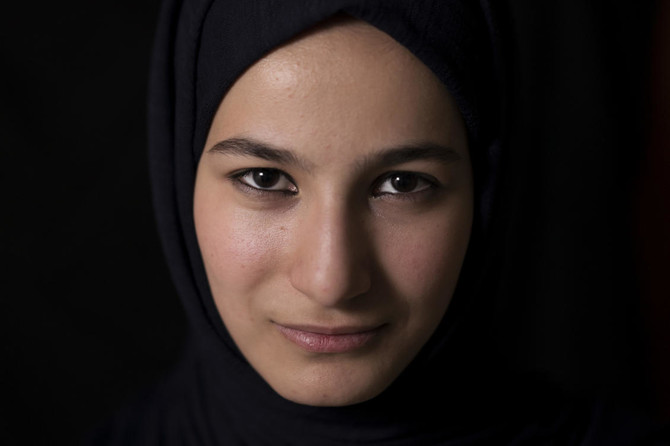
In this Nov. 11, 2017 photo, Iraqi teen Ferah, shown studying for an exam in Irbil, Iraq. (AP)
“Isn’t there a right to the freedom to dream, the freedom to have the best years of my life?” Ferah wrote. “I’d just like to know when I will really live.”
She escaped onto the Internet, staying online late into the night. Her Facebook postings garnered more than 6,000 followers, who encouraged her, gave her hope and became her friends.
Across Mosul, society rolled up behind closed doors, everyone living nocturnal, virtual lives.
With their kids stuck at home, some parents married them off just to give them something to do. It was ridiculous, Ferah scoffed — girls around her age marrying guys in their early 20s they barely knew. The girls were so excited, in makeup and elaborate dresses, as if it were a real marriage that would last, she thought.
She preferred her own world.
As months dragged on, she decorated her room with paper cutouts of butterflies and flowers. She hung strings of lights. From Instagram and Tumblr, she printed inspirational messages and taped them above her bed. One poster showed a girl wearing fairy wings. “What if I fall?” the picture asked — and then replied, “Oh, but my darling, what if you fly?“
Her “little works,” as she called them, gave her solace.
She improved her English watching YouTube videos. She downloaded Arabic translations of self-help books. Twice, she read “The 7 Habits of Highly Effective Teens.”
Habit #1: “Be proactive.” Tell yourself “I am the captain of my life. I can choose my attitude.”
She tried to do positive things. She learned to sew clothes and make gifts out of colored paper and gave them to friends. In times like this, simple things brought people joy. For a time, she and her sister went to a woman’s house for lessons in memorizing the Qur’an. But by the time Ferah learned a third of the holy book, Daesh decreed that only its clerics could teach the Qur’an, so the woman stopped the lessons, fearing reprisals.

In this Nov. 11, 2017 photo, Iraqi teen Ferah, shown studying for an exam in Irbil, Iraq. (AP)
On her 16th birthday, in July 2016, Daesh organized a bitter surprise: They shut down the Internet across Mosul.
Ferah was cut off. So she wrote for herself now — and defied her despair.
“No one can stop you when trust in what’s inside you, when survival is in your heart even as your body is drowning, when light is inside you even as darkness is around you,” she wrote. “Even when difficulties grow, I will not break. Go on, war, get worse.”
It did get worse, even as liberation came in January 2017.
As Iraqi forces battling into Mosul neared Ferah’s neighborhood, Daesh fighters seized her family’s home to use as a sniper’s post.
Ferah’s family took refuge with a neighbor. Huddling in a single room, they heard the battle outside, the rocket fire, the guns hammering. Then a giant blast shook them. The room went black.
The battle ended. The militants fled, and Iraqi troops took control of the district.
As they retreated, the Daesh fighters had set off explosives in Ferah’s home. She watched the flames consume her room. Her little works — the butterflies, the lights, the clothes — were all reduced to ash.
“I saw my dreams ... as they turned to nothing,” she wrote. “My trust in tomorrow slipped away ... My heart has burned up.”
But it was not the end.
Her family rebuilt their home. Ferah found the confidence to endure.
Now 17, back at school and able to dream of a future again, she looks back at one of her favorite texts. It’s a love song to herself, written amid her hopelessness to praise the good she had discovered.
“Good morning to everyone who feels the beauty within — no matter who it angers,” she reads. “Glory to the fading light of endings and the burst of new beginnings. Everything else won’t last long.”