GAZA CITY: Hamas and Fatah delegations traveled to Cairo on Friday to start a new round of talks aimed at implementing a reconciliation deal signed by the two Palestinian factions.
Fatah accuses Hamas of not allowing the Palestinian Authority (PA) to work freely in Gaza, and thus hindering moving to other issues such as reforming the Palestinian Liberation Organization (PLO) and setting a date for general elections.
Hamas says the PA is stalling in providing services to Gazans, and has called for the lifting of sanctions imposed on Gaza by the authority.
Fayez Abu Eita, deputy head of Fatah’s Revolutionary Council, told Arab News that the Cairo talks are an attempt to “save reconciliation and prevent it from failing.”
He said: “There are administrative and financial issues. The government (PA) can’t collect taxes in Gaza. Employees who worked in the government before the split (between Hamas and Fatah) aren’t allowed to return to their places of work. Some ministers can’t work in their ministries.”
Hamas on Saturday urged the PA “to carry out its duties and responsibilities in full, first and foremost to lift unjust sanctions on our people in Gaza, or resign and form a national government.”
In the past few days, there have been Egyptian-brokered marathon meetings in Gaza between Palestinian factions.
Issues of contention
“We hope Fatah will abide by what was agreed in the Cairo deal signed on Oct. 12, to shoulder the responsibilities of the government, pay the salaries of employees and lift sanctions,” Hamas spokesman Abdel Latif Al-Kanoa told Arab News.
“After more than 10 years, ongoing division has created great crises. We need more time and patience to solve issues of contention.”
The PA has called on its staff to return to work in ministries in Gaza, something Hamas has rejected.
The Gaza Personnel Union decided to prevent any PA employee from returning to work until a just solution is found for employees who were appointed by Hamas in Gaza after its takeover of the territory in 2007.
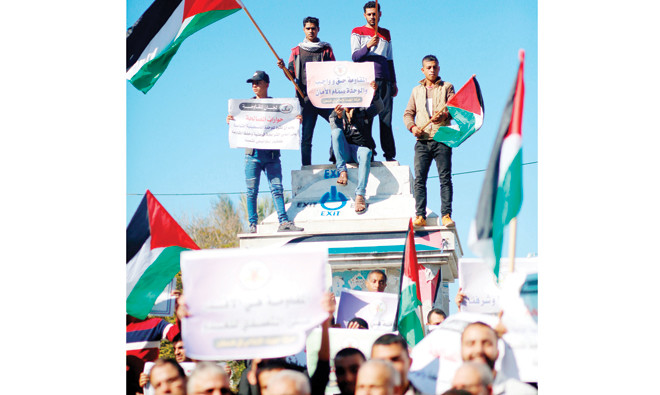
On Sunday, Palestinian factions in Gaza demanded the lifting of PA sanctions on the territory.
Meanwhile, Hamas has refused to comment on reports that there were negotiations in Egypt regarding prisoner exchanges with Israel.


![]()
Hamas, Fatah delegations in Cairo for talks
Hamas, Fatah delegations in Cairo for talks
Latest updates



© 2026 SAUDI RESEARCH & PUBLISHING COMPANY, All Rights Reserved And subject to Terms of Use Agreement.