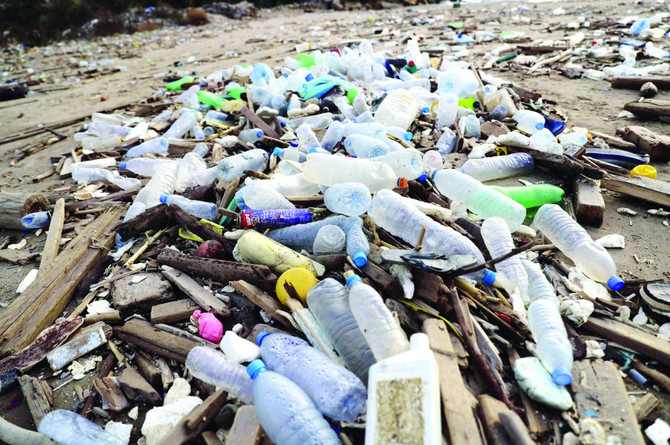
BEIRUT: People and municipalities have resorted to burning garbage in Lebanon as a result of government mismanagement, and it may badly damage the health of nearby residents, Human Rights Watch (HRW) said on Friday.
The open burning of waste in Lebanon poses serious health risks, HRW warned in a report released on Friday, blaming decades-old, across-the-board government failure.
The New York-based watchdog said the crisis escalated in 2015 when the Lebanese authorities closed the main landfill site near Beirut, having arranged no alternative.
It posed a particular threat for children and old people, and constituted a rights violation, the report said.
Large protests broke out soon afterward as huge mounds of rotting waste filled the streets and demonstrators chanted “You stink!” at the government.
“Open burning of waste is harming nearby residents’ health one garbage bag at a time, but authorities are doing virtually nothing to bring this crisis under control,” said Nadim Houry, HRW’s interim Beirut director.
Rivers of rubbish flooding populated areas across the country, including in central Beirut, put the spotlight on Lebanon’s waste problem but the rights group said a silent crisis had been unfolding elsewhere for years.
“In the 1990s, the central government arranged for waste collection and disposal in Beirut and Mount Lebanon but left other municipalities to fend for themselves without adequate oversight, financial support, or technical expertise,” HRW said.
The report, entitled “As If You’re Inhaling Your Death,” said that led to a massive increase in open burning of waste across the country.
It quoted research by the American University of Beirut that found 77 percent of Lebanon’s waste is improperly dumped or landfilled when only 10 to 12 percent is considered impossible to compost or recycle.
HRW said the “vast majority” of the more than 100 residents living near open dumps whom its researchers interviewed suffered from respiratory problems.
The report said that besides its failure to set up a nationwide waste management program, the government was doing nothing to prevent open burning, to monitor its impact and inform the population of the risks.
The watchdog said those combined failures “violate Lebanon’s obligations under international law, including the government’s duties to respect and protect the right to health.”
The report underlined how Lebanon has failed to find real solutions to the issue since then.
It said people living near places where rubbish was burned reported chronic obstructive pulmonary disease, coughing, throat irritation, skin conditions and asthma — all consistent with frequently breathing smoke from burning waste.
It called on the Parliament to pass a law that the Cabinet approved in 2012 to create a single body to make uniform national decisions about waste management.
Government ministers have repeatedly said it is illegal to burn rubbish in Lebanon.
The garbage crisis came to symbolize Lebanon’s wider political malaise as a bitterly divided Parliament was unable to choose a new president or prime minister, leaving in place a caretaker government unable to take even basic decisions.
That phase of political crisis ended last year when a deal between the rival sides led to the appointment of Michel Aoun as president and Saad Hariri as prime minister. But they have not found a long-term solution to the waste crisis.
In 2016, the government established two temporary landfill sites near Beirut, but HRW says they are mired in lawsuits and will be full by next year — two years sooner than the government had estimated.
During the seven months before they were opened, garbage was often burned in Beirut and the nearby region of Mount Lebanon.


![]()
Serious health risks from Lebanon waste burning
Serious health risks from Lebanon waste burning
Latest updates




© 2026 SAUDI RESEARCH & PUBLISHING COMPANY, All Rights Reserved And subject to Terms of Use Agreement.