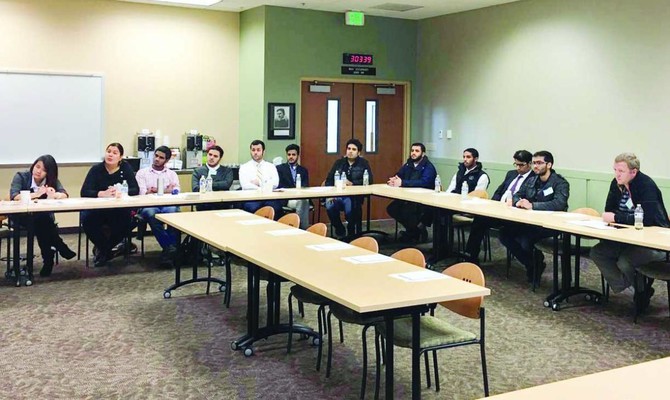
The National Grid SA, a subsidiary of the Saudi Electricity Company (SEC), has signed a memorandum of understanding (MoU) on the Strategic Partnerships Project with Schweitzer Engineering Laboratories (SEL), an American corporation. Under the agreement, SEL will provide training programs and courses to Saudi scholarship grantees in Washington, especially those specialized in engineering, energy, IT and electricity. The move is part of the company’s social responsibility program to serve Saudi society and citizens inside the country and abroad.
Laith Al-Bassam, CEO of National Grid SA, said a large number of Saudi scholarship grantees in Washington University have benefited from such advanced courses and programs in the past 18 months. He said the training courses are conducted at centers and headquarters of SEL that are equipped with the latest technologies according to each field. Experiential training is conducted at the labs of the company and attended by students and researchers from different nationalities to exchange experience.
“Through the Strategic Partnerships Project, these programs are developed to provide more specialized technical and technological training to Saudi scholarship grantees with the aim to transfer modern technologies and sciences in various fields to Saudi Arabia through its citizens as part of the Vision 2030 of the Kingdom. They seek to take advantage of the presence of the scholarship grantees in these countries and in close proximity to such international corporations to apply academic sciences and conduct hands-on training at specialized centers and sites,” he added.
Al-Bassam said the training programs include general courses in the field of electricity and engineering, as well as specialized courses such as the 35-hour course in power-system protection. An intensive course will be launched for scholarship grantees at the beginning of next January, which will last for 15 weeks.
Al-Bassam said that the agreement concluded with the American company is among a number of strategic partnership agreements signed with global corporations and institutions in numerous countries in the electricity sector. He said the project will expand soon to include other states in the US and European countries such as Germany and France, in addition to Asian countries such as China, South Korea and Japan.


National Grid SA inks deal with US company to train Saudi students
National Grid SA inks deal with US company to train Saudi students

Automotive Distribution and Marketing Company launches Haval V7 in Jeddah
Automotive Distribution and Marketing Company, the official distributor of Great Wall Motor in Saudi Arabia, officially launched the Haval V7 during an event held at The Ritz-Carlton Jeddah. The ceremony was attended by representatives from both companies, in addition to a select group of media professionals, journalists, influencers, and partners from the authorized dealer network.
The Haval V7 marks a distinctive addition to the SUV segment, combining a bold, contemporary design with advanced smart technologies. The model has been designed to meet a variety of usage needs, whether for daily urban commuting or long-distance travel and weekend adventures. This balanced blend of performance and technology reflects the brand’s vision of delivering vehicles that unite reliability and innovation, with comfort and a confident driving experience.
The launch event featured a dedicated reveal of the Haval V7, during which its specifications and key features were presented. Guests were also given the opportunity to experience the vehicle firsthand through a test drive experience, allowing media representatives and partners to closely evaluate its performance and practical capabilities.
This launch comes as part of ADMC’s and Great Wall Motors’ ongoing commitment to introducing the latest automotive innovations and strengthening the brand’s presence in the Saudi market. It reflects the company’s focus on enhancing the customer experience and offering vehicles that align with the evolving expectations and needs of local customers.


