HONG KONG: Asia’s major manufacturing economies saw their fastest expansion in factory activity in years last month, driven by robust demand for electronics and firming the case for central banks in the region to shift to tighter monetary policy next year.
A raft of mostly strong factory activity surveys released on Friday comes a day after the Bank of Korea became the first major central bank in Asia in three years to raise interest rates.
The tightening marks a potential turning point for the region with Malaysia and the Philippines among central banks that could lift rates next year.
The firm expansion in factory activity, seen in South Korea, Japan and Taiwan, has not been uniform, however, with Beijing’s war on pollution tempering growth in Chinese manufacturing in October.
Analysts expect any tightening by Asian central banks to be gradual and follow the lead in the US, which is expected to hike again in December and three more times in 2018. US and eurozone manufacturing surveys later on Friday are expected to show even higher growth rates than in Asia.
“We’re seeing the strong momentum in the third quarter carrying over in the fourth,” said Khoon Goh, head of Asia research at ANZ.
“The improving global backdrop ... suggests that central banks in this region will start policy normalization. It’s important to note this is not the start of an outright tightening cycle, this is the removal of very accommodative policies.”
Elsewhere in Asia, India saw gross domestic product growth rebound in the three months to September, in a sign businesses are recovering from disruptions caused by the launch of a national sales tax and a shock ban on high-value banknotes.
China, however, remains one of the biggest risks to global growth, analysts say.
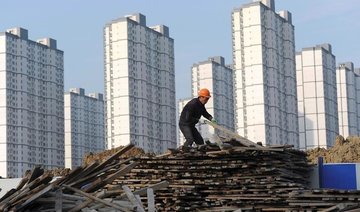
The world’s second-biggest economy has defied market expectations with economic growth of 6.9 percent in the first nine months of the year, supported by a construction boom and robust exports.
But Beijing’s efforts to reduce air pollution have led to a cooling in factory activity in recent months.
The Caixin/Markit Manufacturing Purchasing Manager’s Index (PMI) dipped to 50.8, compared with 51.0 in October and a 50.9 forecast. While staying above the 50-point mark that divides growth from contraction on a monthly basis, the index edged down to its lowest level in five months.
An official manufacturing survey on Thursday showed activity unexpectedly picking up, however, the Caixin/Markit print tends to focus more on small and mid-sized companies and is seen as a better gauge of private sector activity.
Moves to reduce corporate and financial risks in China have also hit sentiment. Sweeping new rules for the asset management industry, a crackdown on micro loans and losses imposed on the creditors of the state-owned Chongqing Iron & Steel have jolted markets, pushing government bond yields to three year highs and causing a sharp drop in stock prices.
China’s ability to implement these reforms without causing too much damage to growth, which the government is expected to target around 6.5 percent next year, is key for Asia’s economic outlook.
“We expect growth momentum to weaken further in the coming months as the drags from slower credit growth, reduced fiscal support and the environmental crackdown all intensify,” said Julian Evans-Pritchard, China economist at Capital Economics.
A global sell-off in tech stocks this week has raised questions about whether the current surge in demand for electronics products and components has peaked or whether investors are simply rotating to other sectors, such as banking.
For now, the economic data suggests Asia’s electronics producers remain in good shape.
South Korea’s factory activity expanded at the strongest pace in 55 months in November, with the Nikkei/Markit PMI rising to 51.2 from 50.2 in October. Japanese manufacturing grew at the fastest pace in more than 3-1/2 years. Taiwan’s PMI came at 56.3 in November, its best reading in 6-1/2 years.
“Even as the smartphone-related boost starts to fade, the outlook for 2018 remains bright amidst the global recovery,” HSBC Greater China economist Julia Wang said.
Japanese companies raised spending on factories and equipment in July-September by 4.2 percent from the same period last year, suggesting its September quarter GDP growth figures could be revised higher. Japan’s jobless rate held steady at 2.8 percent in October and the availability of jobs reached the highest in almost 44 years, although inflationary pressures in the world’s third largest economy remain stubbornly weak.
Likewise, in South Korea, export growth slowed but still recorded 13 straight months of expansion in November, while inflation eased to the slowest in 11 months, reinforcing views that the new monetary tightening cycle will be gradual.


![]()

Asian manufacturing expands further, but China remains a risk
Asian manufacturing expands further, but China remains a risk

Latest updates




© 2026 SAUDI RESEARCH & PUBLISHING COMPANY, All Rights Reserved And subject to Terms of Use Agreement.