LONDON: British Prime Minister Theresa May is en route to Saudi Arabia, a UK government spokesperson told Arab News, and is set for talks with the Kingdom’s Crown Prince Mohammed bin Salman later today.
Trade ties and the humanitarian situation in Yemen are expected to figure in talks between May and the crown prince.
May, on a three-day visit to the Middle East, met with her Iraqi counterpart Haider Al-Abadi in Baghdad on Wednesday, after a brief visit to Jordan.
The trip is part of the UK’s efforts to strengthen trading links with partners in the Middle East ahead of Brexit.
A spokesperson for the prime minister said: “This visit demonstrates that, as the UK leaves the EU, we are determined to forge a bold, confident future for ourselves in the world. We must look at the challenges that we and future generations will face and build stronger partnerships with countries that will be vital to our security.”
The UK Department for International Trade this week launched dedicated trading teams to target key geographical areas, including the Middle East.
“Given the UK’s existing trading relationships in the Gulf, it’s a logical place to start, particularly Saudi Arabia,” said Crispin Hawes, regional managing director at Teneo Intelligence.
“There are considerable controversies around the amount of trade that is in weapons and weapons systems, so it’s not without its potential political pitfalls but if you’re looking for an opportunity for a post-Brexit Britain, one of those opportunities has to be in the central (Middle East).”
A defence deal is the most likely priority, said Jason Tuvey, Middle East economist at Capital Economics, with the UK “probably looking to secure a free trade agreement in its dealings with the GCC in particular.”
This is May’s second visit in just over six months to Jordan and Saudi Arabia, both of which have defence contracts with British firms. May's visit is expected to include her asking Crown Prince Mohammed bin Salman to allow "full" humanitarian aid and commercial shipments through Yemen's port of Hodeidah, which is held by the Shiite militias being targeted in the Saudi-led war.
“We are very concerned about the humanitarian situation in the Yemen,” May said. “We are very clear that we want to see full humanitarian and commercial access to the port of Hodeidah, and obviously that’s an issue I’ll be raising when I’m in Saudi Arabia.”
The partial reopening of ports in Yemen, which were closed after Houthi militias fired a missile towards Riyadh on Nov. 6, has restored some access for humanitarian aid to Yemen. During a meeting in London on Tuesday with Saudi Foreign Minister Adel Al-Jubeir, UK Foreign Secretary Boris Johnson said: “I welcome the steps taken toward reopening the ports of Hodeidah and Salif and the resumption of UN flights to Sanaa airport.”
A statement released after the meeting, which was also attended by ministers from the UAE and Oman, as well as Thomas Shannon, the US undersecretary of state for foreign affairs, Alistair Burt, the UK minister of state for the Middle East, and UN Special Envoy Ismail Ould Cheikh Ahmed, expressed “full support for Saudi Arabia and its legitimate security concerns.”
Saudi Arabia is the UK’s largest trading partner in the region. “Saudi Arabia is an important trading partner and given the declared goals of the crown prince in terms of the Saudi economy, I imagine the trip will contain a lot of name-checking of his various plans for the development of a more diversified economy and the opportunities that could conceivably bring to British companies, particularly in the high-tech and services sector,” said Hawes.
May has expressed support for the crown prince’s ambitious social and economic reform program, which is being rolled out under the banner of the Vision 2030. “We’ve already seen some changes taking place in Saudi Arabia,” said May, citing the recent decision to lift the ban on women driving in the Kingdom.
The crown prince “is somebody who has a very clear vision of 2030 for Saudi Arabia,” May said. “It’s important we work with him on delivering that vision. It’s important for Saudi Arabia and the region.”
On Thursday, May will return to Amman for talks with Jordan’s King Abdullah II and Prime Minister Hani Al-Mulki to discuss the UK’s support for the Jordanian economy. A British government spokesperson said: “Jordan’s continued security, stability and economic sustainability are central to a peaceful future in the Middle East and are clearly in our mutual national interests.”
During a visit to the region earlier this year, May announced that military trainers would be sent to Jordan to help the country improve its capability to carry out airstrikes against Daesh. May will also meet members of the Arab Women’s Enterprise Fund in Jordan this week to discuss the potential impact of UK support on job creation in the region.


![]()
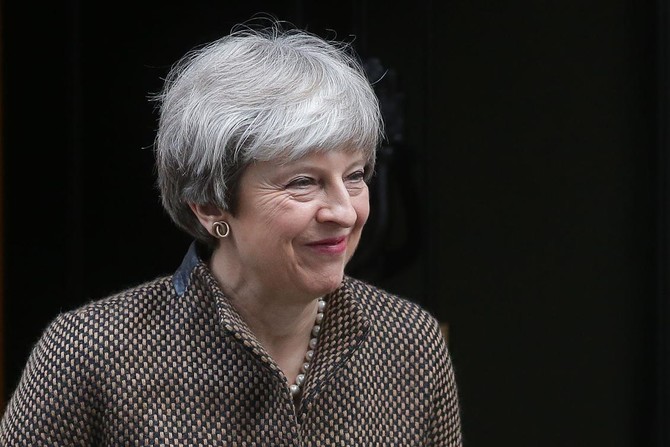
Britain’s May traveling to Saudi Arabia, to meet with crown prince
Britain’s May traveling to Saudi Arabia, to meet with crown prince

Latest updates


© 2026 SAUDI RESEARCH & PUBLISHING COMPANY, All Rights Reserved And subject to Terms of Use Agreement.