Vienna: All OPEC states are supporting a full-year extension when they meet on Nov. 30, yet Russia is still not giving any confirmation on the duration of the extension, sources told Arab News.
Saudi Arabia and Russia are leading the global efforts to extend the current agreement to curtail production of 24 countries by 1.8 million barrels a day (bpd) to rebalance the oil market and to bring global inventories back to their five-year average. The agreement, which will expire in March, has helped in raising oil prices in the past few days to levels not seen since 2015.
“All members of OPEC want to extend the deal until the end of 2018 and many non-OPEC members such as Oman and Bahrain want that too, but we are still waiting to hear from Russian officials as they are giving mixed signals,” a source familiar with the talks told the Arab News.
Oil markets will rebalance some time in the third quarter of 2018, according to OPEC’s own estimates, a source told Arab News. The calculations were confirmed by OPEC’s Economic Commission Board (ECB), raising the possibilities for extending production cuts well into next year.
The conclusion from OPEC’s national representatives attending the ECB meeting and the group’s secretariat is enough to convince OPEC but it might not be enough to convince the Russians.
“Russians are complaining about high oil prices and they don’t want to see prices shooting up above $60,” one of the sources said. “They see the market rebalancing a few months earlier than OPEC’s forecast, so they are happy with a shorter period of extension.”
The head of Russia’s top oil producer Rosneft, Igor Sechin, a close ally of President Vladimir Putin and a critic of the deal with OPEC, has said the recent price rally lends too much support to the rival US shale industry, which does not participate in cuts.
OPEC’s leader Saudi Arabia has signaled that it wanted oil to trade at about $60 per barrel as the Kingdom is preparing to list its national oil champion Aramco and is still fighting a large fiscal deficit.
Russia also needs high oil prices before the presidential election in March 2018. But officials in Moscow have also expressed worries about an overly strong rouble, which would undermine the competitiveness of its economy.
OPEC’s members, however, are looking for full-year commitment as it is the only way to ensure markets that 2018 will be a stable year. OPEC offered Russians an option to adjust supply next year based on any new development and that will be included in the new terms of the deal, a source said.
The countries have no option but to agree to a full-year extension when they meet as any other option will result in a fall in oil prices, one of the sources said.


OPEC mulls over full-year extension with no clear answer from Russia
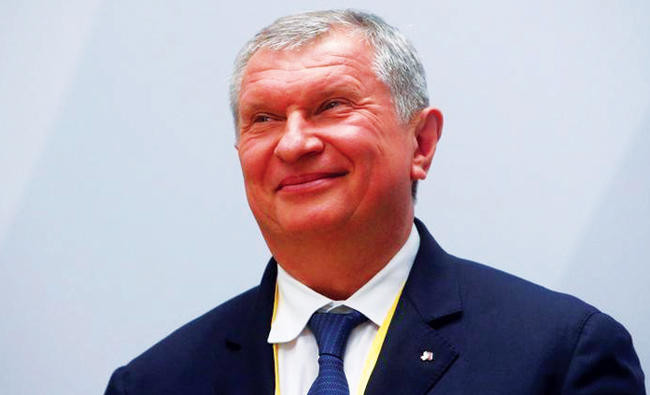
OPEC mulls over full-year extension with no clear answer from Russia

Supply chains reel as carriers halt Gulf routes and impose war risk surcharges in response to Iran-US conflict
RIYADH: Global supply chains were disrupted on March 2 as the US-Iran conflict forced shipping lines and airlines to suspend routes, reroute traffic, and impose emergency surcharges across the Middle East.
As traffic slowed through the Strait of Hormuz and airspace restrictions spread across Gulf hubs, logistics providers halted new container bookings and adjusted operations, driving longer transit times, higher freight costs, and greater uncertainty for cargo owners worldwide.
Ship-tracking data cited by Reuters showed a maritime standstill taking shape near the Hormuz chokepoint, with roughly 150 crude and liquefied natural gas tankers anchored in open waters beyond the strait and additional vessels stationary on both sides, clustered near the coasts of Iraq, Saudi Arabia, and Kuwait, as well as the UAE and Qatar.
Industry guidance warned of heightened naval activity, anchorage congestion and potential insurance volatility, even as no formal international suspension of commercial shipping had been declared.
Rising tensions in the Gulf forced operational pullbacks, with Reuters reporting at least three tankers damaged and one seafarer killed, prompting shipowners to reassess their exposure in regional waters.
Container carriers acted to limit risk, with MSC Mediterranean Shipping Co. suspending new bookings for Middle East cargo amid security concerns and network uncertainty.
A.P. Moller–Maersk paused sailings through the Suez Canal and Bab el-Mandeb and suspended vessel crossings through the Strait of Hormuz, attributing the move to the worsening security situation following the start of the US-Israeli attack on Iran.
Rival operators began diverting vessels around the Cape of Good Hope, extending voyage times between Asia and Europe and tightening effective capacity. The longer routings are increasing fuel consumption and disrupting equipment repositioning cycles, adding strain to already stretched container availability in key export markets.
Freight costs rose further after Hapag-Lloyd introduced a formal War Risk Surcharge for cargo moving to and from the Upper Gulf, Arabian Gulf and Persian Gulf, citing what it described as the “dynamic situation around the Strait of Hormuz” and associated operational adjustments across its network.
The surcharge, effective March 2 until further notice, is set at $1,500 per twenty-foot equivalent unit for standard containers and $3,500 per unit for reefer containers and special equipment.
The surcharge will apply to any booking made on or after March 2 that has not yet shipped, as well as cargo already in transit to or from affected Gulf regions. It will be paid by the booking party and excludes shipments regulated by the Federal Maritime Commission or SSE.
France-based shipping group CMA CGM said March 2 it will introduce an “Emergency Conflict Surcharge,” effective immediately, citing escalating security risks in the region. The surcharge will be set at $2,000 per 20-foot dry container, $3,000 per 40-foot dry container, and $4,000 per reefer or special equipment container.
The measure applies to cargo moving to and from Iraq, Bahrain, and Kuwait, as well as Yemen, Qatar, Oman, the UAE, and Saudi Arabia. It also covers shipments to Jordan, Egypt via the Port of Ain Sokhna, Djibouti, Sudan, and Eritrea, encompassing trade linked to Gulf and Red Sea countries.
On the port side, DP World said operations had resumed at Jebel Ali Port in the UAE following precautionary disruption. The reopening restored activity at the Gulf’s largest transshipment hub, though the broader impact of rerouted vessels, suspended bookings and insurance constraints continues to limit throughput predictability.
Marine insurers added to the strain by issuing notices canceling war-risk cover for vessels operating in Iranian waters and surrounding areas, with changes taking effect on March 5.
The withdrawal of coverage complicates voyage approvals and introduces further pricing volatility for shipowners and charterers considering calls within the region.
Air freight networks have also been affected. Widespread flight cancellations and airspace restrictions across the Middle East disrupted passenger and cargo flows through key hubs, including Dubai.
FedEx said it had temporarily suspended services in specific Middle East markets, including Bahrain, Israel, and Qatar, as well as Saudi Arabia, Kuwait, and the UAE, and halted pickup and delivery services in several Gulf countries due to escalating tensions and airspace closures, affecting time-sensitive shipments across several nations.
Air cargo disruption appears to be significant. Ryan Petersen, CEO of Flexport, a US multinational corporation that focuses on supply chain management and logistics, wrote on X on March 2 that “18 percent of global air freight capacity has been taken out of the market by conflict in the Middle East this weekend,” highlighting the scale of network dislocation as airspace closures and flight cancellations ripple across Gulf hubs.
While the figure has not been independently verified, it underscores the degree to which capacity constraints are tightening for time-sensitive shipments, including pharmaceuticals, electronics and industrial components.
Data from Lloyd’s List Intelligence underscores the scale of disruption to maritime throughput. Daily deadweight tonnage of tankers and gas carriers transiting the Strait of Hormuz fell sharply by March 1, reflecting what industry sources describe as a de facto halt in normal vessel movements.
The combined effect of halted transits, booking suspensions, war-risk pricing measures and air service interruptions is beginning to ripple through global supply chains. Energy exports remain the most immediately exposed given the strategic importance of the Strait of Hormuz, but sectors dependent on just-in-time inventory, from manufacturing to retail, are also facing longer lead times and rising logistics costs.
As of March 2, carriers and freight operators were prioritizing crew safety and asset protection while monitoring military developments. The duration of the conflict will determine whether the current disruption remains a short-term operational shock or develops into a prolonged restructuring of trade routes serving the Middle East.