Myanmar’s Suu Kyi to visit China amid Western criticism over Rohingya exodus

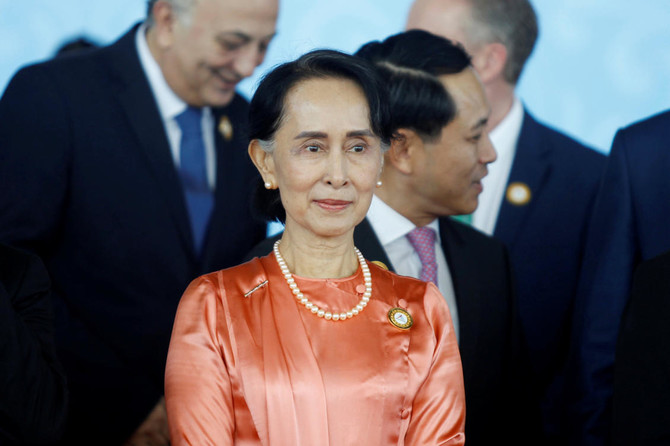
Aung San Suu Kyi will soon visit Beijing, state media said on Monday. (File photo: Reuters)
Updated 27 November 2017
Follow

Myanmar’s Suu Kyi to visit China amid Western criticism over Rohingya exodus

YANGON: Myanmar’s civilian leader, Aung San Suu Kyi, will soon visit Beijing, state media said on Monday, as the southeast Asian nation appears to draw closer to its northern neighbor, China, amid global criticism over an exodus of Rohingya refugees.
Myanmar has bristled at pressure from Western nations over its armed forces’ brutal response to August attacks on security posts by Rohingya Muslim militants in the western state of Rakhine.
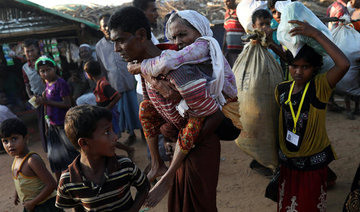
The United States and the United Nations have accused Myanmar of “ethnic cleansing” and called for the military to be held accountable over allegations of killings, rape and arson that sent more than 620,000 Rohingya fleeing to Bangladesh.
China, however, has backed what Myanmar officials call a legitimate counter-insurgency operation in Rakhine, and stepped in to prevent a resolution on the crisis at the UN Security Council.
News of Suu Kyi’s visit comes after Chinese President Xi Jinping and Chinese military leaders welcomed Myanmar’s powerful army chief Min Aung Hlaing last week and pledged closer cooperation.
The state-run daily Global New Light of Myanmar said Nobel Peace laureate Suu Kyi would “soon” depart to attend a Communist Party of China-hosted forum of world political leaders in Beijing.
Suu Kyi’s spokesman Zaw Htay could not be reached for more details, but the meeting begins on Thursday and runs until Dec. 3, according to China’s official news agency Xinhua.
Myanmar is in the international spotlight this week as Pope Francis makes the first visit by a head of the Roman Catholic church to the Buddhist-majority country.
He has previously spoken out about the treatment of minority Muslims to whom Myanmar denies citizenship, but some Christians fear doing so in the country could provoke a backlash.
Many in Myanmar refuse to recognize the name Rohingya, preferring to call them “Bengalis” to suggest they belong in neighboring Bangladesh.


Venezuela advances amnesty bill that could lead to mass release of political prisoners

Updated 06 February 2026
Follow

Venezuela advances amnesty bill that could lead to mass release of political prisoners

  • Such an amnesty is a central demand of the country’s opposition and human rights organizations with backing from the United States

CARACAS: Venezuela’s legislature on Thursday advanced an amnesty bill proposed by acting President Delcy Rodríguez that could lead to the release of hundreds of opposition leaders, journalists and human rights activists detained for political reasons.
Such an amnesty is a central demand of the country’s opposition and human rights organizations with backing from the United States. But the contents of the bill have not been released publicly, and rights groups have so far reacted with cautious optimism — and with demands for more information.
The bill, introduced just weeks after the US military captured then-President Nicolás Maduro, still requires a second debate that has yet to be scheduled. Once approved, it must be signed by Rodríguez before it can go into effect.
In announcing the bill late last month, Rodríguez told a gathering of justices, magistrates, ministers, military brass and other government leaders that the ruling party-controlled National Assembly would take up the legislation with urgency.
“May this law serve to heal the wounds left by the political confrontation fueled by violence and extremism,” she said in a pre-taped televised event. “May it serve to redirect justice in our country, and may it serve to redirect coexistence among Venezuelans.”
Rights groups, fearing some political detainees will be excluded, want more details about the requirements for amnesty before any final vote.
The Venezuelan Program for Education-Action in Human Rights, or PROVEA, issued a statement emphasizing that the bill must be made public urgently due to its potential impact on victims’ rights and broader Venezuelan society.
Based on what is known so far about the legislation, the amnesty would cover a broad timeline, spanning the administration of the late Hugo Chávez from 1999 to 2013 and that of his political heir, Maduro, until this year. It would exclude people convicted of murder, drug trafficking, and serious human rights violations, reports indicate.