HARARE: Zimbabwe’s former president Robert Mugabe cried and lamented “betrayal by his lieutenants” when he agreed to step down last week under pressure from the military and his party after 37 years in power, the Standard newspaper said in its Sunday edition.
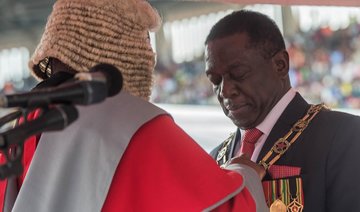
President Emmerson Mnangagwa, a former Mugabe loyalist, was sworn in on Friday and attention is focused on whether he will name a broad-based government or select figures from Mugabe’s era.
The newspaper quoted sources within Mugabe’s inner circle as saying the devout Catholic held a rosary as he told his close associates and a team of negotiators at his “Blue House” Harare mansion that he was resigning. He announced the decision as parliament heard a motion to impeach him.
“He looked down and said ‘people were chameleons’,” one of the sources was quoted as saying.
The state-owned Sunday Mail quoted Father Fidelis Mukonori, a Jesuit priest who is a close Mugabe friend and mediated his resignation with the military, as saying Mugabe’s face “just glowed” after he signed the resignation letter.
“So we are not talking about a bitter man. I told him that it was good for him to see someone running the country...,” Mukonori told the Sunday Mail.
Neither Father Mukonori nor Mugabe’s close aides were immediately available for comment.
Mugabe’s fall after 37 years in power was spurred by a battle to succeed him that pitted Mnangagwa, who had stood by him for 52 years, and Mugabe’s wife Grace, who is 52.
The privately-owned Standard newspaper, which has been critical of Mugabe and his government over the years, urged Mnangagwa to “walk the talk on graft.”
At his swearing in ceremony on Friday, Mnangagwa said he valued democracy, tolerance and the rule of law and would tackle corruption. He has also urged citizens not to undertake “vengeful retribution.”
The new government is already moving to bring some of Mugabe and his wife’s close associates to book and former finance minister Ignatius Chombo was in court on Saturday on corruption charges.
Chombo was among several members of a group allied to Grace who were detained and expelled from the ruling ZANU-PF party after the military seized power in “Operation Legacy” which it said was meant to remove the “criminals” around Mugabe.
Chombo, who told the court he was forcibly removed from his home on Nov. 15 by armed men wearing military uniform, was detained until Monday when his bail application will be heard. He was led away in leg irons together with ousted head of the ruling ZANU-PF’s influential youth league Kudzanai Chipanga.


![]()
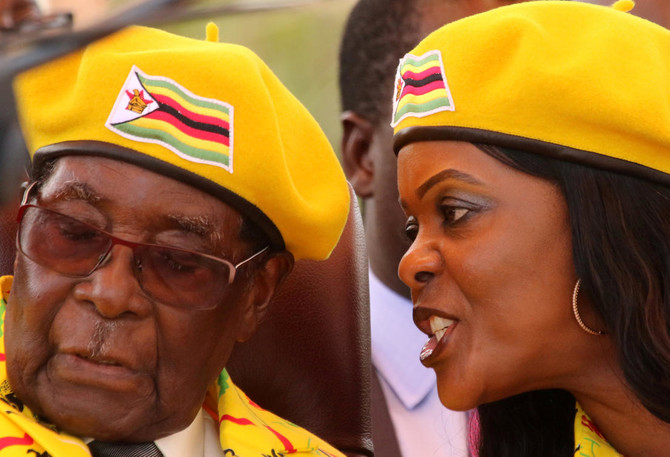
Zimbabwe’s Mugabe cried when he agreed to step down, report says
Zimbabwe’s Mugabe cried when he agreed to step down, report says

Latest updates


© 2026 SAUDI RESEARCH & PUBLISHING COMPANY, All Rights Reserved And subject to Terms of Use Agreement.