MANILA: “It’s about time.” That was international security analyst Stephen Cutler’s “first reaction” to Thursday’s news that Philippine President Rodrigo Duterte had formally terminated peace talks between the Government of the Republic of the Philippines (GRP) and communist rebels the National Democratic Front-Communist Party of the Philippines-New People’s Army (NDF-CPP-NPA).
Cutler, who was formerly the legal attaché of the US Federal Bureau of Investigation (FBI) in Manila, told Arab News, “In my view, this is a long overdue action by the Philippine government.”
Peace talks with the insurgents — who have been waging war against the GRP for nearly half a century — have been going on, albeit intermittently, for more than two decades.
Since they began, in 1986 during President Corazon Aquino’s regime, more than 40 rounds of talks have been conducted between the GRP and the NDF-CPP-NPA, according to the Office of the Presidential Adviser on the Peace Process.
But, as Cutler pointed out, the rebels do not recognize the legitimacy of the GRP, and have for years displayed a lack of sincerity in dealing with the government. In fact, Cutler suggested, their recent activities have shown that they are more interested in full political power in the Philippines.
“That’s why there’s no way to negotiate with them,” he explained. “So why even go through the charade – except to have the government pay for free trips wherever they hold the negotiations? The communists are not sincere. There’s no way that they’re going to agree to anything that the government says.”
He added that Duterte’s Proclamation No. 360 (announcing the cessation of the peace talks) is “a statement of reality.”
Cutler warned, though, that it would be no surprise if the NPA — the armed wing of the CPP — were to step up its attacks on government troops, police, and civilians in retaliation.
All units of the Armed Forces of the Philippines (AFP) are already on high alert for such eventualities, according to AFP spokesperson Maj. Gen. Restituto Padilla.
However, even if such attacks take place, Cutler said they would only validate the president’s decision. “So they run the risk of either reinforcing what (the president) has done, or having to accept it.”
And with peace talks officially terminated, Cutler said, Duterte is no longer constrained by the need to ensure the rebels would still participate in the peace process, meaning the GRP can now pursue the rebels more aggressively.
So now, he said, the government can really go after the rebels, take them to court, and arrest them, especially if they kill people and commit other criminal offenses.
“It’s not for political advantage. It’s for criminal offense,” Cutler said.
The security analyst adds, though, that fighting the rebels — whether physically or in court — cannot be the sole focus of the government’s response.
“I think what the government needs to do is (launch) a social-reform program where they are providing good schools, credible elections, and credible government services in areas that are heavily (influenced) by the NPA,” Cutler said. “By doing that, you are destroying the NPA’s argument, which is essentially that the government is illegitimate and can’t do what the state ought to be doing,” he continued.
“Drugs and corruption,” Cutler suggested, are two of the key things “that allow the NPA to move forward.” So Duterte “is going to have to start doing some work with anti-corruption.”
Ultimately, Cutler sees the official termination of the talks as a great opportunity for the president.
“This is across the board offering, or allowing, (Duterte) to change the way he governs in the NPA areas,” he said.


![]()
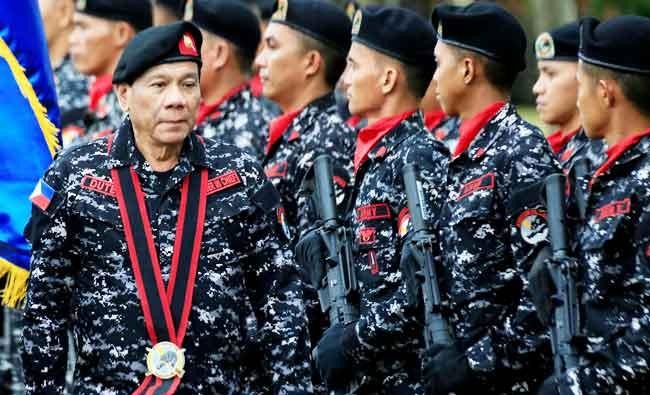
End of peace talks offers Duterte new beginning in Communist areas
End of peace talks offers Duterte new beginning in Communist areas
Latest updates


© 2026 SAUDI RESEARCH & PUBLISHING COMPANY, All Rights Reserved And subject to Terms of Use Agreement.