HARARE: Zimbabwe’s recently fired vice president was set to return on Wednesday to be sworn in as the country’s new leader, after Robert Mugabe announced his stunning resignation during impeachment proceedings against him.
The state-run broadcaster reported that Emmerson Mnangagwa would arrive at a military air base in the capital, Harare, at 6 p.m. and would be sworn in Friday.
Zimbabweans erupted in response to Mugabe’s resignation Tuesday, cheering and dancing in the streets late into the night, thrilled to be rid of a leader whose early promise after the end of white minority rule in 1980 was overtaken by economic collapse, government dysfunction and human rights violations.
Now the focus turns to Mnangagwa, Mugabe’s longtime deputy who was pushed aside earlier this month as unpopular first lady Grace Mugabe positioned herself to replace him and succeed her husband. Mnangagwa fled the country, claiming threats against his life.
That led the military to step in a week ago, opening the door for the ruling party and the people to publicly turn against the president.
It was not clear what the 93-year-old Robert Mugabe and his wife would do next. Mugabe, who was the world’s oldest head of state, said in his resignation letter that legal procedures should be followed to install a new president “no later than tomorrow.”
The speaker of parliament was expected to speak to reporters at midday on the way forward.
The privately run Newsday newspaper reported that Mnangagwa would be met on arrival by army commander Constantino Chiwenga and ruling party officials and then was expected “to meet Mugabe for a briefing.”
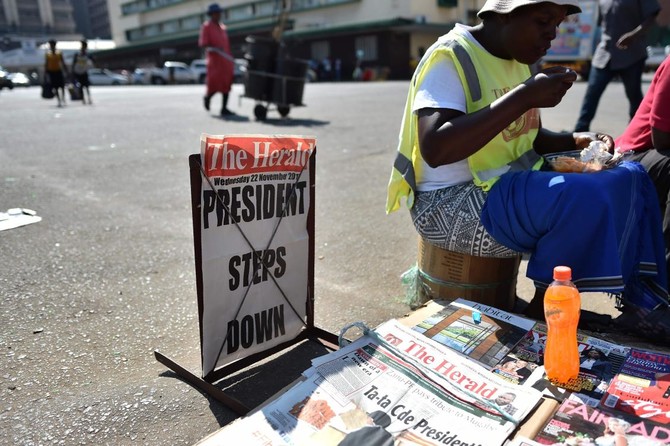
Zimbabweans woke up to the first day in 37 years without Mugabe in power. With some nursing hangovers, they looked over newspaper headlines such as “Adios Bob and Ta-ta President.”
“I think this change of government is like a new breath of fresh air right across the country,” said Patrick Musira on the streets of the capital. “Everyone was engulfed with excitement and they are looking for a better future, a brighter future with work.”
Zimbabwe’s new leaders are faced with a once-prosperous nation whose economy has collapsed, sending well-educated but frustrated young people into desperate work as street vendors. Many have left the country altogether.
Mnangagwa is a former justice and defense minister who served for decades as Mugabe’s enforcer, a role that earned him the nickname “Crocodile.” Many opposition supporters believe he was instrumental in the army killings of thousands of people when Mugabe moved against a political rival in the 1980s.
So far in the current political turmoil Mnangagwa has used inclusive language, saying in a statement hours before Mugabe’s resignation that all Zimbabweans should work together to advance their nation.
“Never should the nation be held at ransom by one person ever again, whose desire is to die in office at whatever cost to the nation,” Mnangagwa said.
In a new commentary, the state-run Zimbabwe Herald newspaper stressed the importance of presidential term limits, saying Zimbabweans will “never again go back into a box of silence.”
It added: “We hope that when (Mnangagwa) finishes his stint in State House the cheers will be for a job well done ... He has the best wishes of most Zimbabweans, at least today.”


![]()
Zimbabwe poised to swear in Mnangagwa as new president
Zimbabwe poised to swear in Mnangagwa as new president

Latest updates


© 2026 SAUDI RESEARCH & PUBLISHING COMPANY, All Rights Reserved And subject to Terms of Use Agreement.