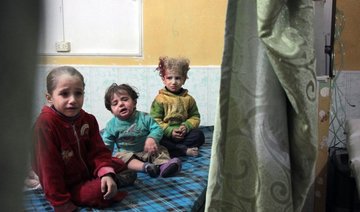
BEIRUT: His nation is a smoldering ruin, much of it held by rival armed factions, domestic or foreign. Half the population is displaced, hundreds of thousands have died and much of the West regards him as a tyrant and human rights abuser. But Syrian President Bashar Assad appears to have survived the war and is likely to hold onto power for the foreseeable future.
The sides in Syria’s civil war are preparing for what will be the eighth round of UN-sponsored peace talks in Geneva intended to forge a path forward for a political transition to end the conflict. But barring any surprises, no negotiated resolution is likely to lead to Assad’s ouster.
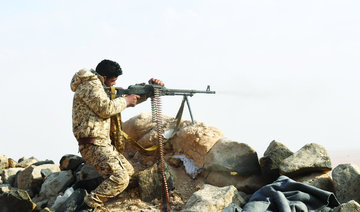
One reason is military. Assad’s forces have had the momentum on the ground the past year, backed by an overwhelming Russian air campaign and fighters from Iran and Hezbollah. Assad’s government now controls more than 50 percent of Syria.
Holding half the country normally wouldn’t be an optimistic sign, but that’s up from 19 percent earlier this year. His troops control Syria’s four largest cities, 10 of Syria’s 14 provincial capitals and its Mediterranean coast. Also, no force on the ground is capable of driving Assad out at this stage.
On the diplomatic front, the top supporters of the opposition, the United States and its allies, long ago backed off demands that any deal involve Assad’s immediate removal. Now they are pushing for a plan for elections that could bring a new leader. But Assad’s ally Russia now dominates the negotiating process, meaning there is little pressure on him to accept real elections. A political solution under his terms would be to incorporate opposition members into a national unity government under his leadership.
Assad’s opposition is in disarray. The top opposition negotiator, Riyad Hijab, resigned on Monday, complaining that foreign powers were carving up Syria and brokering side deals to “prolong the life of Bashar Assad’s regime.” He leaves his post just two days before the opposition was to meet in Saudi Arabia to come up with a unified delegation and negotiating stance. Saudi Arabia has already signaled to the opposition it has to come to terms with Assad’s survival.
Assad looks increasingly confident. On Monday, he traveled to Sochi for talks with Russian President Vladimir Putin in the second time Assad has traveled to Russia or left the country in the course of the country’s civil war.
Earlier this month, Assad’s office posted on social media a photo of the president and the first lady, Asma, strolling through their Damascus palace courtyard, smiling at each other. The picture is part of a propaganda campaign to project business as usual and confidence in the future. The presidency’s Instagram account produces daily images of the first couple visiting with students, families of slain fighters, orphanages and bakeries.
US Secretary of State Rex Tillerson in late October repeated Washington’s call for Assad to surrender control, insisting that “the reign of the Assad family is coming to an end.”
But turning that call into reality takes leverage that Washington doesn’t appear ready to use.
In a joint statement released earlier this month, US President Donald Trump and Russian President Vladimir Putin agreed that there is no military solution to the conflict in Syria. They made vague comments about Assad’s “recent commitment to the Geneva process and constitutional reform and elections” as called for under a United Nations Security Council resolution.
There are few scenarios that could bring about Assad’s fall. One would be if the US struck a deal that convinced Russia to force Assad to accept a political transition that ensures his departure from the presidency. But it is hard to imagine what incentive the US could give Moscow to dump its ally. Another scenario would be if the US or other opposition backers reversed course and launched an all-out military drive against Assad.
“That requires massive escalation, restarting the war from scratch to roll back Assad’s gains and creating an opposition that is both able to govern and acceptable to the international community,” said Aron Lund, a fellow with the New York-based think tank The Century Foundation.
“Looking at the conflict right now and how the opposition’s allies are all backing away — it’s just not going to happen,” he said.
Trump ended a CIA-backed program training rebel forces trying to oust Assad. The United States has been more focused on fighting the Daesh group in Syria, supporting Kurdish-led forces that have successfully rolled back the militants and took control of nearly a quarter of the country.
Turkey, another top supporter of the opposition, is more concerned with thwarting the ambitions of the Kurds in Syria than with ousting Assad. It backs a force of opposition factions holding an enclave of territory in northern Syria and skirmishing with the Kurds.
The main rebel-held area focused on fighting Assad is in the northwestern province of Idlib, but it is dominated by Al-Qaeda-allied factions.
Russia, meanwhile, helped mediate a series of local cease-fires between Assad’s forces and rebels on most fronts around the country. That has allowed Assad and his allies — troops from Iran, Lebanese Hezbollah guerrillas and Iraqi Shiite militiamen— to focus on battling the Daesh group in the east.
On Sunday, state-run media announced that Assad’s forces have recaptured the town of Boukamal, the Daesh group’s last significant stronghold in Syria, leaving the militants to defend just strips of desert territory in the country and a besieged pocket outside the capital, Damascus.
“To be sure there will be flare-ups of violence and bombings and unrest,” Lund said. “But he (Assad) holds the center, he holds most of the population, he’s got the economy and the institutions and the UN seat. ... He has all the stuff he needs to continue to rule.”
When Syria’s conflict began with mass protests in March 2011, many expected Assad to be quickly toppled like other Arab leaders. Regional and international supporters of the opposition poured in money and weapons and then US President Barack Obama and other Western leaders declared the Assad dynasty finished.
Assad’s determination never wavered throughout the conflict, aided by the opposition’s fragmentation and Russia and Iran’s inerventions.
Nikolaos Van Dam, author of the book “Destroying A Nation: The Civil War in Syria,” said Western countries created false expectations by calling on Assad to step down while only offering half-hearted support for the opposition and underestimating the cohesion of Assad’s leadership.


![]()

His country a smoldering ruin, but Assad still in his seat
His country a smoldering ruin, but Assad still in his seat

Latest updates


Recommended


© 2026 SAUDI RESEARCH & PUBLISHING COMPANY, All Rights Reserved And subject to Terms of Use Agreement.