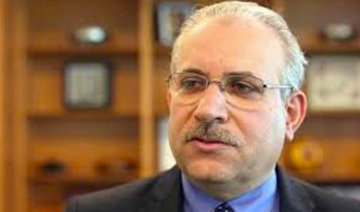
JEDDAH: Yahya Al-Aridi, a political adviser to the Syrian High Negotiations Committee, has said the Syrian opposition’s conference in Riyadh on Wednesday mainly aims to discuss unifying the opposition and adopting a mechanism to adopt a new constitution for the country.
The intention, he said, is to deprive Russia of excuses to stop efforts to address the crisis.
“The fragmentation of the opposition has been used by the Russians as a pretext to discredit the opposition in general,” he said.
“I have been present in almost all Geneva and Astana talks and the Russians and the regime have always been using this as an excuse to foil the talks. We want to unify our stances so that they have nor more excuses — neither the regime nor the Russians.
“The Riyadh conference aims to sideline or take away this card from the hands of Russia and the regime. Also, there should be some sort of consolidation of strengthening of the opposition front, meaning that we need to introduce new actors who are more experienced and better trained and have in-depth knowledge about the negotiations,” he added.
Moreover, he said, the Russia and Cairo platforms are being invited, and this will be a way of checking how serious they are about engaging in serious talks over the future of Syria and the Syrian people and their best interests.
“We acknowledge that there are certain discrepancies and differences between the different opposition platforms but these can be resolved and overcome. If they are really part of the Syrian opposition.
“The two platforms, particularly the Moscow platform, have been insisting on the continuation of the Syrian regime and the adoption of the 2012 Syria Constitution which was introduced by the Syrian regime and gave absolute powers to Bashar Assad,” he said.
“If they continue to insist on these two demands then i suggest that they should be members of the regime front and not the opposition, as their demands meet the demands of the regime.”
However, Al-Aridi said the opposition has other alternatives to discuss with all parties with regard to which constitution should be adopted for the future of Syria.
“We will call for a constitutional declaration that governs the transitional period which will be the responsibility of a transitional body. This body would establish an national assembly which would select a team of skilled and qualified individuals to be tasked with drafting a new constitution that serves the country and the people’s aspirations of a new dictatorship-free Syria,” he said.
The conference will be attended by representatives of Syrian opposition groups from Riyadh, Moscow and Cairo.
One of the participants representing the Moscow platform, Firas Al-Khaldi, explained that the committee will study and prepare the necessary documents and the meeting’s final communiqué.
The conference aims to unite the opposition under one delegation and issue a unified document before the delegation heads to the Geneva talks at the end of November.
Moreover, the conference seeks to resolve points of dispute, including the fate of Syrian President Bashar Assad, and whether or not he should step down at the beginning of the transitional period.
The second point of dispute, according to Al-Khaldi, is about the constitution.
He said there are those who want to follow the constitution set by Assad in 2012, which is what Moscow wants, and those who favor the Fifties constitution.
This came as the political bodies in the Syrian governorates confirmed on Sunday that Russia seeks to create an opposition in line with Assad’s regime and Russia’s interests in Syria.
In a statement issued by these bodies, they said: “The political bodies in Syria, which represent the revolutionary and political movement inside Syria, are following with great concern these calls. We firmly reject all suspicious attempts that seek to refloat Bashar Assad’s criminal regime.
“We highly appreciate the efforts of some Arab brothers and Syrian friends in supporting our revolution’s legitimate demands, and we expect them to continue to do so with real representation of the Syrian revolutionary bodies.”
The statement also highlighted the right of revolutionary bodies to select their representatives in conferences and negotiations.
The political bodies also refused to accept any individual or group that does not consider the Geneva Declaration 1 and Resolutions 2118 and 2254 the only references for a political solution.
They also noted that “the determinants of the Riyadh I Conference are the basis for joining any political body that opposes Assad’s regime.”
On Monday (Nov. 20), anti-Assad activists launched the campaign “Reject the Moscow Platform,” which aims to send messages to participants in the Riyadh II Conference, set to be held by the end of this week, and insist on not allowing the Moscow platform to join the negotiations delegation that will represent the Syrian revolution, given that the stances of the Moscow platform favor Assad’s regime.
Syrian opposition figure Michel Kilo said: “Participants in the Riyadh II Conference are required to thwart the Russian plan. The Geneva Declaration 1 and Resolution 2118 state that the political solution begins with the establishment of a transitional governing body, formed by mutual consent of the regime and the opposition, with full executive powers, which will create a democratic system in Syria.
“The Riyadh II Conference’s commitment to international resolutions means its commitment to the Syrian people’s right to establish a transitional governing body,” Kilo said.
“This right is not a precondition as the National Coordinating Body says, but a right recognized by international resolutions. Russia attacked us and our people with all kinds of weapons in order to save Assad’s regime. It used its veto 11 times. Therefore, we must reject the Russian solution, commit to change and insist on having Assad step down with his entire regime.”


![]()

Riyadh conference aims to unify Syrian opposition, says adviser
Riyadh conference aims to unify Syrian opposition, says adviser

Latest updates


Recommended


© 2026 SAUDI RESEARCH & PUBLISHING COMPANY, All Rights Reserved And subject to Terms of Use Agreement.