SHANGHAI: China has hit the brakes on subway projects in at least three cities and Beijing is asking others to slow down their plans, local governments and media have reported, indicating concerns over high debt from city-level infrastructure spending.
China has been in the grips of a metro-building binge with more than 50 cities working on over 1 trillion yuan ($150.8 billion) worth of projects, after population restrictions were loosened last year to allow more cities to have metro systems.
Such infrastructure spending has helped to shore up economic growth but is now being scrutinized more closely after the government pledged to clamp down on financial risks. Policymakers have warned about the risk of asset bubbles due to high levels of corporate and household debt in the economy.
China’s overall debt has jumped to more than 250 percent of GDP from 150 percent at the end of 2006.
Financial magazine Caixin, citing unnamed sources close to the matter, reported that authorities in Inner Mongolia’s Hohhot and Baotou cities have scrapped approved projects worth billions of dollars in recent months due to concerns over finances.
Xianyang city, which wants to build six lines to link up to central Shaanxi province’s capital of Xi’an, said in a statement this month some of its plans had not yet been approved by the state planner, the National Development and Reform Commission.
“The NDRC has become more cautious about approving metro construction plans and it will be difficult to achieve approval within the year,” it said, adding that one of the factors was debt concerns over the Baotou metro.
The Economic Observer newspaper said it was told by the Wuhan city planner that the NDRC was re-evaluating the country’s subway construction situation.
The Baotou city planner declined to comment when contacted by Reuters on Wednesday. The NDRC and authorities in Hohhot and Wuhan did not immediately respond to requests for comment.
Guotai Junan analyst Gary Wong said such a crackdown on metro projects was appropriate given that many remote and financially weak cities had undertaken metro projects. He said he did not anticipate a large impact on locomotive suppliers such as CRRC Corp. who have shifted focus to metros to offset the slowing high-speed rail market.
“They are already full with orders, even if they don’t get new orders at the moment they will still be busy for the next 2-3 years,” he said.
China would overtake Europe and the Americas if all 50 cities went ahead with their metro plans, data from the International Association of Public Transport showed. Europe has 46 cities with metro systems, and America has
33 cities.
— REUTERS


![]()
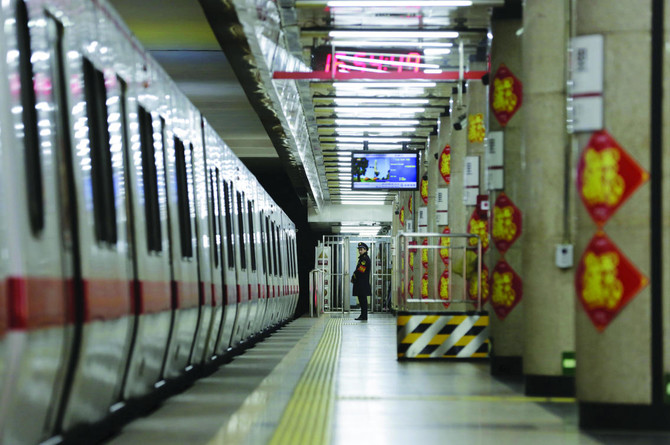
Beijing hits brakes on subway boom over debt concerns
Beijing hits brakes on subway boom over debt concerns
Latest updates


© 2026 SAUDI RESEARCH & PUBLISHING COMPANY, All Rights Reserved And subject to Terms of Use Agreement.