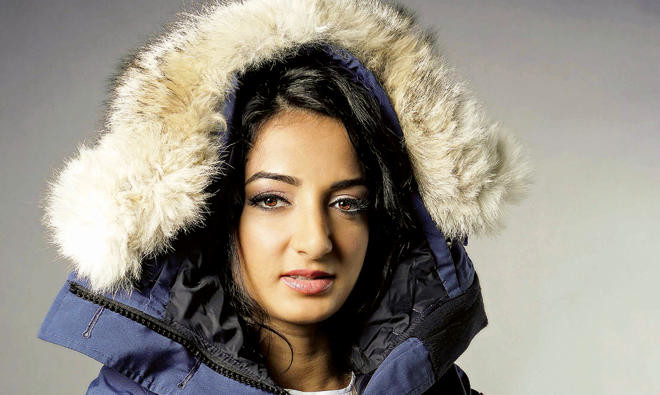
DUBAI: Saudi Arabia’s decision to grant women access to sports stadiums for the first time will go down as a watershed moment in the history of the Kingdom. That’s according to Raha Moharrak, who in 2013 became the youngest Arab and first Saudi woman to reach the summit of Mount Everest. Moharrak hopes the end of the stadium ban will inspire girls across the Kingdom.
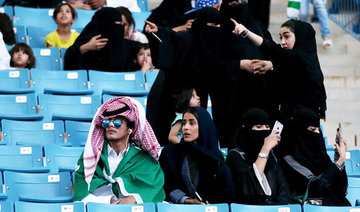
The decision to allow women into stadiums across the country was made last month, meaning that from early 2018 women will be allowed into arenas in major cities, according to the General Sport Authority, the country’s governing body for sports.
Coming on the back of plans to increase female participation in sport throughout Saudi Arabia, optimism is building that this will not just represent a small pinprick in the dam of division, but signal an emphatic opening of the Saudi sporting floodgates.
And for Moharrak the news is just what is needed to get women across Saudi Arabia into sport and more active.
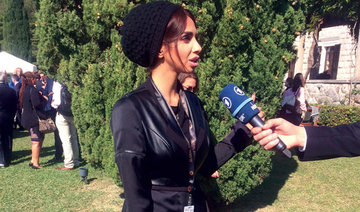
“I get goosebumps when I see a live sporting event and it’s something I have always wished my fellow countrywomen could get to experience,” Moharrak told Arab News, fittingly at the International Conference of Sports for Women (ICSW) in Abu Dhabi.
“I’m so happy that they will be able to taste the magic that is in the air when you see sport live for the first time. There is that vibe you get, that feeling — it touches you and it can often be what inspires you to be an athlete.
“The fact that girls could never previously go and watch sports meant they lost that connection, they lost that first moment of inspiration.”
Social media came alive in Saudi Arabia and beyond when the stadium ruling was announced, with female supporters looking excitedly ahead to the start of 2018 when they will finally be able to attend matches and events in Jeddah, Riyadh and Dammam.
The path toward sporting parity arguably began in 2012 when, after pressure from the International Olympic Committee, Saudi Arabia sent its first ever athletes to the Olympics.
Judo player Wojdan Shaherkani and 800m runner Sarah Attar competed in London with Attar’s appearance, in particular, capturing the imagination of the watching world. Despite finishing a distant last place in her heat, she received a standing ovation from everyone inside the Olympic Stadium.
Attar returned four years later to take part in the marathon in Rio de Janeiro and though she finished 52 minutes behind Kenyan winner Jemima Sumgong she had again made Olympic history for her country, alongside 100m runner Kariman Abuljadayel and fencer Lubna Al-Omair.
While these athletes unquestionably played a role in breaking down barriers, Moharrak has become one of the most recognizable pioneers for female empowerment in Saudi Arabia, and beyond.
Since taking on Everest the Jeddah-born climber has traveled the world to tell enraptured audiences her story, and believes every positive change should be cherished.
Interestingly her achievements, like the abolition of the stadium ban, can be traced back to Princess Reema bint Bandar bin Sultan.
Named the first female president of the Saudi Federation for Community Sports in October, Princess Reema has been a driving force behind the equality evolution, and Moharrak certainly feels a personal debt of gratitude to the royal.
“Princess Reema took me and nine other Saudi girls to Everest base camp and it was then that I knew I wanted to climb the mountain. Her passion and charisma inspired me. Appointing her to this important position in sport is a huge step in the right direction because we have one of us there. She is a doer and a woman of her word who genuinely loves sports. I know she is pushing hard for all of us.”
Moharrak had to fight for her opportunities, defying her father to pursue a passion for climbing. Now he is her biggest fan and she believes that it is only a matter of time before other men also recognize that the playing field deserves to be leveled.
“I was furious to be judged by my gender, my passport and my religion but getting over those obstacles made the success even sweeter. I am constantly inspired by every single girl who goes to the gym, who rides a bike, who picks up a ball, who swims.
“Every female in the Arab world who was born in circumstances that did not make it easy for her to be athletic but who still embraced sport anyway — these people are my inspiration. Some of them have medals, some of them have nothing. But they have all shown tremendous bravery to go after the love of sport.”
Thanks to Moharrak, Princess Reema and Saudi Arabia’s other female sporting trailblazers, there is now hope of a brighter future. They have scratched the glass ceiling; now a new generation has the opportunity to smash through it.


![]()
![]()
![]()
![]()
![]()
![]()
Everest conqueror says end of Saudi Arabia stadium ban can inspire a generation


Everest conqueror says end of Saudi Arabia stadium ban can inspire a generation

Latest updates


© 2026 SAUDI RESEARCH & PUBLISHING COMPANY, All Rights Reserved And subject to Terms of Use Agreement.