GAZA CITY: Palestinians in the Gaza Strip and the occupied West Bank on Thursday held rallies to mark the 13th anniversary of the death of revered former leader Yasser Arafat.
This year’s events came as rival Palestinian factions Fatah and Hamas seek to carry out a landmark reconciliation deal signed last month that aims to end their 10-year rift.
Arafat, who died on Nov. 11, 2004 at a hospital near Paris from unknown causes at the age of 75, remains a towering figure among Palestinians.
Former senior Fatah party official Mohammed Dahlan, who lives in exile in the UAE, organized a rally in Gaza.
A few thousand Dahlan supporters raised pictures of Arafat and Palestinian flags, while on the stage there were large portraits of Arafat and Sheikh Ahmed Yassin, the founder of Hamas who was assassinated by Israel in 2004.
Dahlan was not in attendance but a speech was delivered on his behalf.
He was once one of Palestinian President Mahmoud Abbas’s top officials in Gaza but fell out with him and was later kicked out of his Fatah party. Since then he has become closer to rivals Hamas, the movement that has run Gaza since 2007.
Year of reconciliation
In a separate event in the West Bank city of Ramallah on Thursday, dozens of Palestinians gathered to commemorate Arafat’s death.
“We really wanted to come this year because this is the year for reconciliation between here and Gaza,” said rally participant Sanaa Al-Rifai.
“We hope this reconciliation will be a good start and the soul of the martyr (Arafat) will be more at peace when he sees the Palestinian people more united.”
Arafat rose to become the leader of the Palestinian movement after the creation of Israel, leading an armed struggle in which thousands died.
Decades later he disavowed violence and famously shook hands with Israeli prime minister Yitzhak Rabin on the White House lawn, although the peace the Oslo accords were supposed to bring never materialized.
The Palestinians have long accused Israel of poisoning him, charges the Israeli government firmly denies. His body was exhumed in 2012 for tests but a subsequent French investigation found no proof of poisoning.
Last month, Hamas signed an Egyptian-brokered reconciliation agreement with Fatah that is supposed to see the Palestinian Authority reclaim control of the Gaza Strip by Dec. 1.
Hamas handed over the borders to Fatah on November 1 in a first key test of the agreement but there have been signs of tensions in recent days over security control of the Gaza Strip.


![]()
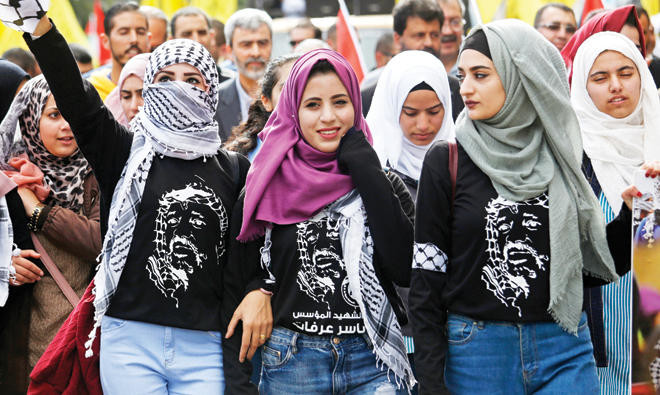
Palestinians mark 13 years since Arafat’s death
Palestinians mark 13 years since Arafat’s death


Latest updates


© 2026 SAUDI RESEARCH & PUBLISHING COMPANY, All Rights Reserved And subject to Terms of Use Agreement.