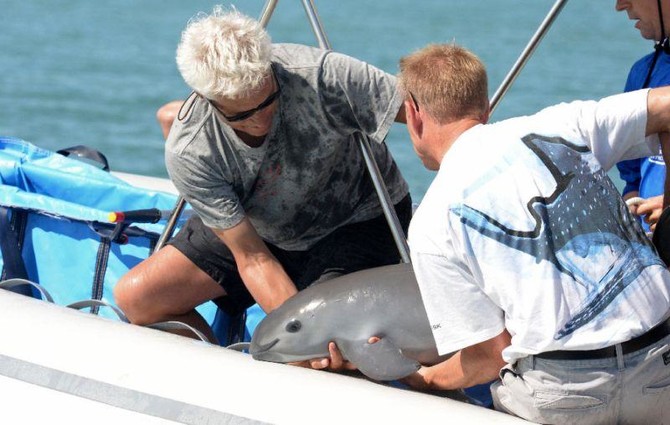
MEXICO CITY: Mexico said Saturday it had captured a rare vaquita marina porpoise — a female of reproductive age — as part of a last-ditch bid to save the critically endangered species.
The vaquita, the world’s smallest porpoise, has been pushed to the brink of extinction by illegal gillnet fishing and there are just 30 left in the wild.
The Mexican government and conservation groups have launched an unprecedented plan to save the species by transporting as many as possible to a protected marine reserve.
“The @VaquitaCPR team has managed to capture another vaquita marina,” Mexican Environment Minister Rafael Pacchiano tweeted, adding that the animal is in the care of veterinarians.
A six-month old calf — the first vaquita ever captured — was caught last month but had to be released as it was too young to be separated from its mother.
However the second porpoise “is an adult female and of reproductive age,” Pacchiano said on Twitter. “It’s a great achievement that fills us with hope.”
The initiative, which began field operations in October, is attempting to locate the remaining vaquitas using acoustic monitoring, visual searches and dolphins trained by the US navy.
Captured vaquitas will be transported to a marine sanctuary, where it is hoped they will breed before being released back into the wild.
The vaquita has been nearly wiped out by gillnets used to fish for another species, the also endangered totoaba fish, whose swim bladder is considered a delicacy in China and can fetch $20,000 per kilogram.
In June, Mexico announced a series of measures to protect the vaquita, including a permanent ban on gillnets in its habitat.
In all, the government has committed more than $100 million to protecting the vaquita while supporting the local fishing community.

Mexico captures rare vaquita porpoise in bid to save species

Apple to update EU browser options, make more apps deletable
- iPhone maker came under pressure from regulators to make changes after the EU’s sweeping Digital Markets Act took effect on March 7
- Apple users will be able to select a default browser directly from the choice screen after going through a mandatory list of options
STOCKHOLM: Apple will change how users choose browser options in the European Union, add a dedicated section for changing default apps, and make more apps deletable, the company said on Thursday.
The iPhone maker came under pressure from regulators to make changes after the EU’s sweeping Digital Markets Act took effect on March 7, forcing big tech companies to offer mobile users the ability to select from a list of available web browsers on a “choice screen.”
The new rules require mobile software makers to show the choice screen where users can select a browser, search engine and virtual assistant as they set up their phones, which earlier came with preferred options from Apple and Google.
In an update later this year, Apple users will be able to select a default browser directly from the choice screen after going through a mandatory list of options.
A randomly ordered list of 12 browsers per EU country will be shown to the user with short descriptions, and the chosen one will be automatically downloaded, Apple said. The choice screen will also be available on iPads through an update later this year.
Apple released a previous update in response to the new rules in March, but browser companies criticized the design of its choice screen, and the Commission opened an investigation on March 25 saying it suspected that the measures fell short of effective compliance.
The company said it has been in dialogue with the European Commission and believes the new changes will address regulators’ concerns.
It also plans to introduce a dedicated area for default apps where a user will be able to set defaults for messaging, phone calls, spam filters, password managers and keyboards.
Users will also be able to delete certain Apple-made apps such as App Store, Messages, Camera, Photos and Safari. Only Settings and Phone apps would not be deletable.