TUNIS: A Tunisian policeman died Thursday a day after he was stabbed by an Islamist extremist outside parliament in a bustling part of the capital Tunis, the authorities said.
Commander Riadh Barrouta, who was knifed in the neck during the attack on Wednesday, “has died,” interior ministry spokesman Yasser Mesbah said.
A second officer was lightly wounded in the forehead in the early morning assault before the attacker in his mid-20s was quickly arrested.
In the wake of the incident the interior ministry said the assailant had confessed to having adopted an “extremist” ideology three years ago.
“Killing them (police), he believes, is a form of jihad,” it said.
Prosecutors on Thursday said the man — an unemployed computer science graduate born in 1992 — appeared to be a lonewolf who did not belong to any cell, but “intended to join terrorist groups” in neighboring Libya.
The attacker, who comes from a suburb of Tunis, would be taken before anti-terrorist prosecutors on Friday, said Sofiene Sliti, a spokesman for the prosecutors’ office.
Since its 2011 revolution, which sparked the Arab Spring, Tunisia’s security forces have faced a series of jihadist attacks that have claimed the lives of more than 100 soldiers and police.
Wednesday’s attack happened next door to the famed National Bardo Museum that was the site of a deadly Daesh group attack in 2015 that killed 21 foreign tourists and a policeman.
In June the same year, 38 foreign tourists, including 30 from Britain, lost their lives in an IS attack in the coastal holiday resort of Sousse.
Tunisia has been under a state of emergency since November 2015, after another attack killed 12 presidential guards in the heart of the capital.


![]()
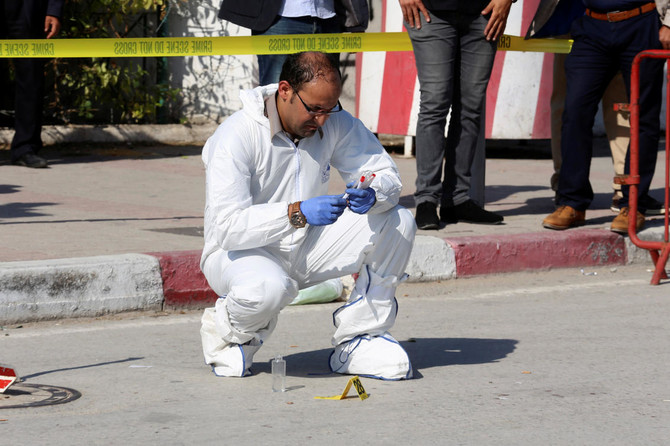
Tunisian policeman dies after knife attack outside parliament
Tunisian policeman dies after knife attack outside parliament

Latest updates




© 2026 SAUDI RESEARCH & PUBLISHING COMPANY, All Rights Reserved And subject to Terms of Use Agreement.