LONDON: A chastening night for Real Madrid coincided with a coming of age moment for Tottenham.
The European champions in three of the last four seasons were not just beaten in north London, but dismantled with ease by a Tottenham lineup lacking that kind of Champions League pedigree.
Such was Tottenham’s superiority, Madrid seemed fortunate to leave Wembley Stadium with only a 3-1 loss on Wednesday.
While Tottenham celebrated qualifying for the knockout phase for only the second time, the Champions League holders were reeling from their first group-stage loss in five years.
Coming directly after its Spanish league defense was hit by a surprise loss at Girona, the psychological impact will be even greater for Zinedine Zidane’s team.
“I am not worried,” the Madrid coach said. “We played against a team who were better than us tonight and we have to accept it.”
Madrid’s fragile defense was beaten too easily by Tottenham, a club that hasn’t won the English league since 1961 but has finished third and second in the Premier League in recent seasons. Dele Alli, suspended for the opening three games in Group H, made an explosive return to the Champions League with two goals.
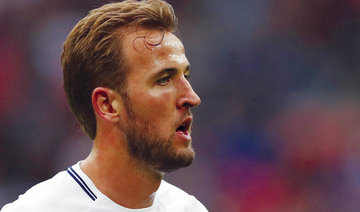
Alli and Harry Kane then combined to set up Christian Eriksen in the 65th minute to build a commanding lead that ensured Cristiano Ronaldo’s strike in the 80th was a mere consolation for Madrid.
“It’s important we don’t just compete but we do win,” Alli said. “We feel like we are a top side, and nights like this show we are.”
The victory took Tottenham three points clear of Madrid at the top of the group, ensuring passage into the last 16 with two games to spare. Tottenham has only competed in the knockout phase once before — in the 2010-11 season when it was eliminated by Madrid in the quarterfinals.
Then, Madrid beat Tottenham 5-0 on aggregate, but the tables have turned. Last month, Tottenham secured a 1-1 draw in the Spanish capital and now it has beaten Madrid for the first time as Zidane endured one of the most painful games of his 22-month reign.
“After the loss in La Liga it’s always tough to recover from a morale point of view,” Zidane said. “Now it’s going to be even more difficult, because that’s two losses in a row.”
Tottenham’s victory came almost seven years since it beat another reigning European champion — Inter Milan — 3-1 in the group stage on Nov. 2, 2010 at White Hart Lane. Mauricio Pochettino’s team was dumped out in the group stage last season, but now appears far more adept among the continent’s elite.
“You have all seen today that Tottenham is a big team,” Pochettino said. “We now belong not only among the best in England but in Europe. Results like these help people see where we are going.”
And it was achieved with a core of inexpensive homegrown players, too. Three of them combined for the opener.
Harry Winks chipped a pass to Kieran Trippier, who squared the ball across the penalty area for Alli to squeeze into the net in the 27th.
This was a night of frustration for Ronaldo, summed up shortly after Alli’s goal when he hit the side netting and shot straight at goalkeeper Hugo Lloris. Ronaldo put his head in his hands.
It would get worse for Ronaldo.
The hosts sliced through the spine of the Madrid team in the 56th before Alli’s shot deflected off Sergio Ramos and wrong-footed goalkeeper Kiko Casilla to land in the net.
At the other end, Tottenham was adeptly neutralizing Madrid, and Ramos and Ronaldo were successfully crowded out when they were close to goal around the hour.
Another counterattack unsettled Madrid and ended with the third goal in the 65th. Alli released Kane, whose diagonal pass reached Eriksen. Luka Modric, in the Tottenham side that beat Inter Milan in 2010 before joining Madrid, was outmuscled by Eriksen and the ball was slotted into the net.
The only blots for Tottenham were a first-half hamstring injury for Toby Alderweireld, Alli missing out on a hat trick with an off-target header, and not keeping a clean sheet.
But a Tottenham side that has fallen short in the last two seasons when pursuing the Premier League title would not collapse against the European champions on a memorable night for a club that has won just one trophy this millennium, the League Cup.
“This means nothing if at the end of the season we haven’t won a trophy,” Pochettino said.


![]()

Tottenham comes of age, humbling Madrid to reach CL last 16
Tottenham comes of age, humbling Madrid to reach CL last 16

Latest updates


© 2026 SAUDI RESEARCH & PUBLISHING COMPANY, All Rights Reserved And subject to Terms of Use Agreement.