MANILA: A 22-year-old Indonesian who went to the Philippines to fight alongside the Daesh-backed Maute group in Marawi City was arrested on Wednesday.
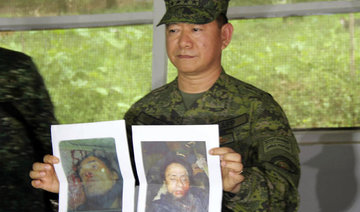
John Guyguyon, Lanao del Sur provincial police chief, identified the militant as Mohammed Ilham Syaputra from Sumatra, Indonesia. He had a bullet wound to the side of his body.
Guyguyon said Syaputra claimed he was invited by Isnilon Hapilon, Daesh’s designated emir in the Philippines.
Syaputra was involved in a bombing in Indonesia’s capital in January 2016, Guyguyon added.
Syaputra was arrested in the village of Loksa Datu. Guyguyon said his clothes were drenched at the time, an indication that he had swum across a lake to escape the conflict zone.
Guyguyon said the suspect claimed he arrived in the Philippines in November 2016. He also admitted taking part in a clash with Philippine government forces in Piagapo, Lanao del Sur, in April, during which three Indonesians and a Malaysian were among 37 militants killed.
Syaputra revealed that prior to the Marawi siege, there were plans by Hapilon’s group to bomb military camps in Basilan, Sulu and Tawi Tawi.
Guyguyon said a gun, a grenade, money of various denominations, jewelry, a mobile phone, and a passport allegedly owned by a fellow Indonesian militant, were seized from Syahputra.
His arrest is a big blow to Maute because of the information that authorities can extract from him, particularly the location of remaining fighters in Marawi, Guyguyon added.
“We’re capitalizing on this to completely neutralize the enemy, then we’ll make Marawi City really safe for people who are coming back, especially those displaced by the fighting,” he said.
Armed Force of the Philippines (AFP) spokesman Maj. Gen. Restituto Padilla told Arab News: “This is one less terrorist roaming in our midst who may inflict harm on innocents.” Syahputra had been reported killed in Marawi in May.
Joint Task Force Ranao Deputy Commander Col. Romeo S. Brawner, Jr. assured residents that the military will enhance clearing operations so returnees will be safe.


![]()

Militant involved in Jakarta bombing arrested in Marawi
Militant involved in Jakarta bombing arrested in Marawi

Latest updates




Recommended


© 2026 SAUDI RESEARCH & PUBLISHING COMPANY, All Rights Reserved And subject to Terms of Use Agreement.