ANKARA: Turkey and Russia’s relationship, boosted by the duo’s attempts to negotiate an end to the war in Syria, will likely be damaged by Moscow’s decision to invite Syria’s main Kurdish political party to the proposed congress scheduled for Nov. 18 in Sochi. Russia had pledged to invite all of Syria’s rival parties to the congress.
In a press conference on Wednesday, Turkey’s presidential spokesperson Ibrahim Kalin called Russia’s invitation of the Kurdish-led Democratic Union Party (PYD), and its armed affiliate, People’s Protection Units (YPG), to the congress “unacceptable,” and said the Turkish government considered it an “imposition.” ‘
The PYD, which — along with the YPG — currently controls around a quarter of Syrian territories, opened a representative office in Moscow in February 2016 and is regarded by Russia as a legitimate and influential actor in the reconstruction of war-torn Syria.
But Turkey sees the PYD as a spinoff of the Kurdistan Workers Party, which it (along with multiple other countries) lists as a terrorist organization for its decade-long insurgency in Turkey and Iraq. Turkey had vetoed the PYD’s participation in the previous peace talks.
“We have immediately conveyed our reaction,” Kalin told reporters, adding that the Turkish government approves invitations to all other Syrian Kurdish groups.
Kalin also explained that during the seventh round of Russia-Turkey-led peace talks held earlier this week in Astana, Turkish officials told Moscow that “such initiatives will not be welcomed.”
The Syrian opposition announced on Wednesday that they had concerns about any Russian-sponsored congress, preferring the directions taken by UN-led peace talks in Geneva, which have been running in tandem with the Astana talks.
Nursin Atesoglu Guney, dean of the faculty of economics, administrative and social sciences at Bahcesehir Cyprus University, suggested that Russia may have seen its PYD/YPG invitation as a tool to gain concessions from regional actors.
“Russia has always kept the PYD card in hand,” Guney told Arab News. “But it also knows that Ankara will not take a step back on this issue.”
Guney stressed that Russia’s intention to include the PYD and YPG in the Sochi congress should also be viewed through “the lens of US-Russian competition on the ground,” since the Kurdish parties are backed by America against Daesh in Syria.
Guney also said that the partnership between Moscow and Ankara is “issue-based,” so this latest disagreement would likely be resolved without escalation.
Emre Ersen, a Syria analyst from Marmara University in Istanbul, said that while Turkey and Russia currently need each other in order to maintain stability in Syria’s four de-escalation zones — especially Idlib — they “still have significant differences regarding the issue of Syrian Kurds.”
Ersen told Arab News he believes Moscow’s priority is “to oblige the Syrian Kurds to make a deal with the Assad government.”
According to Ersen, the Sochi congress could facilitate that process, since a draft constitution prepared by Russia last year included cultural autonomy rights for the Syrian Kurds.
“It is interesting to note that the Assad regime has also signalled that it could be open to the idea of autonomy for the Kurds,” Ersen said. “Therefore, they can find a common ground with the Syrian Kurds with the influence of Moscow. If Moscow can achieve this, it can also move the Syrian Kurds away from the orbit of Washington.”
However, he warned: “As indicated by the Turkish government’s reaction to the inclusion of PYD in the upcoming congress, Ankara is not happy about the vision Moscow has in mind.”
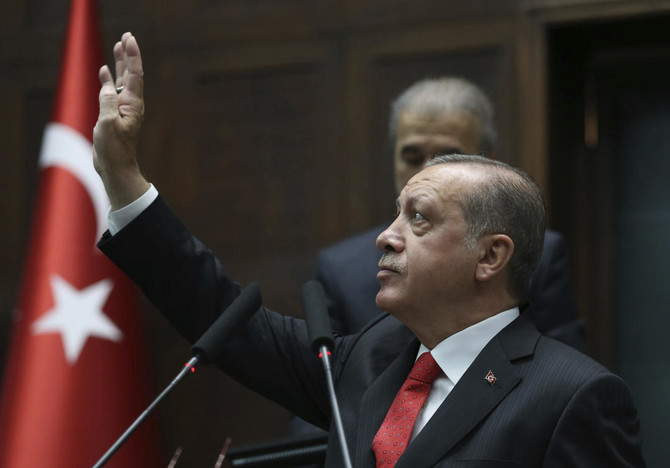
Turkish President Recep Tayyip Erdogan recently hinted that the Turkish Army could turn its attention to the northern Syrian district of Afrin — currently controlled by the YPG — once its ongoing operation in Idlib, in coordination with Russian forces, is complete.
Ersen noted that, for Russia, the ongoing Astana process is vital to ensure both Turkey and Iran’s regional ambitions are kept in check and that neither gains significant geopolitical leverage in Syria independent of Russian interests.
“Still, Moscow will need to find a way to appease Turkey in order to implement its own vision in Syria,” he added. “It could be open to making minor concessions to Turkey regarding the Afrin issue, if Ankara silently approves the Russian vision with regard to the future of Syria.”


![]()
Turkey: Russian invitation to Kurdish party for Syria talks ‘unacceptable’
Turkey: Russian invitation to Kurdish party for Syria talks ‘unacceptable’

Latest updates


© 2026 SAUDI RESEARCH & PUBLISHING COMPANY, All Rights Reserved And subject to Terms of Use Agreement.