LONDON: The oil price hike to over $60 per barrel — $10 ahead since July — reflects underlying fundamentals such as robust global gross domestic product (GDP) growth and a better realignment of supply and demand, according to London-based analysts.
These underlying trends, more than instability in Kurdish regions of Iraq, were the real drivers of the price rise, the analysts said.
Oil has topped $60 a barrel for the first time in two years in the past few days, reinforcing views expressed recently by the head of the Organization of the Petroleum Exporting Countries (OPEC) that stability was returning to the sector.
Jason Gammel, oil analyst at London broker Jefferies, said internal research — using a variety of sources including data supplied by the International Energy Agency — showed demand exceeding supply for the first time in four years.
Gammel said “demand is ahead of supply, but I think for this to continue, the agreement by OPEC and non-OPEC countries to constrain production, which they struck in 2016, would have to be extended through 2018.”
That will not be confirmed until the next OPEC meeting in Vienna later this month.
Gammel said excess inventories were approaching the five-year average in the US, but were still 179 million barrels over that average in the wider OECD.
He does not expect OECD inventories to revert to the five-year average until late 2018 or even 2019. But he was generally “encouraged” by underlying demand growth potential driven by stronger global GDP.
Oswald Clint at London-based Bernstein Research said fundamentals were pushing up the price. In the short term, he was cautious because of the possibility of a US supply response.
“We are medium to long-term bullish, and expect the price to go back to the $70s range by 2020,” he said.
“We don’t see demand risks, we don’t see international supply response risks, we believe in the efficacy of OPEC curtailments and continue to see that helping, but if there is no US shale response, we could meet our price target sooner.”
Clint said the key to understanding the market was price elasticity — where lower prices pull in demand. “People didn’t expect that to last long after the 2014 correction, but cheap pricing stimulates demand,” he said. Reporting a surge in third-quarter earnings on Tuesday, BP Chief Finance Officer Brian Gilvary said,“inventory reductions and continued efforts from OPEC and non-OPEC countries to maintain cuts supported price gains.”
He added: “Oil demand over the remainder of the year is expected to remain robust. Overall we expect inventory levels to continue to edge lower, although there still remains a lot of uncertainty around the pace of that adjustment and around the longer-term outlook.”
At a recent forum in London, OPEC Secretary-General Mohammed Barkindo said the global oil market was tightening at an “accelerating pace,” and cited a sharp reduction in worldwide inventories as evidence that last year’s agreement by producers to cut supply was having an effect.
He added: “OPEC stocks in September were about 160 million barrels above the five-year average, down from 340 million in January. There has been a massive drainage of oil tanks across all regions … a balanced oil market was now fully in sight.”


![]()
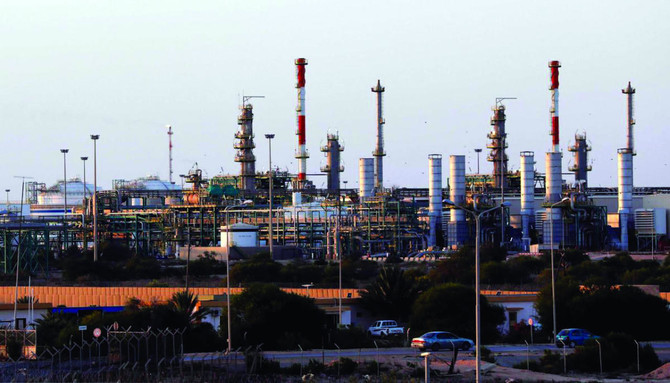
‘Oil demand outstrips supply for the first time in four years’
‘Oil demand outstrips supply for the first time in four years’


Latest updates


© 2026 SAUDI RESEARCH & PUBLISHING COMPANY, All Rights Reserved And subject to Terms of Use Agreement.