

From Egypt with love: Find out why handbag brand Okhtein is flying off the shelves

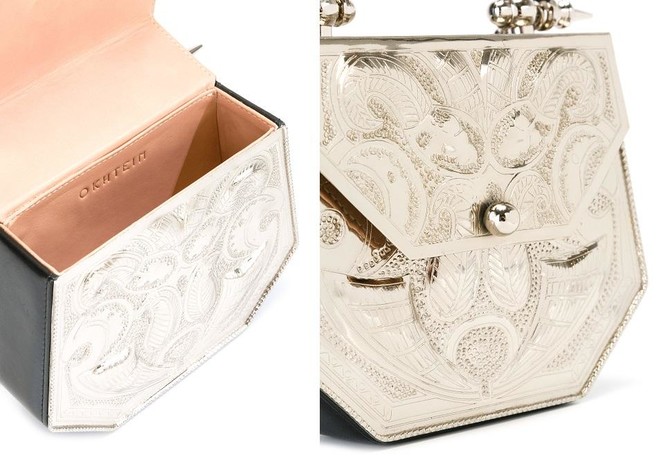
The popular brand is known for its quirky, cute and ultra-feminine bags and scarves. (Photos supplied)
Updated 31 October 2017
Follow

From Egypt with love: Find out why handbag brand Okhtein is flying off the shelves

BEIRUT: Founded by two sisters, Egyptian brand Okhtein is one of the country’s hottest exports and for good reason.
The popular brand — which is sold in such high-end outlets as Bloomingdales in Dubai and Harvey Nichols in Saudi Arabia — is known for its quirky, cute and ultra-feminine bags and scarves.
The brand, which means “two sisters,” was launched in 2013 by Aya and Mounaz Abdelraouf and has since gone on to reach astronomical heights in its success around the Middle East.
“We used to work on several projects together when we were kids and both of us had good work chemistry and shared an artistic vision,” the pair told Arab News. “We felt like we both completed each other and we should pursue our dream and start a brand together. We love fashion and both of us love accessories. Growing up, we had a fascination with luxury handbags. We always wanted to wear unique bags that weren’t available in the market, so we both ended up designing our own.”
What is less known is the decisive influence exerted by the duo’s grandmother on their taste and ideas about fashion. According to the sisters, their grandmother kept her clothes from the 1960s and 1970s and allowed the pair to rummage through her closed in search of inspiration.

The sisters believe that the secret behind their success is their story and the fact that they produce their line of bags and other accessories in Egypt.
“We sell our bags to big players in the market who usually have ‘Made in Italy’ stamped on the inside (of their other products). Our ‘Made in Egypt’ (concept) is new and it changes the expectations of people,” the pair said.
To manufacture their products, the sisters take a philanthropic approach to their work based on their desire to incorporate more handmade embroidery and straw into their leatherwork. The pair set up a collaboration with several local NGOs that provide assistance to skilled female workers from economically unstable backgrounds in the country.

And another one! ##GoodNightVibes #okhtein #repoinEgypt #beyonce #theseries

A post shared by OKHTEIN (@okhtein) on

The duo is proud that the brand is exporting the values of Egyptian craftsmanship and giving back to those in need — all through the power of fashion.
Harnessing the creativity of Egypt is clearly important to the sisters who were born and raised in Cairo. Aya studied communication and media arts along with digital arts and design at the American University of Cairo while Mounaz studied marketing and art at the same university and also went on to become a painter who has exhibited in galleries in Paris and Egypt.
It is no wonder then that the brand is known for its creativity and its ability to capture certain moods and moments in time.
This is especially visible in the brand’s flagship models, the “Palmette Minaudiere” and “Palmette Backpack.”

Thursday mood, weekend vibes with our Dome Plate in gold. #styledby @maisonmehany #ootd #okhtein

A post shared by OKHTEIN (@okhtein) on

The minaudiere, also known as the box clutch, comes in a variety of colors as is based on the invention of the box clutch in 1934 by French jewelry, watch, and perfume company, Van Cleef and Arpels. Charles Arpels was inspired by watching Florence Gould, the third wife of famed casino owner Franck Jay Gould, toss her personal belongings in a tin box. The small, handle-free clutch bag quickly became the ultimate chic statement and the sisters have put their own, decidedly unique, spin on it.
Recently, the designers chose a brand ambassador to help bridge the gap between the brand and their consumers.
“We’ve chosen Karen Wazen from Lebanon, who lives in Dubai… We love her style, her personality and everything about her. She feels connected to our brand because she’s a twin and has twin daughters, so the bond of sisterhood is very special to her. In addition, we have Egyptian actress, Amina Khalil as our local brand ambassador. She’s strong and charismatic and fits very well with our identity,” the pair said.

Styling two dresses in one with our all time favorite Mini Studded Red Gold. #styledby @maisonmehany

A post shared by OKHTEIN (@okhtein) on

Avid fashionistas should keep their eyes peeled as the designers are currently working on creating a luxury line of travel bags and suitcases and also plan to incorporate crystals, silk and artificial fur in their future collections.
Draped in history, Saudi fashion designers look to the future

Updated 22 February 2026
Follow

Draped in history, Saudi fashion designers look to the future

  • Saudi designers are reimagining the Kingdom’s heritage through modern fashion

RIYADH: The fast-growing fashion industry in Saudi Arabia is looking through the lens of history and heritage to produce clothing draped in the history of traditional garb worn during the time of the Kingdom’s founding.

At the Saudi Cup on Feb. 13, a number of designers showcased their couture inspired by the country’s rich history.

Saudi designer Fahda Al-Battah, one of the minds behind brand Adara by Fa alongside Abeer Al-Moammar, spoke to Arab News about their debut collection “Journey Through Time.”

Saudi designers showcased their couture inspired by the Kingdom’s rich history at the recent Saudi Cup in Riyadh, which is becoming  a hotspot for the latest styles. (Supplied)

The emerging brand’s collection was designed with the intention of displaying the country’s diversity.

The collection’s six pieces each represent a region of the Kingdom, either through motifs, symbolism, or patterns that are hand drawn by Al-Battah and her team.

The first dress is heavily inspired by the Qassim and Al-Ahsa regions, and features illustrated scenes of people collecting dates from palm trees and using them in various ways. “It’s a story, basically,” Al-Battah said.

“Heritage must be preserved and if anything new comes up now, we must create new heritage and not replicate the past,”

Amar Al-Amdar, Saudi designer

Another piece uses the patterns and colors that are prominent in the Southern region as motifs, with a backdrop of lush mountains and colorful architecture.

A drapey blue piece is inspired by the coasts of both Jeddah and the Eastern Province. “It's very fluid, even in design,” she said.

Adara by Fa's debut collection "Journey Through Time" highlights the beauty of Saudi Arabia's various regions. (AN photo by Abdulrahman bin Shalhoub)

Two other pieces are inspired by the central Najd region, the designer said, a dark green ensemble with wing sleeves and another white dress, each elevated with decorative pieces resembling a string of dates.

The hero piece is an extravagant gown that displays every part of Saudi Arabia chronologically along the trim, starting with Najd and meshing into the other regions.

“The last dress has each part of Saudis, any culture and heritage, and it unifies us with the sheila (headscarf), which has King Abdulaziz’s quote, ‘We united on the word of monotheism, and so our hearts and lands united,’ which shows unification of us as a whole region,” she said.

MD29, another brand supported by the Fashion Commission, was inspired by the Saudi spirit of hospitality, taking Saudi coffee as a central element in their latest collection. (AN photo by Abdulrahman bin Shalhoub)

“Saudi is very rich in heritage. So, most of the designers right now are looking for a way to identify themselves in the global market and showcase the beauty of what Saudi has.

“Each designer in Saudi is paving the way in a new field, which makes it very exciting and very creative,” Al-Battah said.

ASL Line, for example, was inspired by the lavender found in the heart of the desert. The soul of the plant was translated into a story through stitching and colorful motifs.

“We don’t look for inspiration from far away … we go back to our land,” according to a post on the brand’s social media account.  

MD29, another brand supported by the Fashion Commission, was inspired by the Saudi spirit of hospitality, taking Saudi coffee as a central element in their latest collection.

“You can see in the collection the color variations from the plant to the grind. This time, they wanted to highlight the character more, not just in the silhouettes, but in the fabrics, in the Arab spirit,” Manal Al-Dawood, founder of the brand, told Arab News.

Through their technique of layering the fabric, the prints used in the collection try to show the journey of coffee beans, from the moment they are planted into the earth to making it to the grinding process.

Saudi designer Amar Al-Amdar shared with Arab News his thoughts on the art scene through his experience of being a prominent figure in the industry.

He said: “We are now in phases of focusing on respecting the identity and culture in Saudi designs across all its regions, of course.

“And that’s a beautiful thing, but an important thing to focus on in this phase is that, in the past, when they were working on creating our pieces and wearing these (traditional) designs, that was considered innovation. That was the new look.

“When there was a swift pause on the development of our clothing, our past became heritage. But heritage must be preserved and if anything new comes up now, we must create new heritage and not replicate the past.”

He did not mince words about the wave of amateur designers that are adapting traditional clothing to use as decorative elements for newer, unconventional designs.

“For example, some of the worst things I’ve seen is taking something like the shemagh (scarf) and incorporating it into pants, or taking the agal (headwear) and making it a belt.

“This mix and crossing is wrong. Long ago, when they designed something for the head, it was intended to serve a purpose. It wasn’t decorative,” he said.

He felt it was important to caution novel fashion designers to innovate for the future and not simply look to the past for inspiration, and not create pieces that use heritage as merely a decorative motif.

“We need to form new paths, some renewal. There was a functionality to things, everything served a purpose in its design.

“But when design only becomes shifting a placement of something, that’s the biggest misuse of the original Saudi design … heritage is made to serve a purpose, so if we want to innovate it, it must have a functionality to it,” he said.