Japan to reportedly launch crackdown on asylum seekers

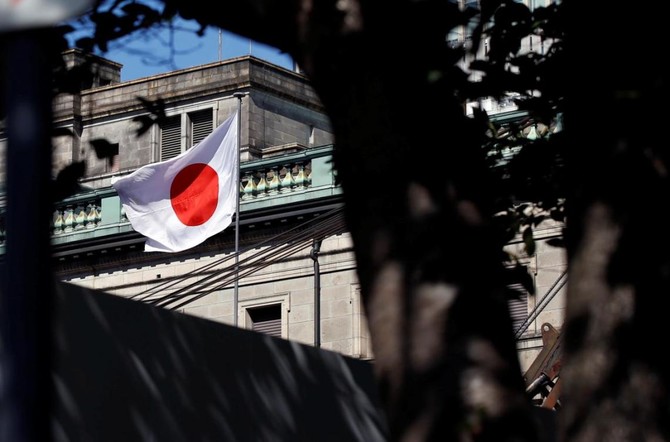
From as early as mid-November, Japan will only allow those it regards as bona fide refugees the right to work. (File photo: Reuters)
Updated 31 October 2017
Follow

Japan to reportedly launch crackdown on asylum seekers

TOKYO: Japan will curb asylum seekers’ rights to work and detain any not deemed refugees or who have made multiple applications, the Yomiuri daily reported on Tuesday, in a move to further tighten one of the developed world’s toughest refugee systems.
From as early as mid-November, Japan will only allow those it regards as bona fide refugees the right to work. The Justice Ministry estimates that the new rule will effectively deny the right to work for more than 10,000 asylum seekers a year who don’t qualify for refugee status, the Yomiuri said, without citing sources.
Others, including those who fail to qualify as refugees in initial checks and multiple asylum applicants, will be held in detention centers after their permission to stay in Japan expires, the report said.
At present, asylum seekers with valid visas receive renewable permits allowing them to work in Japan while their refugee applications are reviewed — a system the government says encourages people to seek asylum in order to work.
“We are looking at policies, including that in the (Yomiuri) article. We haven’t decided whether to put it into action,” said Yasuhiro Hishida, a Justice Ministry official overseeing refugee recognition.
Japan accepted just three refugees in the first half of 2017 despite a record 8,561 fresh asylum applications, and only 28 in 2016. Human Rights Watch in January described the country’s record on asylum seekers as “abysmal.”
The prospect of the crackdown drew criticism from Japan’s most prominent refugee organization, which said that asylum seekers would struggle to make ends meet without work permits.
“It’s essential that minimum living conditions are ensured while people apply for asylum,” said Eri Ishikawa of the Japan Association for Refugees.
The world’s third biggest economy has remained unwelcoming to immigration despite a shrinking, aging population that has exacerbated the worst labor shortages in four decades and drags on an already slow economic growth.
Japan’s reluctance to accept foreign workers and refugees is in contrast to the policies of other industrialized countries, and has forced labor-hungry industries including construction and manufacturing to rely on asylum seekers with work permits.
Immigration remains a controversial subject in Japan, where many pride themselves on cultural and ethnic homogeneity.
Almost six in 10 Japanese think diversity of ethnic groups, religions and races makes their country a worse place, a poll this month by the Pew Research Center showed.


Pakistani consortium acquires 75 percent stake in PIA in major privatization move

Updated 4 sec ago
Follow

Pakistani consortium acquires 75 percent stake in PIA in major privatization move

  • Around 90 percent of $482 million bid amount will be reinvested into PIA to fund fleet expansion and improve services
  • The airline’s sale is a central pillar of Pakistan’s broader economic reform agenda under a $7 billion IMF bailout 

ISLAMABAD: Pakistan on Tuesday concluded the long-awaited privatization of its loss-making national flag carrier, the Pakistan International Airlines (PIA), with Arif Habib Group emerging as the winning bidder in a process the government says will end decades of state-funded bailouts and help revive the loss-making airline.

The consortium, led by Arif Habib Group, secured a 75 percent stake in PIA for Rs135 billion ($482 million) after several rounds of bidding, valuing the airline at Rs180 billion ($643 million).

The sale marks the South Asian country’s most aggressive attempt in decades to reform the debt-ridden carrier, which has accumulated more than $2.8 billion in financial losses.

Following the announcement of successful bidder, Muhammad Ali, chairman of the Pakistan Privatization Commission, said the biggest advantage fo the sale would be that the government will not have to fund the airline.

“It will have new planes and all Pakistanis, who want to travel around the world directly, which we go through transits via different airports today, all of that will be improved, service quality will be better and overall, there will be an impact on employment and GDP [gross domestic product] growth in the country,” he said.

“[We] had to make it at least Rs120-125 billion [investment]. That is why I am very happy to have Rs135 billion [$482 million] bid, out of which 92 percent will go to the company [PIA]. So, around Rs125 billion [$446 million] investment will be made in the company. So, what our target was for the investment, planes, today there are 18 planes, after 4 years, we are looking at 38-40 planes.”

Ali said they hoped the number of passengers traveling through PIA annually would rise to 7 million from the existing 4 million over the next 4 years.

Once considered among Asia’s leading carriers, PIA struggled with chronic mismanagement, political interference, overstaffing, mounting debt and operational issues that led to a 2020 ban on flights to the European Union, United Kingdom and the United States (US) after a pilot licensing scandal. The EU and the UK lifted the bans, providing fresh momentum to the carrier that still remains barred from flying to the US.

Arif Habib, chairman of Arif Habib Group, said they are committed to restoring the airline’s fortunes through fresh capital, fleet expansion and improved management.

“PIA is our national organization. It has seen good days in the past,” Habib told Arab News. “I hope that this new capital will go into the company and the airline’s problems will be solved.”

He said the airline’s fleet would be expanded significantly.

“In the first phase, there will be 38 aircraft and then it will be expanded to 65 aircraft. Depending upon the demand, we will further increase the number of aircraft,” he said, adding that the group would “give confidence to the existing employees and take full advantage of their expertise.”

The airline currently employs 6,480 staff, according to PIA spokesman Abdullah Hafeez Khan.

Government officials say the structure of the privatization deal was designed to prioritize the airline’s revival rather than immediate fiscal gains for the state.

“I hope that PIA will revive in the future. We’ll go back to the glory days,” Ali said.

Under the agreement, the new management is required to invest up to Rs125 billion [$446 million] in the airline, including the acquisition of new aircraft.

Ali clarified the airline’s name would remain unchanged.

“PIA’s name cannot be changed. It will remain Pakistan International Airlines,” he said.

Under the transaction, the government will retain a 25 percent stake, worth around Rs45 billion ($160 million), in the airline.

Ali, however, said the winning bidder has 90 days to decide if it wants to buy the remaining 25 percent share from the government.

Addressing employee concerns, Ali said no staff member would be laid off for at least one year and that existing pay, perks and compensation structures would remain unchanged during this period. Decisions on longer-term staffing will be made later, he added.

Pakistan had prequalified four investor groups in July, but Fauji Fertilizer Company, part of a military-backed conglomerate, withdrew before ahead of the bidding process.

The airline’s sale is a central pillar of Pakistan’s broader economic reform agenda under a $7 billion bailout agreed last year with the International Monetary Fund (IMF).