LONDON: October 2005 and, while the hair of the respective coaches in the press conferences ahead of the AFC Champions League final was silver, West Asian football was standing firmly in the middle of the continental podium with gold around its neck.
Milan Macala, often more prickly than his cuddly persona suggested, was to spend over two decades coaching the national teams of Kuwait, Oman, UAE, Saudi Arabia and Bahrain, as well as a number of big clubs in the region. But here, the Czech tactician was trying to lead Al-Ain of the UAE to a second continental crown in three years.
Then there was Anghel Iordanescu, laconic and confident, who was sadly to spend less time in the region. The Romanian was trying to lead Al-Ittihad to a successful defence of their title.
The Saudi side won, comfortably — they usually did.
At the time, the Tigers were imperious, beating Chinese and Korean opposition in the quarter and semifinals 8-3 and 7-0 respectively on aggregate. Even now they are the only team to win back-to-back Asian Champions Leagues.
To see two West Asian teams meet with the trophy at stake now, however, is unthinkable. The reason that literally is now the case — the tournament is divided geographically until the final, a change from 2013 when the two zones started to mix in the last eight — is down to the fact teams from the east were dominating.
The Al-Ittihad vs Al-Ain final in 2005 marks a high point in the modern history of West Asian club football. After the Tigers took their second crown, the east started to rise again. Of the 11 tournaments since, only once has the trophy been in a cabinet located west of China — Al-Sadd’s 2011 triumph.
This mirrored what was happening at international level. Iran and Saudi Arabia both easily qualified for the 2006 World Cup, with Bahrain coming very close to giving Asia five representatives in Germany, narrowly losing the final intercontinental playoff to Trinidad and Tobago.
The following summer, Iraq and Saudi Arabia met in the Asian Cup final, with the Lions of Mesopotamia making headlines around the world with their glorious win. Since then, however, the national teams have suffered a similar slump to their clubs.
Of the four teams the AFC sent to the 2010 World Cup in South Africa, none came from the Middle East. Four years later only one country from the region made it, Iran. The Asian Cup has similarly been dominated by the East.
The relative failure of the west has not been helped by chopping and changing coaches on a crazy basis. Iordanescu was fired not long after leading Al-Ittihad to continental glory. The Tigers, feared at the time, have not won since.
Such short-term thinking washes over all aspects of the game. Coaches, even some world-famous ones, live from game to game and don't think about anything beyond. Countries such as Japan and South Korea have paid more attention to youth development and facilities, and encouraged their brightest talents to test themselves in Europe — a policy that, so far, Iran apart, is not replicated this side of India.
Yet now, the situation is improving. The west may not exactly be the best just yet but it is growing in strength. Saudi Arabia made it to the World Cup, helped by hiring a good and experienced coach in Bert Van Marwijk and giving him time with the team. This followed the example of Iran with Carlos Queiroz molding an increasingly cosmopolitan Team Melli into Asia’s No. 1 team and best hope for next summer.
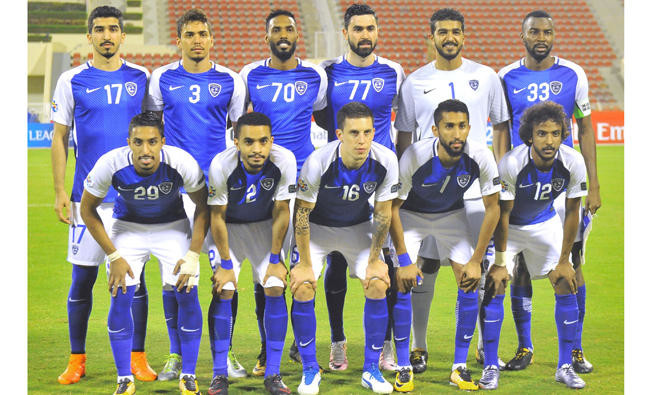
If western teams can outperform their eastern rivals in Russia, that will be a statement. But there is something else that needs to happen. It is time for the AFC Champions League trophy to return to the region. In next month’s final, Al-Hilal are up against Urawa Reds of Japan. An emphatic win, more than anything else, would send a signal to the rest of the continent: West Asia is back.


![]()
![]()
Why West Asia needs Al-Hilal to rock Urawa Reds

Why West Asia needs Al-Hilal to rock Urawa Reds
Latest updates


© 2026 SAUDI RESEARCH & PUBLISHING COMPANY, All Rights Reserved And subject to Terms of Use Agreement.