BAGHDAD: Iraqi Kurdish leader Masoud Barzani, the driving force behind last month’s independence vote, finds himself isolated at home and abroad weeks after he scored a major victory with a resounding “yes” at the polls.
He organized the Sept. 25 referendum in the autonomous Kurdish region of northern Iraq with much fanfare, despite domestic and international objections. But analysts say he miscalculated.
Weeks after the vote, central government forces launched a sweeping operation, reclaiming territory and oil fields in and around the disputed province of Kirkuk from Kurdish Peshmerga forces.
The loss of the oil fields, which provided income that would have been critical to an independent Kurdish state, sparked recriminations among Kurds.
Iraqi President Fuad Masum, a Kurdish member of a party long at odds with Barzani’s Kurdistan Democratic Party (KDP) who supported a UN-backed push for dialogue, said the independence referendum triggered the assault on Kirkuk.
Iraqi Kurdistan’s main opposition party, Goran, has called for talks with Baghdad and demanded that Barzani and his deputy Kosrat Rasul resign, saying they “no longer have any legitimacy.”
“The KDP is isolated within Kurdistan itself, in Iraq, regionally and increasingly internationally,” said Kirk Sowell, an analyst and publisher of Inside Iraqi Politics.
Sowell said that faced with staunch opposition both from Goran and from long-time rival the Patriotic Union of Kurdistan, the KDP’s “only hope is that Baghdad overreaches and loses international support.”
But he warned that the KDP “doesn’t have much leverage left” in negotiations.
The US, a key ally of both Baghdad and Kurdish forces in the battle against Daesh, opposed the non-binding referendum, as did several nations including Iraq’s neighbors Iran and Turkey.
Iraq’s supreme court ruled that the vote was unconstitutional.
Barzani, who saw a “yes” vote as a step closer toward the cherished dream of Kurdish statehood, campaigned relentlessly prior to the referendum but has since slipped out of view.
On Sept. 26, a day after the vote, he urged Iraqi Prime Minister Haider Al-Abadi to begin talks on the issues dividing them, but the two sides remain wide apart. Al-Abadi has vowed to keep Iraqi unity intact and world powers appear to support his view.
“Barzani will now have to reconsider his maximalist attitude and reopen channels of negotiation,” Karim Bitar of the Paris-based Institute of International and Strategic Affairs told AFP.
“The US and the entire international community, with the notable exception of Israel, remains committed and attached to Iraq’s unity and territorial integrity,” he said.
The son of iconic Kurdish nationalist leader Mulla Mustafa Barzani and head of the KDP since 1979, Barzani has long been the face of demands for Kurdish self-determination.
Born on Aug. 16, 1946, in Mahabad, capital of a Kurdish republic declared by his father amid unrest in Iran following WWII, Barzani joined the fight for an independent Kurdistan as a teenager.
To this day he wears the garb of a Peshmerga fighter: Baggy khaki pants and shirt, a traditional sash and a checkered white-and-red scarf rolled around his head as a turban.
“Barzani has made strategic decisions for years based on a narrow circle of advisors, not through a democratic process,” Sowell said. “It appears... that Barzani is surrounded by people who just tell him what he wants to hear.”
Many Kurds believe that two men — former Iraqi Foreign Minister Hoshyar Zebari and Kirkuk Gov. Najm Eddine Karim — were behind Barzani’s decision to hold the referendum.
Kurdish affairs analyst Mutlu Civiroglu said the independence vote backfired and isolated Barzani because the Kurdish leader “misinterpreted” messages from Washington and Ankara.
Barzani believed both allies would support his march towards independence and failed to read between the lines, Civiroglu said.
The US was “very clear in supporting a united Iraq in which Kurds play a balancing role,” he said.
Turkey, home to a large Kurdish minority, saw the vote as a threat to its own unity, he added.
“Barzani could not read the position of the US in regards to Iraq and misinterpreted the messages” as support for his move toward independence, he said.
“He heavily relied on good relations with Turkey.”
Bitar said a “false vision of Iraq as a mere mosaic of ethnic and sectarian identities” had been reinforced since the US invasion of 2003.
“There has been a common and unfortunate tendency among many analysts and policymakers to underestimate the strength of Iraqi nationalism,” he said.
“To paraphrase Mark Twain, we could say that events of the past few days indicate that reports of Iraq’s death may have been greatly exaggerated.”


![]()
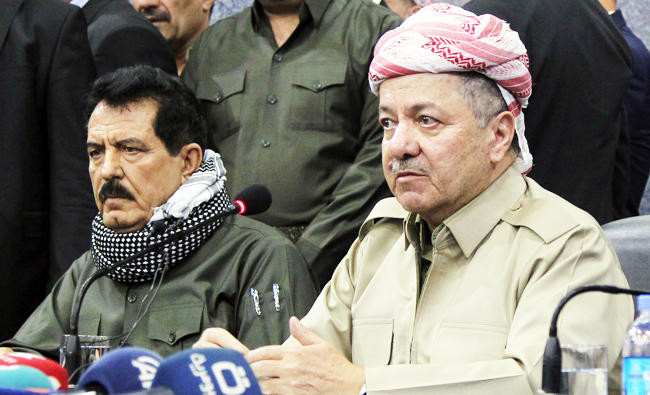
Barzani isolated by his drive for Kurdish independence
Barzani isolated by his drive for Kurdish independence

Latest updates


© 2026 SAUDI RESEARCH & PUBLISHING COMPANY, All Rights Reserved And subject to Terms of Use Agreement.