RAQQA: “Special operations by the Caliphate’s soldiers!” boasts a torn, bloodstained pamphlet at a bombed-out media kiosk in Raqqa, a symbol of Daesh’s once fearsome propaganda machine.
As well as serving as the Syrian capital of Daesh’s “caliphate,” Raqqa was the beating heart of much of its media output. But since a US-backed offensive brought Daesh’s three-year reign over the city to an end, the backbone of the terrorists’ macabre marketing now lies in ruins.
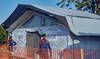
Scattered across Raqqa are bluish-grey cement kiosks labeled “media points,” where Daesh members would distribute printed publications on everything from their military conquests in Syria and Iraq, to guidelines for fasting and rules on women’s wear.
One such kiosk stands in Raqqa’s central Clock Tower Square, just next to what appears to be an outdoor viewing lounge under a slanted roof missing half of its bricks.
Six dusty rows of alternating green and red cushioned seats face a metal stand where a television should have been. A flat-screen TV lay smashed on the ground nearby.
“Daesh used to broadcast their productions here for residents to watch — footage of their battles, punishments, and nasheeds (Islamic hymns),” said Shoresh Al-Raqqawi, a 25-year-old Raqqa native and Syrian Democratic Forces (SDF) fighter.
The SDF ousted the last remaining Daesh fighters from Raqqa on Tuesday and while most of the forces had withdrawn, Raqqawi stayed behind as part of a small unit helping to clear rubble from streets and remove mines.
The only sign of movement on Saturday in the heavily damaged neighborhoods around Raqqa’s famous clock tower was by bulldozers and a handful of white SDF pickup trucks.
Raqqawi recounted how Daesh members working at the kiosk would stop young men with mobile phones and erase the songs on their devices, replacing them with Islamic nasheeds.
“Daesh also used to bring young children here, give them sweets, potato chips, and biscuits, and make them watch the videos and listen to their songs,” he added.
For years, Daesh has operated a sophisticated and multilingual media machine, complete with online magazines, radio broadcasts and social media campaigns highlighting its military prowess and gruesome tactics.
It often used minors in its propaganda output to ratchet up the shock factor, boasting of child soldiers that it called “Cubs of the Caliphate.”
While Daesh media continue to operate from elsewhere following Raqqa’s fall, there has been a shift in tone, with the narrative nostalgically recalling the caliphate.
On Saturday, the names and logos of Daesh’s many outlets could be seen emblazoned on a tattered, greyish banner near the media kiosk in Clock Tower Square: Al-Bayan Radio, Al-Hayat, Al-Furqan, and Al-Naba pamphlet.
The group used the channels to publish grisly footage online of the punishment and even execution of alleged opponents, including Western hostages or those accused of being spies. But while most of the world could look away, Raqqawi and fellow SDF fighter Khalid Abu Walid were often forced to watch these practices live.
“They would whip and hit people so hard,” said Abu Walid, 21, telling AFP how shops and streets in the roundabout would shutter and residents would gather around to watch whatever punishment was being doled out.
“All roundabouts in Raqqa had media points like this,” Abu Walid said.
Torn Daesh papers can be found on almost every damaged Raqqa street, providing clues to the behemoth administration that the terrorist organization once ran there.
One dusty card features a table recording the number of times its owner received zakat, or charitable offers, from others.
Another document details the handover of the hisba — or police office — from one manager to another.
On Saturday, a unit of foreign intelligence officers dressed in military gear and thick neon orange gloves could be seen inspecting a home near Raqqa’s infamous Al-Naim roundabout.
“They are searching suspected Daesh headquarters, which they heard about from residents who escaped the city,” an SDF fighter accompanying them said on condition of anonymity because he was not authorized to speak to the press.
“They are looking for bodies, identification cards, and other intelligence.”


![]()

In Raqqa, clues to Daesh’s bygone media empire
In Raqqa, clues to Daesh’s bygone media empire
Latest updates




© 2026 SAUDI RESEARCH & PUBLISHING COMPANY, All Rights Reserved And subject to Terms of Use Agreement.