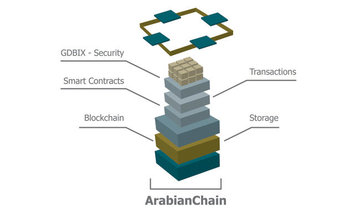
DUBAI: The research arm of the Islamic Development Bank plans to use blockchain technology to develop Shariah-compliant products, aiming to support financial inclusion efforts across its member countries.
The Jeddah-based Islamic Research and Training Institute said it had signed an agreement with local firm Ateon and Belgium-based SettleMint, with the first stage to focus on a technical feasibility study.
The agreement is the latest effort to combine blockchain technology to tap demand from Muslim investors, with firms from Indonesia to Canada having already received Shariah-compliant certification for their products.
Involvement of the IDB, a multilateral development institution, could also encourage other fintech firms to incorporate Islamic finance to tap markets across the Middle East, Asia and Africa.
Islamic finance follows religious principles such as a ban on gambling and outright speculation, but until now the sector has focused on traditional retail banking services.
Blockchain involves a shared electronic ledger that allows all parties to track information through a secure network, removing the need for third-party verification.
The IDB said such features would allow for instantaneous clearing and settlement of transactions and asset exchanges, while helping eliminate counterparty risk.

Saudi Arabia’s IDB plans blockchain technology for Shariah-compliant products
Saudi-French cooperation to localize veterinary vaccine manufacturing
RIYADH: In the presence of sector leaders, the National Livestock and Fisheries Development Program signed a memorandum of understanding with French company Ceva under the patronage of Minister of Environment, Water and Agriculture Abdulrahman bin Abdulmohsen Al-Fadhli, who also chairs the program’s board.
The agreement aims to localize vaccine manufacturing, transfer technology and technical expertise, and expand the industrial and commercial production of veterinary vaccines across the Kingdom.
According to the MoU, the two parties will work to achieve high efficiency in mass production scale-up and establish a clear path for sustainable commercial operation that meets the needs of the local and national market, as well as strengthen the biosecurity and food security system.
The MoU also includes the development and modernization of messenger RNA vaccine technologies, along with joint research and development of a Middle East Respiratory Syndrome vaccine for camels. This involves designing, evaluating, and developing vaccines specifically tailored to combat the virus.
The agreement also covers the development of a rabies vaccine and related solutions, as well as supporting national efforts to control the disease through vaccine provision, capacity building, and the implementation of integrated prevention strategies.
The collaboration between the program and Ceva aims to meet the needs of the poultry vaccine market in the Kingdom, currently estimated at around SR750 million ($199 million).
The company will work to cover approximately 30 percent of this market with an initial investment of around SR250 million.
With continued government support for poultry projects and increased production in the sector, the market is expected to grow at a rate exceeding 10 percent annually, reaching approximately SR1.25 billion by 2030.
The addition of the world’s leading poultry vaccine manufacturer to Biotech Park highlights the program’s key role in developing new industries within the livestock and fisheries sector.
It also highlights the program’s commitment to building international partnerships with global companies, organizations, research centers, and universities to support advanced biotechnology industries and attract high-quality investments. It also seeks to create new economic sectors based on biotechnology, enhance veterinary health security, and support the sustainable economic development of the livestock sector, as well as empower national and emerging companies and provide advanced research and industrial infrastructure.
This will solidify the Kingdom’s position as a global hub for biotechnology industries and the development of national capabilities.
Ceva is the first international partner to join Biotech Park, the future veterinary biotechnology city launched by the program in Dhurma Governorate. The city is the world’s first specialized and fully integrated hub for veterinary biotechnology, serving as a benchmark for sector development and a platform supporting markets across the Kingdom, the Gulf, the Middle East, Africa and beyond.
The signing of Ceva is a significant step, given its position as the world’s leading manufacturer of poultry vaccines and medicines, and one of the most prominent international companies in the field of biotechnology.
The MoU aims to localize the veterinary vaccine industry, ensuring its compatibility with the strains of poultry diseases prevalent in Saudi Arabia. This includes the transfer of technology and technical expertise from Ceva, along with the implementation of specialized training programs to guarantee that manufacturing facilities comply with international Good Manufacturing Practice standards.