LONDON: On Tuesday Al-Hilal strode into the AFC Champions League final with a 6-2 aggregate thrashing of Iran titans Persepolis. While the excitement felt by the many passionate Al-Hilal fans is easy to understand, the fact is every Saudi should jump for joy that the team from Riyadh went through as, along with World Cup qualification, it signals that football in the Kingdom is back at the top table.
On the eve of the 2006 World Cup, a high-ranking member of the Saudi Arabian Football Federation told this writer that when Saudi Arabia are strong then Asian football is strong. That is debatable but for all that has happened in 2017, this will be remembered as the year the country took back its position as the premier West Asian Arabian football nation from the UAE. A welcome change from most of the past decade or so, when Saudi football was stuck on the substitutes bench — never shining on the best stage.
Recently it has been the UAE who have been have been the poster boys for West Asia, with Omar Abdulrahman their shining star. The silkiest of playmakers, ironically born in Riyadh, has a supporting cast that includes the devastating strike force of Ahmed Khalil and Ali Mabkhout. If it was thrilling to watch the Whites play, it was almost as exciting to watch the team slowly develop.
At the same time, Saudi Arabia lurched from defeat to crisis after a highly successful period. Having failed to make the 1990 World Cup, the last, and first, time the UAE made it, the Green Falcons took to the competition with American relish in 1994, becoming the first Asian team since North Korea in 1966 to reach the knockout stage. Saeed Al-Owairan’s slalom run against Belgium secured a place in the last 16 and gave the tournament one of its greatest goals.
There then came three more appearances and by the end of 2007, the team had reached every Asian Cup final since 1984, with the exception of 2004. It then all started to go wrong.
The 2010 World Cup was narrowly missed but decline was confirmed when the team did not even reach the final round of qualification for Brazil, crashing out along with the likes of Tajikistan and Singapore.
Sandwiched between were the disasters of the 2011 and 2015 Asian Cups and their early exits. The Saudi football national team had reached a low point.
Club football was better but not at previous heights. A decade ago, Al-Ittihad of Jeddah were the benchmark for all of Asia. The Tigers’ success in winning the AFC Champions League in 2004 and 2005 still marks the only back-to-back wins in the tournament’s history.
Riyadh rivals Al-Hilal made the final in 2014, losing to Western Sydney Wanderers, but the UAE’s Arabian Gulf League was doing better. Over the next two years, Al-Ahli and Al-Ain reached the same stage to lose narrowly to stronger teams than Sydney in Guangzhou Evergrande and Jeonbuk Motors.
Now though, the tide is turning. As proved by their victory over Persepolis, Al-Hilal are exciting. There is a strong spine running through the side with goalkeeper Abdullah Al-Owaishir, captain Osama Hawsafi and talented playmaker Nawaf Al-Abed surrounded by talented foreign players.
They will be confident of taking the continental title back to the Kingdom for the first time since 2005. It would be a boost for the national team ahead of the World Cup and there is no reason why they too cannot achieve success.
At the same time, the UAE’s failure to qualify for next year’s World Cup, and, apart from that win in Japan last year, never really getting close, means that the so-called golden generation is at risk of never appearing on the world stage.
For Saudi Arabia even Bert Van Marwijk’s departure as boss after he guided the Green Falcons to Russia cannot remove the current feel-good factor. The Dutchman has already been replaced by Edgardo Bauza. There are many who feel Van Marwijk should have stayed as manager — the pragmatic Dutchman offered experience, of both the country’s football scene and the World Cup after taking his homeland to the 2010 final.
Despite that, there is a spring in the step of Saudi supporters at the moment. For the first time in 12 years, fans can look forward to a World Cup. With Japan, South Korea and Iran also preparing for Russia, Asia is sending its four traditional powerhouses once more. Back on top of the West Asian pile, it is time for Saudi Arabia to show how strong they really are.


![]()
![]()
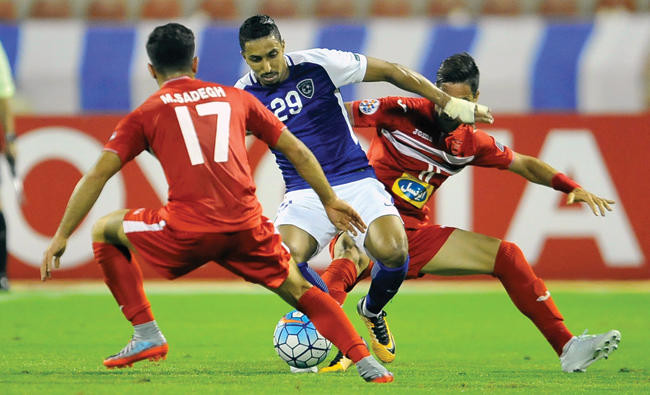
Saudi football is ready to shine again
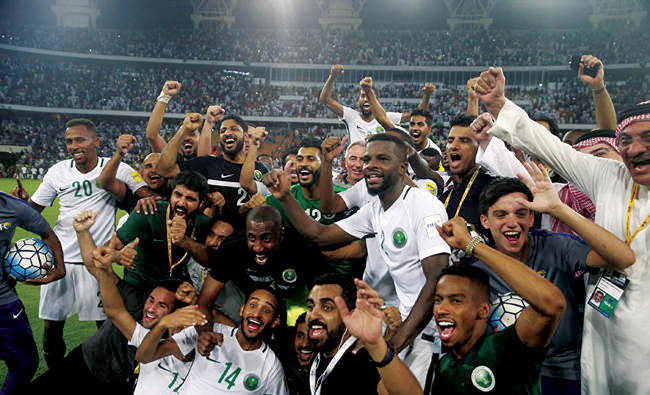
Saudi football is ready to shine again
Latest updates


© 2026 SAUDI RESEARCH & PUBLISHING COMPANY, All Rights Reserved And subject to Terms of Use Agreement.