LAHORE: Pakistan has two seasons — the summer and wedding season. Both influence fashion trends in the country, with the summer catwalks boasting cool, comfortable clothing and the wedding season runways offering attention-grabbing outfits fit for a princess.
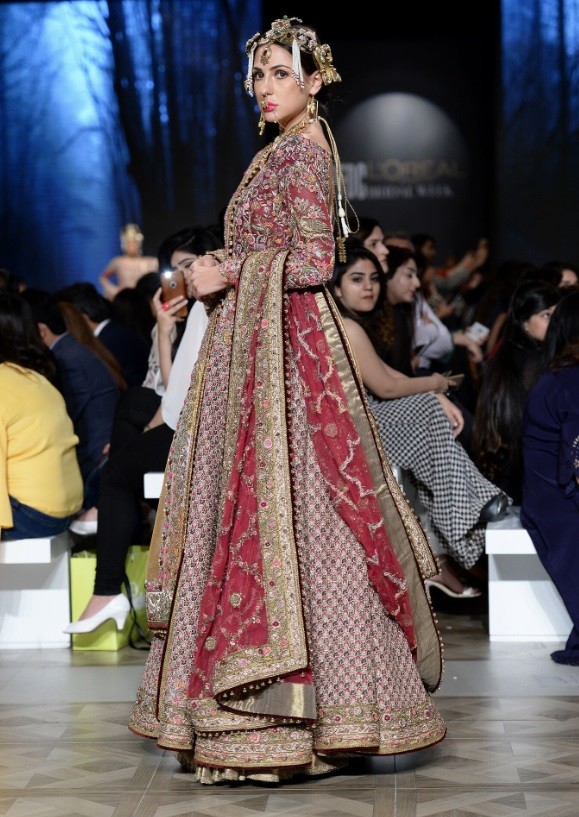
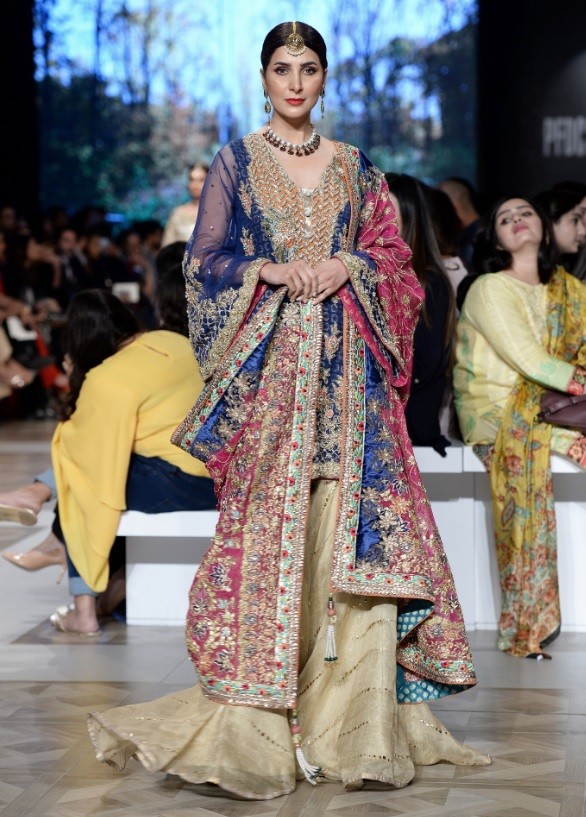
The country’s booming fashion industry puts a great deal of effort into dressing wedding-goers for the events that litter the social calendars of many across Pakistan. A large leg (or two) of the fashion industry in the country is dedicated to all things bridal couture and this year, the Pakistan Fashion Design Council (PFDC) put on their seventh annual Bridal Week in collaboration with L’Oréal Paris (PLBW).
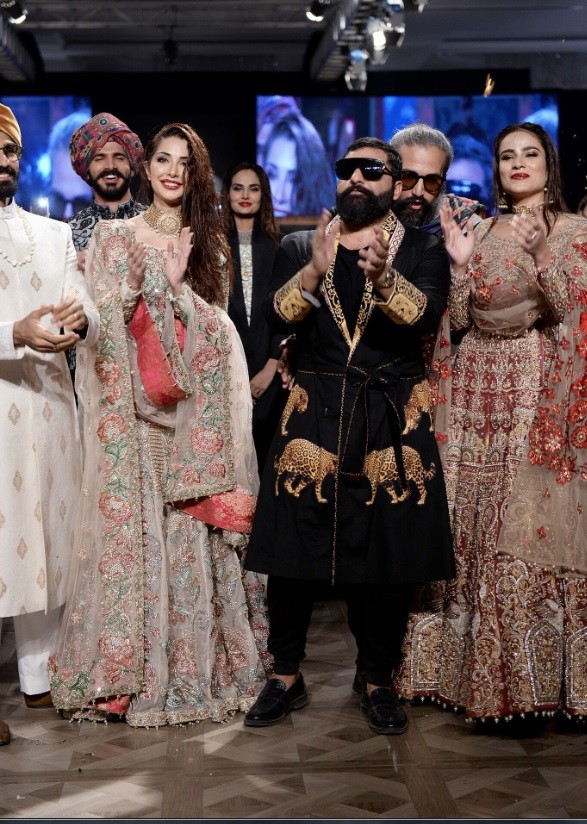
On Oct. 14, the three-day event kicked off at the Nishat Emporium in Lahore. Orchestrated by Mustang Productions, a UK-based production house, the event saw a significant boost in energy and excitement from its previous iterations. The event was also marked by an impressive attention to detail that is usually only found on the runways of non-bridal fashion.
Designers flaunted their creations on the runways in a manner that shook up the bridal industry. Weddings, being so ingrained in the Pakistani psyche, are notoriously difficult to breath fresh air into, but these designers succeeded.
Jewelry played a major role in the showcase of bridal wear, with designer Gold by Reama Malik linking arms with veteran designer Wasim Khan to unleash upon the waiting audience a show that was missing the one thing every bridal offering had — overwhelming embroidery.
The first night saw internationally-recognized Ali Xeeshan show off his colorful creations, which were inspired by destination weddings, in a showcase that was reminiscent of an art installation. The show featured massive portraits of frequent collaborators, including revered fashion photographer Abdullah Harris, that only the master of runway dramatics could pull off.
Night two brought out fantastic presentations from Mahgul, who has grown a cult following for her designs that utilize traditional techniques to out create sensible modern outfits. Similarly, Misha Lakhani and Sania Maskatiya, whose trademarks lay in their expert (however different) approach to cutting and designing for women’s bodies, also wowed the crowd. The night opened with a solo show by Sana Safinaz, which tied together the increasingly common mix of Eastern and Western aesthetics strewn throughout the wedding wear industry. Geometric embellishments, feather accents and figure-hugging cuts easily melded into the collection that included intricate, layered bridal wear.
Night three featured the best of bridal couture and also kept fans on their toes with appearances by superstar entertainers such as Fawad Khan, Sajal Ali and Maya Ali, who played a show stopper for the king of color, Nomi Ansari. The finale was a well thought out production by Fahad Hussayn, whose collection managed to seamlessly place darks and neutrals hand-in-hand with bright hues, like crimsons and pinks.
In the West, fashion and wedding wear do not usually mix. A separate bridal fashion week exists outside the fashion calendar catering to buyers and the bridal world at large, but in Pakistan, that distinction does not exist. With winters that go and come in the blink of an eye, there is not a strong need for a wardrobe to battle the elements. Additionally, the consumers of fashion often find their weekends (and week nights) booked with wedding prep, pre-wedding festivities, events in the double digits, the big days themselves and, of course, post-wedding festivities that call for clothes fit for the occasion.
Other fashion weeks in Pakistan — the spring shows held by the Lahore-based PFDC and the Karachi-based Fashion Pakistan Council — usually end up having a sprinkling of wedding wear thrown in too, but this year was a high point for the specially-dedicated week.
If it was the pinnacle of the bridal wear mountain that has been built over the past seven years, we can only imagine how much bigger — and better — it will be in the years to come.


Ringing in Pakistani bridal week with wedding bells






Ringing in Pakistani bridal week with wedding bells

Imaan Hammam shines in bridesmaid mode
- Attends wedding of best friend and model Cindy Bruna
DUBAI: Supermodel Imaan Hammam recently attended the wedding of her best friend and fellow supermodel Cindy Bruna, who tied the knot with former basketball star and actor Blondy Baruti in an intimate ceremony in Paris.
Bruna, a French-Congolese model best known for her work with Victoria’s Secret and major fashion houses, married in a private celebration attended by close friends and family. She wore a custom gown by Lebanese designer Elie Saab.
Hammam was a part of the bridal party, serving as one of Bruna’s bridesmaids. The Dutch-Moroccan-Egyptian model wore a long, maroon-red gown with a sleeveless silhouette.
The dress was paired with matching elbow-length gloves in the same deep red shade, creating a coordinated and striking look that stood out but was in keeping with the formal event.
On Instagram she posted images with the caption: “Most special weekend celebrating my sis and Blondy. The most beautiful bride … truly. My heart is so full. We danced, we laughed, and we loved every moment.”
The floor-length gown featured clean lines and a streamlined cut, allowing the rich color to take centerstage. Hammam kept her styling minimal, letting the dress and gloves do most of the work.
Hammam and Bruna have been close friends for years, frequently appearing together at fashion events and on international runways.
Hammam is one of the most in-demand models in the industry. She was scouted in Amsterdam’s Centraal Station before making her catwalk debut in 2013 by walking in Jean Paul Gaultier’s couture show.
Hammam has appeared on the runway for Burberry, Fendi, Prada, Bottega Veneta, Marc Jacobs, Moschino, Balenciaga and Carolina Herrera. And starred in international campaigns, including for DKNY, Celine, Chanel, Versace, Givenchy, Giorgio Armani and Tiffany & Co.
Earlier this year, she launched Ayni, an archival platform dedicated to preserving and celebrating Arab artistic expression from her perspective.
“For me, it’s always been so much deeper than just fashion. It is about staying connected to my roots, telling stories that move me and shining a light on the voices that need to be heard.”
She said her hope for Ayni is for it to grow beyond a personal vision and become a “real community.”


