SHANGHAI: Apple has rejected as “meritless” a legal move by Qualcomm to ban iPhone sales in China, the latest salvo in a bitter patent battle between the two US tech giants.
Bloomberg News reported on Saturday that Qualcomm had filed a lawsuit in Beijing seeking a ban on the assembly and sale of iPhones in China — a vital Apple manufacturing base and sales market.
The two California companies are fighting over Apple’s claims that Qualcomm is abusing its market power over certain mobile chipsets in order to demand unfair royalties.
Apple filed a US lawsuit to that effect in January and has joined efforts in other countries where Qualcomm faces probes from antitrust authorities.
Qualcomm has countersued Apple for the royalties.
In response to Qualcomm’s Beijing suit, Apple said in a statement: “This claim is meritless and, like their other courtroom maneuvers, we believe this latest legal effort will fail.”
AFP was not immediately able to obtain a copy of Qualcomm’s complaint.
Bloomberg reported it was filed on September 29 in an intellectual-property court, and said the suit was confirmed by a Qualcomm spokeswoman.
It remains unclear how much chance Qualcomm’s case has in China, where huge numbers of workers are employed in the manufacture of iPhones.
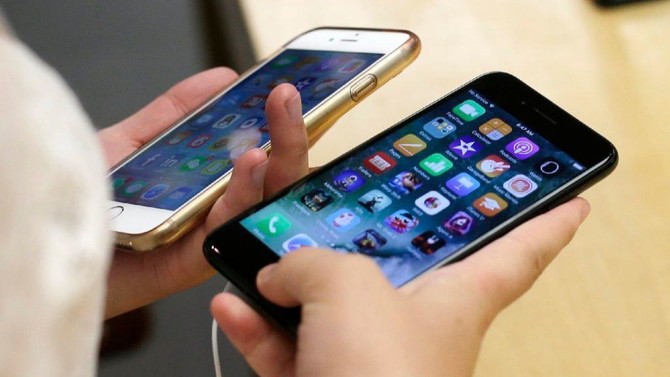
The Qualcomm patents cover power management and a touch-screen technology called Force Touch that Apple uses in current iPhones, Bloomberg reported, quoting Qualcomm.
Apple dismissed Qualcomm’s claims.
“In our many years of ongoing negotiations with Qualcomm, these patents have never been discussed and in fact were only granted in the last few months,” Apple’s statement said.

Apple slams Qualcomm suit seeking iPhone ban in China
Global investors commit more than $3bn to King Salman Park as Saudi giga-project secures new deals
RIYADH: The King Salman Park Foundation has secured more than $3.8 billion in new private-sector commitments at the MIPIM 2026 real estate conference, including a landmark $3 billion fund backed by international investors to develop a major mixed-use district in the heart of Riyadh.
According to a press release, the announcements bring total committed investment in the 17.2 sq. kilometers urban regeneration project to over $5.3 billion across five major packages.
Launched in 2019 under Saudi Vision 2030, the development is designed to be the world’s largest city park and aims to boost green space, improve quality of life, and feature over 1 million trees and extensive leisure facilities.
A $3 billion metro-connected district
The largest of the two packages, designated Package 5, will see a consortium led by Kolaghassi Development Co. deliver a residential-led district with a total built-up area exceeding 1 million sq. meters.
It will provide approximately 3,700 residential units, a K–12 school, around 300 hospitality keys and more than 100,000 sq m of Grade A office space alongside a wide variety of retail and dining offerings.
The development is supported by a Saudi-domiciled, Capital Market Authority-regulated fund managed by Mulkia Investment Co. that has attracted leading investors from the Kingdom and across the world.
Kolaghassi Development Co. will lead the project alongside Al Othaim Investment, one of the Kingdom’s real estate players, and RXR, a New York-headquartered real estate investor and operator.
“Securing investment of this scale, supported by international capital and expertise, is an important milestone for King Salman Park,” said George Tanasijevich, CEO of King Salman Park Foundation.
$850 million cultural district package
In a separate announcement, the Foundation confirmed the award of Package 4 to a consortium led by Retal Urban Development Co., with support from a fund managed by SAB Invest.
The project has a total value exceeding $850 million and will host more than 600 residential units, over 140 hotel keys, and almost 50,000 sq m of Grade A office space, alongside curated retail and food and beverage experiences.
“This opportunity reflects the maturity of Saudi Arabia’s real estate investment landscape and our confidence in culture-led, mixed-use urban destinations as a driver of sustainable returns,” said Abdullah Al-Braikan, CEO and founder of Retal Urban Development Co.
Ali Al-Mansour, CEO of SAB Invest, said the fund structure brings together “long-term capital, experienced development partners, and a shared commitment to place-making excellence” while contributing to Riyadh’s cultural vibrancy and the Kingdom’s quality-of-life ambitions under Vision 2030.