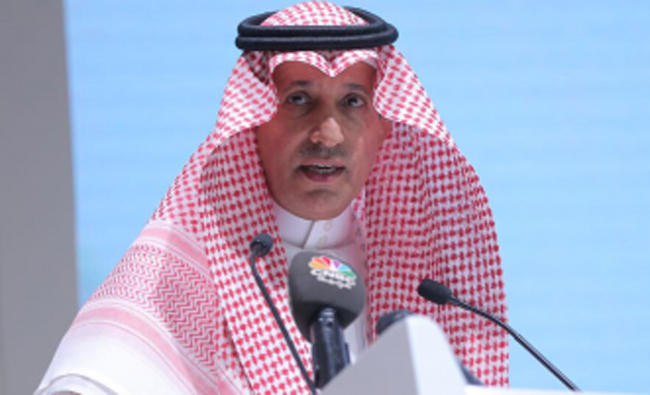
RIYADH: “Human capital is the main focus of development in every society, and giving it sufficient attention is necessary for success and progress. Thus, Saudi Arabia’s Vision 2030 seeks to improve all aspects of the Saudi economy, with human capital development at the forefront,” Minister of Labor and Social Development Ali bin Nasser Al-Ghafis said during the opening ceremony of Saudi Basic Industries Corp. (SABIC) first HR forum, “Transforming HR: Enabling Vision 2030.”
“Saudi Arabia spends more on higher education than most OECD countries, and this expenditure on tertiary education and training accounts for more than 7 percent of the government’s budget,” Al-Ghafis said.
Al-Ghafis pointed out that human capital is the most valuable asset, which is why every firm strives for employee satisfaction and motivation in an attempt to increase productivity and performance through instilling the value of cooperation and developing a spirit of teamwork.
“Saudi Arabia is taking bold action in this regard, such as those mentioned in the National Transformation Program (NTP) 2020,” he said, “including the development of quality standards as well as vocational and technical accreditation; providing citizens with the necessary knowledge and skills to meet the needs of the future labor market; creating decent job opportunities for citizens; developing the skills of the youth; and empowering women.”
The minister explained that in order to achieve the objectives of the NTP 2020, the ministry has launched several initiatives that support employing citizens, among which are updating Nitaqat nationalization thresholds; developing a campaign for activity correction; redesigning the portfolio of HR development to make it support growth in private sector employment; supporting women’s work programs; introducing new regulations for home nurseries; and creating initiatives that will motivate and develop freelance and part-time work, and teleworking.
“Organizing these forums is necessary for accomplishing the shared goal of comprehensive development. These forums are an ideal opportunity for exchanging knowledge and expertise, as well as discussing matters related to human resources. I look forward to seeing the outcomes of this forum applied to real life, which will act as important building blocks for ensuring the development of a strong economy and achieving the Kingdom’s vision,” Al-Ghafis said.
He also praised SABIC’s role in bringing global HR development experiences to Saudi Arabia and commended the company’s experience in HR development.


![]()
Labor minister: KSA spends more on education than most OECD countries
Labor minister: KSA spends more on education than most OECD countries
Latest updates


© 2026 SAUDI RESEARCH & PUBLISHING COMPANY, All Rights Reserved And subject to Terms of Use Agreement.