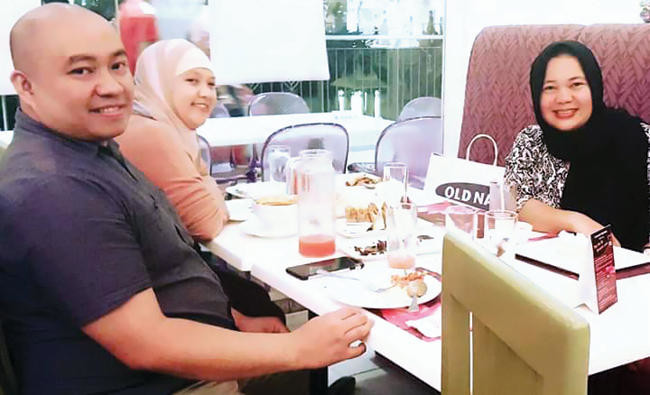
MANILA: Friends and colleagues have described Russell Salic, a Filipino doctor and one of three suspects named by the US as perpetrators of a thwarted 2016 militant plot to target New York’s Times Square and subway system, as a “softie,” “generous” and “gullible.”
Salic, 37, an orthopedic surgeon from Kawayan, is accused of helping to finance the planned attacks.
Currently in the custody of the National Bureau of Investigation (NBI) in Manila, he is also suspected of having links to the Daesh-inspired Maute group, which is responsible for the ongoing siege in Marawi City.
Salic and two other suspects — Abdulrahman Al-Bahnasawy, a 19-year-old Canadian citizen, and Talha Haroon, a 19-year-old US citizen residing in Pakistan — are charged with seven offenses.
They include conspiracy to commit acts of terrorism, use weapons of mass destruction, and bomb places of public use, which carry a maximum sentence of life in prison.
Salic, who allegedly used the aliases Abu Khalid or “the doctor,” surrendered to Philippine authorities upon learning that he was wanted by the US. Friends and colleagues have expressed shock and disbelief over the charges against him.
“The absurdity of the allegations is so disturbing. Everybody… knows this guy to be a comedian,” close friend Jasmine P. said on social media.
She told Arab News that she has known Salic “since 1998, when we were just wide-eyed 17-year-olds braving the world for college.”
He was “a good listener” and “very generous, which endeared him to all of us,” she said, adding that he was “a softie.”
But “his weakness is that he’s very gullible. He’s easy to convince. He just can’t refuse those who ask for his help.”
Jasmine said the last time they saw each other was Dec. 12, 2015, when Salic had talked about his feelings for children in war-torn Gaza.
“He was teary-eyed when he talked about the children. He said he’d love to hug those kids just to make them feel that somebody in the world cared, because he felt they weren’t given much attention by the UN.” She said Salic had donated money to children in Gaza through “a teacher.”
When asked if Salic was ever critical of the US, Jasmine replied: “Like me and almost all Muslims in the world, he was condemning the US… It doesn’t necessarily mean he supports bombing establishments there.”
She added: “Even I sometimes have posts asking how the US supports airstrikes hitting innocent children. But I never heard him talk about revenge or any kind of plot against the US.”
She described allegations of Salic’s involvement with Maute as “really, really absurd,” adding that “he was on residency training,” which she said would have made it impossible for him to engage in other activities as “he practically has to live in the hospital.”
Quoting a member of Salic’s family, Jasmine said: “He’s sad, but he’s trying to be brave for his mom. He’s a mama’s boy. He feels sorry for his family for bringing them into this mess. He submits his fate to God, and is hopeful that something good will come out of this.”
Asked about claims that Salic helped fund the planned New York attacks and intended to send money to Daesh, Jasmine replied: “If that were true, I — one of his closest friends — would’ve noticed a drastic lifestyle change in him.”
She said when she heard about his alleged involvement in terrorism, she immediately called him to ask about it.
“He just shrugged it off as if it’s not a big deal, but he’s planning to get a lawyer to sort the mess out. He talked about his plan for marriage.” But the wedding has been canceled due to the charges he has to deal with, she added.
Another friend of Salic, S.H. — a medical officer — said she was heartbroken when she saw the news about him.
A former professor at Salic’s university, A.V., said she believes he “is the same Russell as way back in college... kind and harmless.”


![]()
Philippine doctor accused in NYC terror plot is a ‘softie,’ say friends
Philippine doctor accused in NYC terror plot is a ‘softie,’ say friends

Latest updates


Recommended


© 2026 SAUDI RESEARCH & PUBLISHING COMPANY, All Rights Reserved And subject to Terms of Use Agreement.