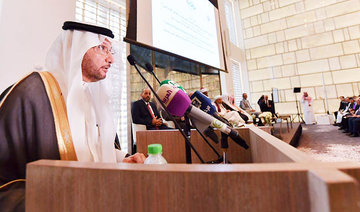
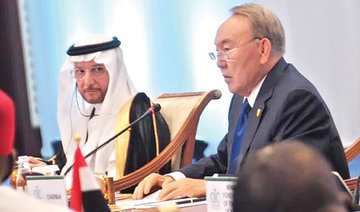
RIYADH: In a major move to fight hostilities and prejudices toward Muslims and Islam globally, the Jeddah-based Organization of Islamic Cooperation (OIC) has joined forces with three other organizations to hold a regional forum in Dakar on Monday.
The two-day forum on Islamophobia will map out a comprehensive strategy to address intense spikes in anti-Muslim sentiments and hate crimes.
“There will be sessions to present the media strategy to address the phenomenon of Islamophobia and discuss the training curriculum for journalists and media professionals to deal with stereotypes about Islam and Muslims in the Western media prepared by the Rabat-based Islamic Educational, Scientific and Cultural Organization (ISESCO),” said an SPA report on Saturday.
ISESCO has teamed up with the OIC standing committee on information and cultural affairs, and the Senegalese National Assembly to organize the forum, said the report.
“Muslims are facing serious challenges because of the growing hostility, but they are also enthusiastically ready to confront them,” said Mohammed Solaiman Al-Othman of King Saud University, commenting on the forum.
Asked about the growing trend in Islamophobia globally, and how it can be addressed, Al-Othman said that “a large number of Muslims, not only in the Western countries, but also in other parts of the world are experiencing discrimination … Muslims in the US and the West continue to be the most negatively rated religious group … Hence, there is a need to set up more and more advocacy groups to fight Islamophobia,” he added.
He said that the OIC and many other national and regional organizations of the Arab world have been “working and lobbying for the protection of Muslims and the cessation of religious and racial profiling.”
The OIC also organized a similar forum in London in July this year. The two-day event concluded with recommendations and possible projects for implementation.
In April 2017, the OIC held yet another workshop and meeting in Istanbul to discuss the OIC Islamophobia Observatory’s works in dealing with the rise of anti-Muslim sentiments in the West. The Istanbul forum, while seeking radical and real solutions for Islamophobia, called on all global organizations, including UN agencies, to fight anti-Muslim racism, hostilities, and unacceptable discourses about Islam and Muslims.
According to the latest OIC Islamophobia Observatory report, “the growing trend of Islamophobia has not subsided in any tangible way … Muslims have been terrorized and discriminated against. Islamic sacred symbols have been insulted. People with Islamic attire were targeted with hatred. Women with hijabs were abused on streets and in public spaces. Certain governments outlawed Islamic attire or restricted Muslims from having prayer facilities.”


![]()

OIC, ISESCO to hold forum in Dakar to fight Islamophobia
OIC, ISESCO to hold forum in Dakar to fight Islamophobia
Latest updates








© 2026 SAUDI RESEARCH & PUBLISHING COMPANY, All Rights Reserved And subject to Terms of Use Agreement.